13 min read 7 clicks
Hormone therapy for prostate cancer, also called androgen deprivation therapy (ADT), lowers testosterone or blocks its effect on cancer cells. It can be given as injections, tablets or surgery to remove the testicles.
Its role depends on the stage of the disease. When combined with radiotherapy, it can form part of a curative treatment approach for some men, while in advanced disease, it is used to control cancer progression. Choosing the appropriate approach and managing potential side effects are specialist decisions. Men considering prostate cancer hormone therapy in Germany can request a specialist review of their medical records before planning travel [1].
Hormone Therapy in Different Prostate Cancer Situations
The role of hormone therapy depends on how far the cancer has spread and on earlier treatment [1]:
- Localised disease: Hormone therapy is added to radiotherapy in men with intermediate-risk or high-risk cancer. The length of treatment depends on the risk group.
- Locally advanced disease: Hormone therapy is recommended together with radiotherapy when the cancer extends beyond the prostate capsule or into nearby structures.
- Recurrent disease: After earlier local treatment, a rising prostate-specific antigen (PSA) level may signal biochemical recurrence. Salvage radiotherapy after prostatectomy is combined with ADT in men at higher risk of progression. For high-risk recurrence, enzalutamide, alone or with ADT, is another option.
- Metastatic hormone-sensitive disease: ADT is the foundation of treatment. In men in good general condition, adding apalutamide, enzalutamide or darolutamide is recommended or, in newly diagnosed high-risk disease, abiraterone. Docetaxel chemotherapy may be combined with these medicines in men who are suitable for it.
Hormone Therapy Combined With Radiotherapy
The German S3 guideline recommends adding hormone therapy to radiotherapy for high-risk localised and locally advanced prostate cancer, and a shorter course for intermediate-risk disease.
The length of treatment is adjusted to other health conditions and tolerability [1]:
- Intermediate-risk disease: Usually about four to six months.
- High-risk localised or locally advanced disease: Usually 24 to 36 months, starting up to six months before radiotherapy if needed.
- Lymph node involvement: For cancer in nearby pelvic lymph nodes (N1 M0), or with several high-risk features, adding abiraterone with prednisone to long-term ADT is recommended when the prostate and pelvic lymph nodes are irradiated. Abiraterone is not authorised in Germany for this use, so it is an off-label option decided with the specialist.
An individual patient data meta-analysis of 12 randomised trials involving 10,853 men with localised prostate cancer found that adding androgen deprivation therapy (ADT) to radiotherapy significantly improved metastasis-free survival. Prolonging ADT after radiotherapy also improved outcomes, whereas extending its duration before radiotherapy did not demonstrate a significant additional benefit. The authors recommend shared decision-making, as the magnitude of benefit may vary between patients [2].
| Outcome at 10 years | Radiotherapy alone | Radiotherapy with hormone therapy |
|---|---|---|
| Alive without metastasis | 52% | 61% |
| Alive (overall survival) | 57% | 65% |
The table above shows the percentage of men alive without metastasis, and alive overall, at 10 years after radiotherapy alone and after radiotherapy with hormone therapy.
Hormone Therapy Approaches for Prostate Cancer
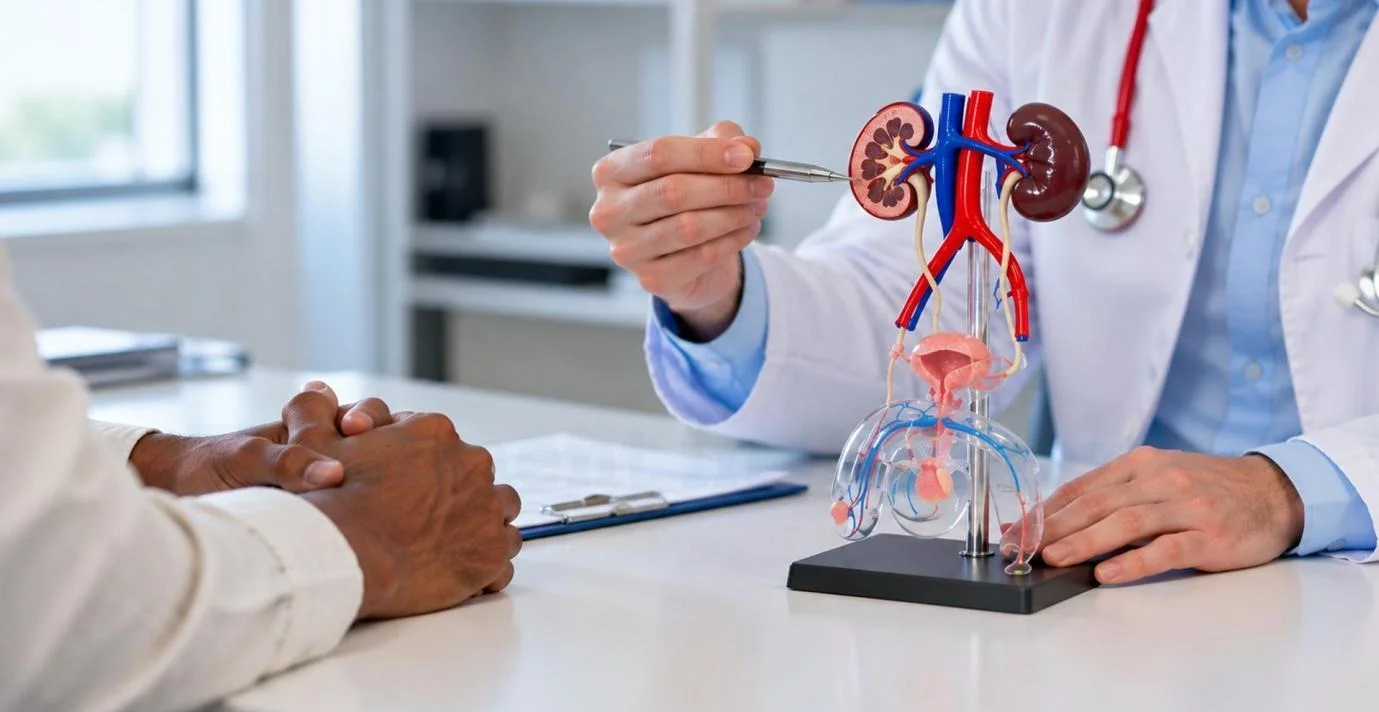
The main approaches act on testosterone in different ways.
Testosterone-Lowering Treatments
GnRH agonists and GnRH antagonists are the two medicine types that lower testosterone to castrate levels.
GnRH agonists, also called LHRH agonists, are the standard agents for medical castration:
- Testosterone flare: Testosterone rises briefly before it falls, which can temporarily worsen symptoms such as bone pain or urinary blockage. An antiandrogen tablet is often added for the first weeks. In men with severe symptoms or threatened complications such as spinal cord compression, treatment usually starts with a GnRH antagonist or an androgen-receptor pathway inhibitor.
GnRH antagonists, also called LHRH antagonists, block the receptor directly, so testosterone falls rapidly and without a flare. Degarelix is given by injection and relugolix is a daily tablet.
In the HERO trial in advanced prostate cancer, major adverse cardiovascular events (non-fatal heart attack, non-fatal stroke or death from any cause) occurred in 2.9% of men taking relugolix and 6.2% of men receiving leuprorelin over 48 weeks. This was a prespecified safety analysis in a trial designed to compare testosterone suppression, so it suggests a possible advantage for relugolix but does not prove one. No high-quality evidence shows that one type of ADT controls cancer better than another, so the choice is individual [1] [3].
Androgen-Receptor Inhibitors and Abiraterone
These medicines are added to ongoing ADT and do not replace it [1]:
- Enzalutamide, apalutamide and darolutamide block the androgen receptor on cancer cells. Reported side effects include fatigue, high blood pressure, falls and changes in liver values.
- Abiraterone blocks the production of androgens. It is taken with prednisone or prednisolone, and side effects can include high blood pressure, low potassium and fluid retention.
Orchiectomy as Permanent Hormone Treatment
Bilateral orchiectomy, the surgical removal of both testicles, is another way to lower testosterone. It acts very quickly and without an initial rise, but it is permanent [1].
| Approach | How it works | Key consideration |
|---|---|---|
| GnRH agonist (injection) | Causes a short testosterone surge, after which the receptors switch off and testosterone falls | May need flare protection, according to disease burden and clinical risk |
| GnRH antagonist (injection or tablet) | Blocks the GnRH receptor directly, lowering testosterone quickly without a flare | Some studies suggest fewer cardiovascular events than agonists, but this has not been firmly established |
| Androgen-receptor pathway inhibitor | Blocks androgen-receptor signalling in prostate cancer cells (enzalutamide, apalutamide, darolutamide) | Used together with ongoing ADT, not in place of it |
| Abiraterone | Blocks CYP17, an enzyme needed to produce androgens | Given with a low-dose steroid and ongoing ADT |
| Orchiectomy | Surgical removal of the testicles | Permanent and irreversible; avoids repeat injections |
The table above shows how each hormone treatment works and what to consider with it.
Other Prostate Cancer Treatments in Germany
Other treatments are discussed for advanced prostate cancer. Their evidence differs, so a specialist weighs each one individually.
Lutetium-177 PSMA therapy delivers radiation directly to cancer cells carrying the prostate-specific membrane antigen (PSMA) protein. In the EU, it is authorised, together with ADT, for adults with progressive PSMA-positive metastatic castration-resistant prostate cancer who have already had an androgen-receptor pathway inhibitor and taxane-based chemotherapy. German guidelines also list it as an option after docetaxel and an androgen-receptor pathway inhibitor.
Actinium-225 PSMA therapy works in a similar way with a different radioactive source. It is not part of standard treatment and does not appear among the options in the German S3 guideline.
Dendritic cell therapy uses the patient’s own immune cells to try to train the immune system against the cancer. Like actinium-225 therapy, it is not part of standard treatment. A phase 3 trial of one dendritic cell product, added to docetaxel and prednisone in metastatic castration-resistant prostate cancer, found no difference in overall survival [1] [4] [5].
TACE (transarterial chemoembolisation) and TACP (transarterial chemoperfusion) deliver chemotherapy through the arteries that feed a tumour. They are also not part of standard treatment for prostate cancer. The associated specialist is Prof. Dr. Thomas Vogl, University Hospital Frankfurt am Main.
Hormone Therapy Monitoring, Duration and Testosterone Recovery
How long hormone therapy lasts depends on the disease setting, as described above. Once it starts, regular check-ups track the response and detect side effects early.
Check-ups about every three months have proved useful and can be adjusted individually [1]:
- PSA: Measured to assess the response to treatment.
- Testosterone: Checked if the PSA response is not satisfactory, to confirm that castrate levels are reached.
- Side effects: Reviewed at each visit, so that they are recognised and treated early.
| Step | Stage |
|---|---|
| 1 | Baseline assessment |
| 2 | Treatment selection |
| 3 | Start of treatment |
| 4 | Regular PSA, testosterone, bone and metabolic review |
| 5 | Duration and recovery planning |
The table above shows the monitoring steps from baseline assessment to recovery planning.
After ADT stops, testosterone does not return at the same speed in every man. In a pooled analysis of 1,444 men from five randomised trials who had radiotherapy with ADT, the time to recovery varied with the length of ADT, baseline testosterone and age [6].
Hormone Therapy Side Effects and Long-Term Health

Hormone therapy affects more than the prostate, because testosterone acts throughout the body.
Patients should be told about the typical side effects and how they can be treated [1]:
- Hot flushes and night sweats: The most common side effect of castration.
- Reduced sexual desire and erectile dysfunction: Both are typical effects of low testosterone.
- Muscle loss and weight gain: Muscle mass falls, and body fat rises.
- Bone thinning: Bone density can fall, and the fracture risk rises after more than a year of treatment.
- Anaemia: It can cause tiredness and is linked to the length of treatment.
- Concentration and memory: A decline in thinking ability can occur.
- Breast tenderness or enlargement: More likely with antiandrogen tablets.
- Metabolic and heart-health changes: ADT is a risk factor for cardiovascular disease and type 2 diabetes, and it can cause other metabolic changes, such as raised blood sugar.
Staying physically active during cancer treatment improves fitness, tolerability of treatment and daily activities, and exercise and nutrition advice are also recommended for muscle loss and weight gain [1].
Prostate Cancer Hormone Therapy Consultation in Germany
A specialist consultation brings together urology and, where relevant, medical and radiation oncology. The team reviews pathology, PSA and testosterone results, imaging and earlier treatment, then discusses hormone treatment, goals and monitoring.
For International Patients
Before travelling, international patients usually send their records to the German team for review:
- Scans as image files, with their written reports.
- Pathology reports, and PSA and testosterone results over time.
- A summary of earlier treatment and current medicines.
Second Opinion for Prostate Cancer Hormone Therapy in Germany
A second opinion helps clarify which hormonal approach may suit you. Treatment in Germany (TIG GmbH) can review your medical records, connect you with relevant urology and oncology specialists, and coordinate consultations. The German medical team remains responsible for diagnosis, treatment recommendations and care, and no treatment outcome can be guaranteed.
References
Why Patients Worldwide Prefer Our Medical Services in Germany – Key Benefits Explained
International patients planning hormone therapy for prostate cancer in Germany may need support with hospital consultations, medical documentation, medical translation services, and travel arrangements. TIG GmbH helps coordinate these practical steps and communication with healthcare providers according to each patient's needs and the services agreed.
If you are unsure about a diagnosis or the recommended plan, a second opinion from German specialists can also be arranged based on your medical records.
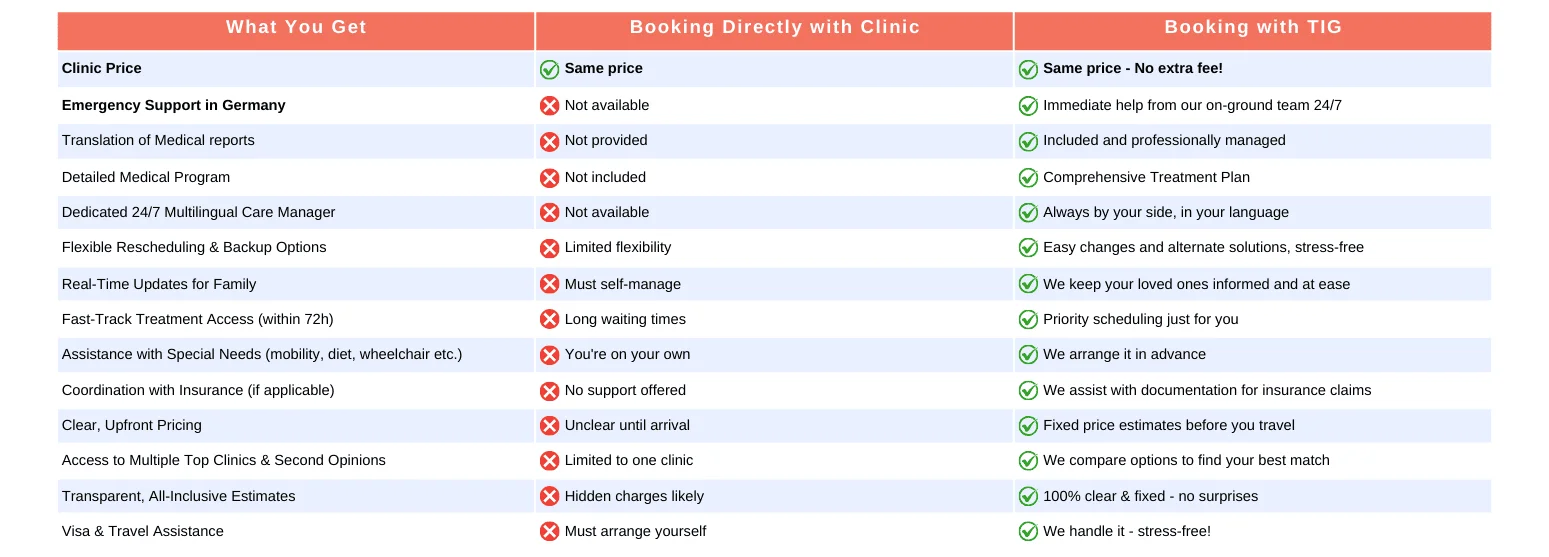
The table above compares the support and coordination services offered through TIG GmbH for hormone therapy for prostate cancer in Germany with the arrangements patients may need to manage when booking directly with a clinic.
Frequently Asked Questions About Prostate Cancer Hormone Therapy
What happens if I miss or delay my hormone therapy injection?
It depends on the medicine and how long the delay is. Contact your clinic as soon as you notice a missed or delayed injection. Your team will advise when to give it and whether a PSA or testosterone check is needed. Do not repeat or double up injections unless your team advises it.
What is the difference between hormone therapy and chemotherapy for prostate cancer?
Hormone therapy lowers testosterone or blocks its effect on cancer cells. Chemotherapy, such as docetaxel, damages dividing cells directly instead. In metastatic hormone-sensitive disease, docetaxel may be combined with hormone treatment and other medicines in men who are suitable for chemotherapy.
Which hormone therapy side effects can be treated?
Many can be managed. Treatment options exist for hot flushes, erectile dysfunction and breast tenderness, exercise and nutrition advice for muscle loss and weight gain, and calcium, vitamin D and bone-protective medicines where osteoporosis is confirmed. Your team can advise which options suit you.
Who monitors my heart and bone health during ADT?
Responsibility differs between centres, so ask your treating team who arranges each check. Because ADT is a risk factor for heart disease and type 2 diabetes, and fracture risk rises after more than a year of treatment, cardiovascular risk, blood sugar and bone health are worth discussing alongside PSA.
When should I contact my doctor about hormone therapy side effects?
Report side effects as soon as they appear instead of waiting for your next visit, especially severe tiredness or new bone pain. Seek emergency care immediately for chest pain, sudden breathlessness, or new leg weakness, numbness, or loss of bladder or bowel control.
Will I be able to keep working during prostate cancer hormone therapy?
That depends on your job, your treatment and how you feel. Fatigue is a reported effect of ADT and of added medicines such as enzalutamide, apalutamide and abiraterone, and hot flushes can also make work harder. Talk to your treatment team and your employer about adjustments such as lighter duties or flexible hours.
What does it mean if hormone therapy stops working?
Over time, some prostate cancers keep growing even though testosterone is at castrate levels. This is called castration-resistant prostate cancer. Your specialist re-checks scans and PSA, and the next options depend on earlier treatment and where the cancer has spread.
Will hormone therapy remove prostate cancer completely?
It depends on the stage. In advanced disease, hormone therapy controls the cancer but is not a cure, and its effect often lessens over time. For some men with high-risk localised or locally advanced cancer, it is given with radiotherapy as part of treatment with curative intent.
.webp)





.webp)





 (1).webp)
 (1).webp)

.webp)
.webp)