
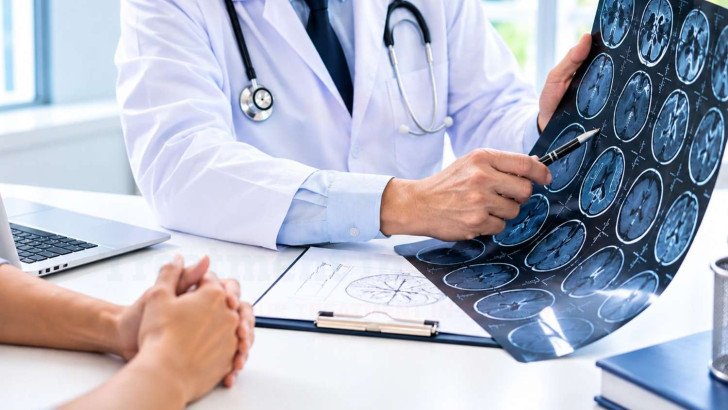
Brain cancer treatment in Germany depends on the tumour type, grade, molecular features, location and the patient’s overall health. This guide covers symptoms, risk factors, diagnosis, tumour classification, surgery, radiotherapy, chemotherapy, targeted therapy, immunotherapy and specialised treatments. It also explains brain metastases, recurrence, side effects, follow-up, specialist care in Germany and costs for international patients.
Brain Cancer Treatment in Germany
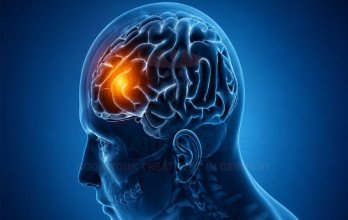
A brain tumour may be diagnosed after symptoms such as seizures, persistent headaches or changes in behaviour. Treatment depends on the tumour type, grade, location and the patient's overall health. Brain cancer treatment in Germany is planned by specialist teams who review test results and recommend suitable options, including surgery, radiotherapy, chemotherapy and, for selected patients, specialised treatments.
Brain Cancer Symptoms, Warning Signs and Risk Factors
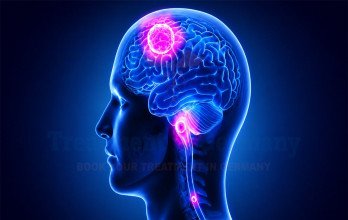
Brain tumour symptoms may result from increased pressure inside the skull or from effects on the brain region involved. They vary with the tumour’s location, size and growth rate, so people with the same tumour type may experience different symptoms.
Common Brain Tumour Symptoms
Symptoms that commonly lead to medical evaluation include:
- Headaches that are new, steadily worsening, worse on waking, or accompanied by nausea, vomiting or drowsiness, which can point to raised intracranial pressure.
- Seizures, including a first seizure in adulthood, which may be a full convulsion or something subtler, such as twitching of one limb, a strange sensation or a brief lapse in awareness.
- Changes in vision, such as blurring, double vision or loss of part of the visual field.
- Weakness, numbness or poor coordination on one side of the body, or new unsteadiness when walking.
- Speech or language difficulties, including trouble finding words or understanding spoken or written language.
- Memory, thinking or personality changes, which family members or close friends often notice before the patient does.

First symptom reported by adults with diffuse glioma in two Finnish cohorts. Only the four most frequent symptoms are shown [1].
None of these symptoms is specific to a brain tumour, and many have more common causes. New or worsening neurological symptoms still require prompt medical assessment.
Known Risk Factors for Brain Tumours
Most brain tumours develop without a clear cause.
The few established brain tumour risk factors include:
- Previous radiation to the head, including radiotherapy given in childhood.
- Rare inherited syndromes, such as neurofibromatosis type 1 and 2, Li-Fraumeni syndrome and tuberous sclerosis.
- Age, as many malignant gliomas occur in older adults, although some tumour types mainly affect children and younger adults.
Mobile phone use, diet and head injuries have not been shown to cause brain tumours.
Brain Cancer Diagnosis and Tumour Classification

Diagnosis confirms whether a tumour is present and defines its type, grade and molecular features. Each step adds information that shapes the treatment plan.
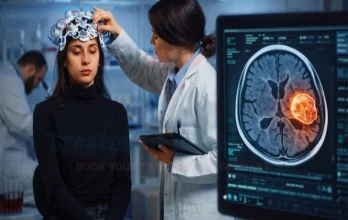
Neurological Examination and Brain Imaging
- Clinical and neurological assessment: a review of how symptoms developed and an examination of strength, sensation, reflexes, coordination, vision and cognition, with attention to conditions that can mimic a tumour, such as stroke, infection or inflammation.
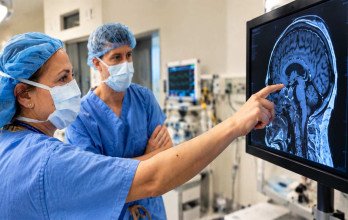
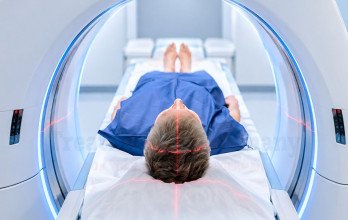
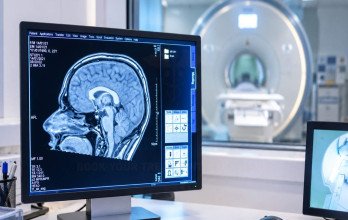
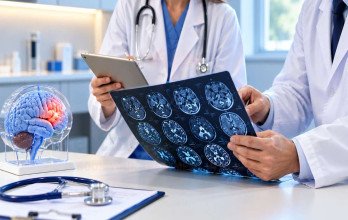
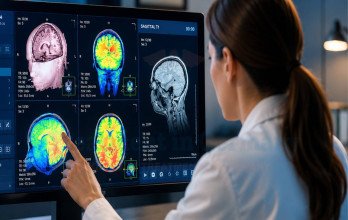
- MRI with contrast: the main imaging test, showing the size and position of the lesion, surrounding swelling and its relationship to areas that control movement, speech and vision.
- Additional imaging: CT, PET or body scans are added in selected cases, for example when the lesion could be a metastasis from cancer elsewhere.
Biopsy, Neuropathology and Molecular Testing
Tissue is often needed when imaging alone cannot establish the diagnosis. It may be obtained during tumour removal or by stereotactic biopsy, in which a needle is guided to the tumour through a small opening in the skull. A neuropathologist then examines the tissue under a microscope and runs molecular tests. The final diagnosis is based on the tumour's appearance, grade and molecular test results. These findings help doctors identify the tumour more accurately, understand how it may behave and select appropriate treatment. Research has shown that additional molecular testing can improve brain tumour classification [2].
Brain Tumour Types, Grades and Molecular Markers
Brain tumours may be malignant or non-malignant, and the brain can also be affected by metastases from cancers elsewhere in the body. US registry data show that most primary brain and other central nervous system tumours are non-malignant. Meningioma is the most common tumour overall, while glioblastoma is the most common malignant type [3].
Main Types of Brain Tumours

An overview of major tumour groups. Each group contains several subtypes with their own treatment pathways.
CNS WHO Grades Instead of Cancer Stages
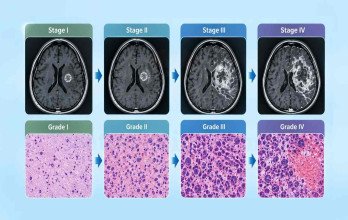
Brain tumours are usually described by grade rather than conventional cancer stage. CNS WHO grades range from 1 to 4, but the meaning of a grade depends on the specific tumour type. A grade 4 primary brain tumour therefore does not mean the same thing as stage IV cancer [3].
Key Molecular Markers: IDH, 1p/19q and MGMT
Molecular findings help doctors tell tumour types apart, estimate how a tumour is likely to behave and choose treatment.
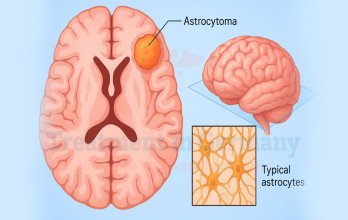
- IDH mutation is found in astrocytomas and oligodendrogliomas and is linked to slower growth than IDH-wildtype glioblastoma.
- 1p/19q codeletion, together with an IDH mutation, confirms an oligodendroglioma.
- MGMT promoter methylation suggests that glioblastoma is more likely to respond to temozolomide chemotherapy.
Brain Cancer Treatment Options in Germany

Brain cancer treatment in Germany depends on the type of brain tumour and its location, grade, molecular features and the patient’s overall health. Some patients need surgery followed by radiotherapy or drug treatment, while others need only one treatment or regular monitoring.
Brain Tumour Surgery and Maximal Safe Resection
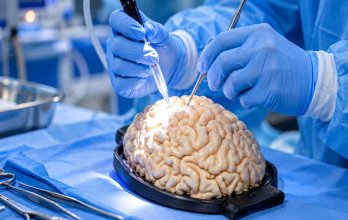
Surgery may be performed to confirm the diagnosis, remove the tumour or both. Surgeons aim to remove as much of the tumour as safely possible while protecting brain functions such as movement, speech and vision. The amount that can be removed depends mainly on the tumour's size and location.
Research in glioblastoma suggests that greater tumour removal, when safely possible, is associated with better outcomes [4]. German neurosurgical centres commonly use functional MRI, intraoperative monitoring and fluorescence-guided surgery to help remove more tumour safely.
Radiotherapy and Radiosurgery for Brain Tumours
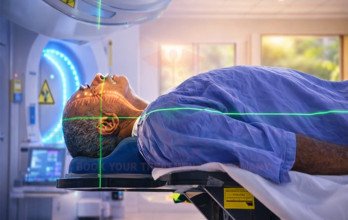
Radiotherapy treats tumour cells left behind after surgery, as well as tumours that cannot be operated on:
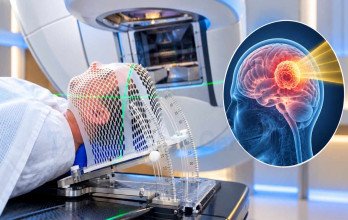
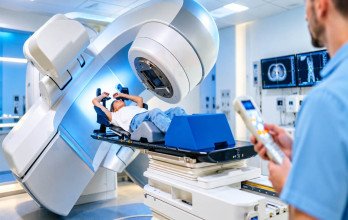
- External-beam radiotherapy is delivered in daily sessions over several weeks and is standard after surgery for many gliomas, often given together with chemotherapy.
- Stereotactic radiosurgery and stereotactic radiotherapy focus a high dose on small, well-defined targets in one or a few sessions, and are widely used for limited brain metastases, meningiomas and other small tumours.
- Whole-brain radiotherapy is used selectively when disease is too widespread for focal treatment. Because it can affect memory and thinking, stereotactic treatment is preferred where possible.
Tumour location can limit both surgery and radiotherapy, particularly near the brainstem, optic pathways or other critical structures.
Chemotherapy for Brain Cancer
The blood-brain barrier can limit drug delivery to some brain tumours, which narrows systemic treatment options. Even so, chemotherapy for brain cancer remains central to several treatment plans. Temozolomide is used with and after radiotherapy for glioblastoma, chemotherapy regimens are used for selected IDH-mutant gliomas, and high-dose methotrexate-based regimens are a central component of treatment for primary CNS lymphoma.
Targeted Therapy and Immunotherapy
Targeted therapy acts on specific changes in cancer cells that help them grow. Molecular testing helps doctors identify patients who may benefit from these medicines. One example is vorasidenib, an IDH inhibitor used for selected patients with grade 2 IDH-mutant astrocytoma or oligodendroglioma after surgery, when immediate radiotherapy or chemotherapy is not needed [5].
Immunotherapy with checkpoint inhibitors has changed care for brain metastases from melanoma and some lung cancers, but has not shown clear benefit in unselected glioblastoma.
Advanced, Metastatic and Recurrent Brain Cancer

Doctors may describe a primary brain tumour as advanced when it is high grade, has returned after treatment or has become difficult to control. Brain metastases, which come from cancer elsewhere in the body, are managed differently.
Brain Metastases Treatment
Brain metastases are deposits of a cancer that started in another organ, most often the lung, breast, skin (melanoma), kidney or bowel. In adults they are more common than primary malignant brain tumours, and they are managed according to the biology of the original cancer. Treatment choices depend on:
- The number, size and location of the lesions, which decide whether surgery, stereotactic radiosurgery or broader radiotherapy is appropriate.
- Whether the lesions are causing symptoms or significant swelling.
- How well the cancer outside the brain is controlled, and which systemic options remain.
- The molecular profile of the primary tumour, such as EGFR or ALK alterations in lung cancer, HER2 status in breast cancer or BRAF mutations in melanoma.
When a Brain Tumour Comes Back
A brain tumour may return or continue to grow after treatment. Changes on MRI do not always mean recurrence, because earlier treatment can cause similar appearances. Once recurrence is confirmed, doctors review the scans, previous treatment and the patient’s condition. Possible next steps include:
- Repeat surgery, when the tumour can again be removed without unacceptable risk. Observational research suggests the extent of re-resection may influence outcomes in selected patients with recurrent glioblastoma [7].
- Re-irradiation, often using stereotactic techniques, planned around the dose and timing of earlier radiotherapy.
- Further systemic therapy, such as a different chemotherapy, a targeted drug matched to the tumour’s biomarkers or, in some tumours, bevacizumab to reduce swelling and symptoms.
- Clinical trials, which are often most relevant at this stage.
Specialised and Emerging Brain Tumour Treatments in Germany
In addition to established treatments, patients in Germany may have access to specialised options such as proton therapy, Tumour Treating Fields and dendritic cell therapy. These approaches offer different ways to treat brain tumours and may be suitable for selected patients, depending on their diagnosis, previous treatment and overall health.

Proton Therapy for Brain Tumours
Proton therapy delivers radiation more precisely, helping reduce unnecessary exposure to surrounding healthy brain tissue. This can be particularly useful for children and patients with tumours close to sensitive brain structures. Specialised centres in Germany offer proton therapy for selected cases. For adult glioblastoma, its main potential advantage is reducing radiation exposure to healthy tissue rather than a proven improvement in survival [8].
Read more on proton therapy for brain tumours in Germany.
Tumour Treating Fields for Glioblastoma
Tumour Treating Fields (TTFields) use a portable device with adhesive arrays on the shaved scalp. In a large randomised trial, adding TTFields to maintenance temozolomide after chemoradiotherapy extended median survival in newly diagnosed glioblastoma from 16.0 to 20.9 months [9]. The device needs to be worn for most of the day, and scalp irritation is the most common side effect.
Read more on Tumour Treating Fields for glioblastoma in Germany.
Dendritic Cell Therapy for Brain Cancer in Germany
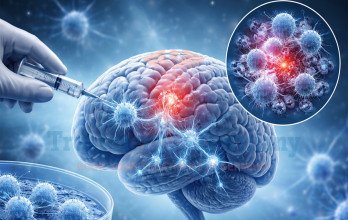
Dendritic cell therapy uses immune cells collected from the patient’s blood, which are loaded with tumour material in a laboratory and given back as a personalised vaccine. Studies in glioblastoma have reported encouraging findings, but important uncertainties about the benefit remain, and the therapy is not part of standard care [10]. It may be considered for selected patients after specialist assessment.
Read more on dendritic cell therapy for brain cancer in Germany.
Clinical Trials and Investigational Therapies
Clinical trials are exploring new approaches to brain cancer treatment, including targeted medicines, cancer vaccines, CAR T-cell therapy, oncolytic viruses and advanced radiation techniques. These studies offer eligible patients an opportunity to access newer treatments under specialist supervision. Participation depends on the tumour type, molecular findings, previous treatment and overall health.
Side Effects, Rehabilitation and Daily Life

Brain tumours and their treatment can affect the body, thinking and independence. Most problems can be reduced with good supportive care.
- Steroids, such as dexamethasone, reduce brain swelling but can raise blood sugar, disturb sleep, increase appetite and affect mood, so doctors use the lowest effective dose.
- Seizures are treated with anti-seizure medicines, which are generally given to patients who have had a seizure rather than to everyone.
- Radiotherapy can cause tiredness, hair loss in the treated area and, later, problems with memory or concentration.
- Chemotherapy, such as temozolomide, can lower blood counts and cause nausea and fatigue.
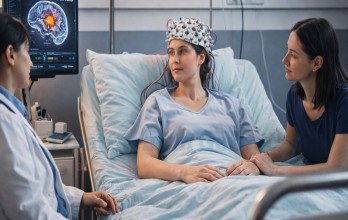
Rehabilitation may begin soon after treatment to help patients regain movement, speech, memory and everyday skills. Support may include physiotherapy, occupational therapy, speech therapy and cognitive rehabilitation. Patients who experience seizures or certain neurological problems may also need to avoid driving until they meet the relevant safety requirements.
Prognosis, Follow-Up and MRI Monitoring
Prognosis varies widely between different types of brain tumours and between individual patients. A grade 1 meningioma that is completely removed may never cause further problems, while glioblastoma remains one of the most difficult cancers to treat.
The main factors behind an individual outlook are:
- Tumour type, grade and molecular profile, including IDH, 1p/19q and MGMT status.
- Location and extent of disease, and how much tumour remains after surgery.
- Response to treatment, and whether and when the tumour recurs.
- Age, general health and neurological function at diagnosis.
Population figures describe groups of patients and cannot predict what will happen to one person [3].
Regular MRI scans help doctors monitor the tumour and check for changes after treatment. Patients with high-grade gliomas usually need more frequent scans, while slower-growing tumours may require less frequent monitoring. The schedule depends on the diagnosis, previous treatment and scan findings. Patients should report new or worsening symptoms between appointments.
Specialist Brain Cancer Care in Germany for International Patients

Brain tumour treatment in Germany is coordinated through specialist neuro-oncology teams. For international patients, an initial review of records and imaging helps determine which specialists and treatment options are appropriate before travel.
Neuro-Oncology Teams and Certified Centres
Brain tumour treatment draws on neurosurgery, neurology and neuro-oncology, neuroradiology, neuropathology, radiation oncology, medical oncology, rehabilitation, psycho-oncology and palliative care.
Complex cases are reviewed by multidisciplinary tumour boards, where specialists work together to recommend suitable treatments. In Germany, the German Cancer Society (DKG) certifies neuro-oncology centres that meet recognised standards for specialist care. Research has also found an association between treatment at certified hospitals and better outcomes for certain cancer groups, including neuro-oncological tumours [11].
Medical Records Needed for a Specialist Review
International patients can usually begin with a remote review of the following records:
- MRI scans in DICOM format, including pre- and post-operative scans.
- Pathology reports with molecular results, such as IDH, 1p/19q and MGMT status.
- Tissue blocks or slides, if the diagnosis needs to be confirmed.
- Operation notes and discharge summaries.
- Radiotherapy plans and doses, which are essential if re-irradiation is considered.
- Current medicines, including steroids and anti-seizure drugs.
- English or German translations of reports in other languages.
Brain Cancer Treatment Costs in Germany
The cost of brain cancer treatment in Germany depends on the individual assessment and the combination of treatments a patient needs. Some patients need only surgery, while others need surgery together with radiotherapy, medicines, rehabilitation or further tests. Costs vary depending on:
- MRI, PET scans, biopsy and molecular testing.
- The type of surgery and length of hospital stay.
- Radiotherapy technique and the number of sessions.
- Medicines and how long they are needed.
- Rehabilitation, follow-up scans and treatment of complications.
The total cost can usually be estimated only after a specialist reviews the medical records and decides which tests and treatments are needed.
How TIG Assists International Brain Tumour Patients
TIG GmbH (Treatment in Germany) helps international patients considering brain cancer treatment in Germany submit their medical records for specialist review, connect with suitable neuro-oncology teams, and arrange consultations, hospital invitation letters, and logistical arrangements, including travel and translation support. All medical decisions remain with the treating German specialists.
References
Why Patients Worldwide Prefer Our Medical Services in Germany – Key Benefits Explained
International patients planning brain cancer treatment in Germany may need support with hospital consultations, medical documentation, translations, and travel arrangements. TIG GmbH helps coordinate these practical steps and communication with healthcare providers according to each patient's needs and the services agreed.

The table above compares the support and coordination services offered through TIG GmbH with the arrangements patients may need to manage when booking directly with a clinic.








.webp)
 (1).webp)
.webp)
.jpg)
 (1).webp)
.jpg)