
9 min read 357 clicks
When you consider treatment abroad, one of the first questions is how much it will cost. Breast cancer treatment cost in Germany depends on the type of therapy, how far the cancer has spread and your individual treatment plan. Specialised therapies such as dendritic cell therapy, TACP, TACE and TPCE each have their own price. Knowing these prices and what affects them helps you plan ahead and request a personal estimate for breast cancer treatment in Germany.
Breast Cancer Treatment Prices by Therapy
The table compares approximate breast cancer treatment prices in Germany for four specialised therapies, including when each may be considered and how treatment is planned.
| Treatment | Considered for | Treatment plan | Approximate price |
|---|---|---|---|
| Dendritic cell therapy | Selected patients, including those with lung metastases | A personalised course of vaccinations | €27,000 for the complete course |
| TACP | Liver metastases | Planned individually by the specialist | €8,000 to €9,000 per session |
| TACE | Liver metastases | Planned individually by the specialist | €8,000 to €9,000 per session |
| TACP | Lung metastases | Planned individually by the specialist | €8,000 to €9,000 per session |
| TPCE | Lung metastases | Planned individually by the specialist | €8,000 to €9,000 per session |
Standard treatment remains the main approach for metastatic breast cancer, while specialised therapies may be considered for selected patients alongside established care. The German AGO breast cancer guideline discusses TACE for selected patients with liver metastases but does not list TACP or TPCE as routine breast cancer treatments [1]. A specialist reviews each patient's medical reports to determine which options may be suitable.
Factors Affecting Breast Cancer Treatment Costs in Germany
Several factors shape your final quote:
- The therapy and the number of sessions or vaccinations.
- Where the cancer has spread, which affects the tests needed.
- Scans and blood tests before and between sessions.
- Outpatient visits or a short hospital stay.
- Preparing the vaccine for dendritic cell therapy.
- Specialist fees and written medical reports.
For patients comparing stage 4 breast cancer treatment cost in Germany, ongoing treatment is an important factor. Additional procedures may need to be coordinated with systemic therapy, which remains central to metastatic breast cancer care [2]. This can affect the treatment schedule and overall cost.
What a Breast Cancer Treatment Cost Estimate Includes
A breast cancer treatment cost estimate shows your expected medical costs before you decide on treatment. Depending on the therapy, it can cover specialist consultations, tests and scans, the treatment itself, hospital services, monitoring and follow-up reports. A clear breakdown also shows which costs, such as travel, are paid separately.
Standard Breast Cancer Treatment Costs in Germany
Standard breast cancer treatments include surgery, radiotherapy, chemotherapy, hormone therapy, targeted therapy and immunotherapy. Their cost depends on the treatment prescribed, the medicines used, hospital services and how long treatment lasts. German hospitals prepare a personal cost estimate after reviewing your medical reports [3]. The main cost factors are:
- Surgery: the type of operation, any breast reconstruction and how long you stay in hospital.
- Radiotherapy: the number of sessions planned.
- Chemotherapy, targeted therapy and immunotherapy: the medicines used and how many treatment cycles you need.
- Hormone therapy: usually tablets taken for several years, which can often be continued at home.
Dendritic Cell Therapy Cost for Breast Cancer in Germany
Dendritic cell therapy cost for breast cancer is €27,000 for the complete course, rather than a price per injection. The quote usually includes:
- The first assessment and review of your reports.
- Collecting blood to make the vaccine.
- Preparing your personalised vaccine in the laboratory.
- The full series of vaccinations.
- Follow-up checks and a summary for your oncologist at home.
The dendritic cell vaccine cost in Germany may vary with the number of vaccinations and any extra tests. If you have lung metastases, an up-to-date chest scan may be needed. Dendritic cell therapy is used alongside standard breast cancer treatment, not instead of it. You can read more about dendritic cell therapy for breast cancer.
TACP, TACE and TPCE Treatment Costs in Germany
TACP, TACE and TPCE are treatments in which a doctor guides a thin tube (catheter) through the blood vessels to deliver chemotherapy directly to tumours in the liver or lungs. TACP for breast cancer delivers the chemotherapy while the blood vessels stay open. TACE and TPCE combine local chemotherapy delivery with embolisation, which reduces blood flow to the treated area and helps retain the medicine locally. Your specialist decides which treatment suits you based on where the metastases are and your medical findings.
TACP and TACE Costs for Breast Cancer Liver Metastases
For breast cancer liver metastases, the TACP treatment cost in Germany and the TACE treatment cost in Germany are both about €8,000 to €9,000 per session. The number of sessions depends on your needs, how the tumours respond and your treatment plan. Treatment techniques and medicines may differ according to the procedure and your individual medical findings [4]. The cost generally includes liver scans, blood tests, the procedure, monitoring and follow-up checks. In Frankfurt, treatment is carried out by Prof. Dr. Thomas J. Vogl’s team of interventional radiologists, doctors who treat tumours through thin tubes guided by imaging. You can read more about TACE for breast cancer liver metastases.
TACP and TPCE Costs for Breast Cancer Lung Metastases
The TPCE treatment cost in Germany and the cost of TACP for lung metastases depend on your treatment plan and the number of procedures you need. Your specialist sets the schedule based on your condition and how the tumours respond [5]. The cost of breast cancer lung metastases treatment may also include chest scans, breathing tests, monitoring and follow-up checks. You can read more about TPCE for breast cancer lung metastases.
Additional Costs of Breast Cancer Treatment in Germany
Depending on your plan, some costs are paid separately from treatment:
- Flights and visa fees.
- Travel costs for a companion.
- Medical interpreters and translation of reports.
- Additional follow-up scans and medical care.
Planning for these costs early, together with your personal estimate, helps you budget for the whole stay.
Cost Estimates and Payment at German Hospitals
German hospitals prepare a personal cost estimate after reviewing your medical reports and recommended treatment plan [3], so you know the expected medical costs before treatment begins.
Payment arrangements vary between German hospitals. Some require advance payment and refund any remaining balance after the final bill is issued [6]. Patients receive information about the applicable payment terms before treatment begins.
Getting a Personal Breast Cancer Treatment Cost Estimate
TIG GmbH helps international breast cancer patients get a personal treatment cost estimate after a specialist has reviewed their medical reports. The process is simple:
- You send your medical reports for review.
- The doctors assess them and propose a treatment plan.
- You receive a written cost estimate before you travel.
- A visa invitation letter and medical visa guidance are provided if needed.
- Your medical appointments and travel arrangements are coordinated.
TIG GmbH reviews your medical records and coordinates your specialist consultations, appointments and travel. Useful documents include pathology reports, recent scans, your treatment history and current medicines. Identification documents may be requested for administrative purposes.
To get started, submit your medical reports to TIG GmbH and request your personal treatment assessment and written cost estimate.
References
Why Patients Worldwide Prefer Our Medical Services in Germany – Key Benefits Explained
International patients planning treatment for breast cancer in Germany may need support with hospital consultations, medical documentation, translations, and travel arrangements. TIG GmbH helps coordinate these practical steps and communication with healthcare providers according to each patient's needs and the services agreed.
If you are unsure about a diagnosis or the recommended plan, a second opinion from German specialists can also be arranged based on your medical records.
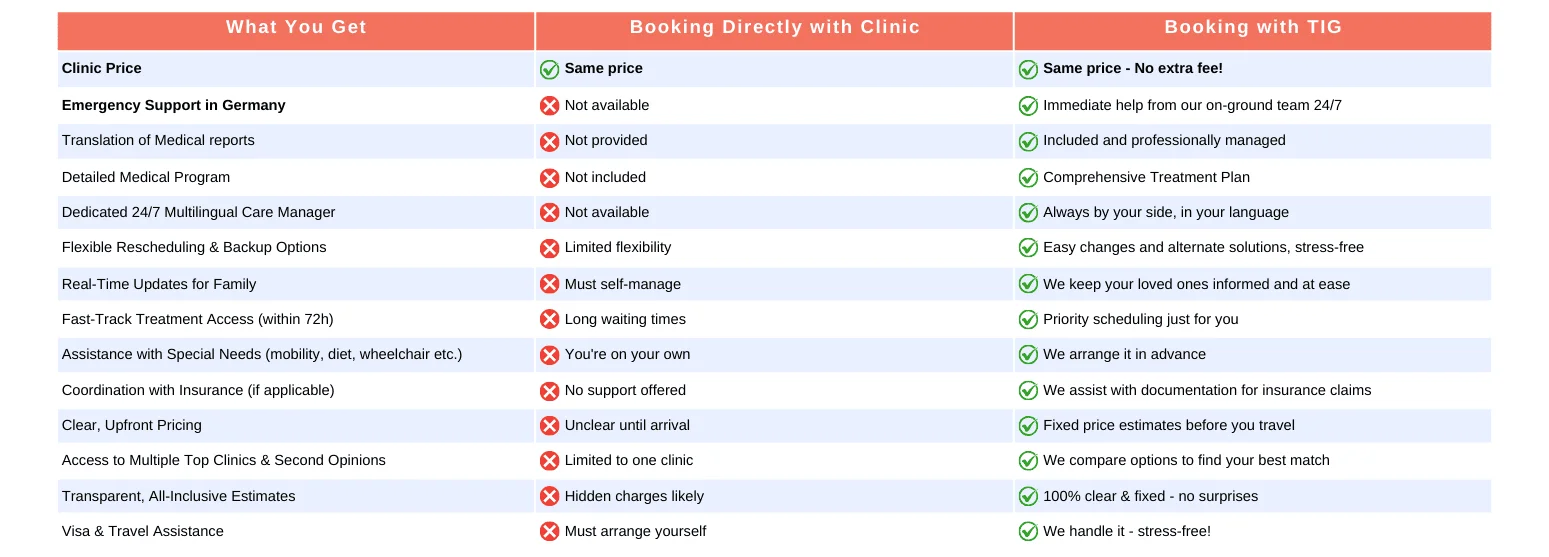
The table above compares the support and coordination services offered through TIG GmbH for TACE treatment of breast cancer in Germany with the arrangements patients may need to manage when booking directly with a clinic.
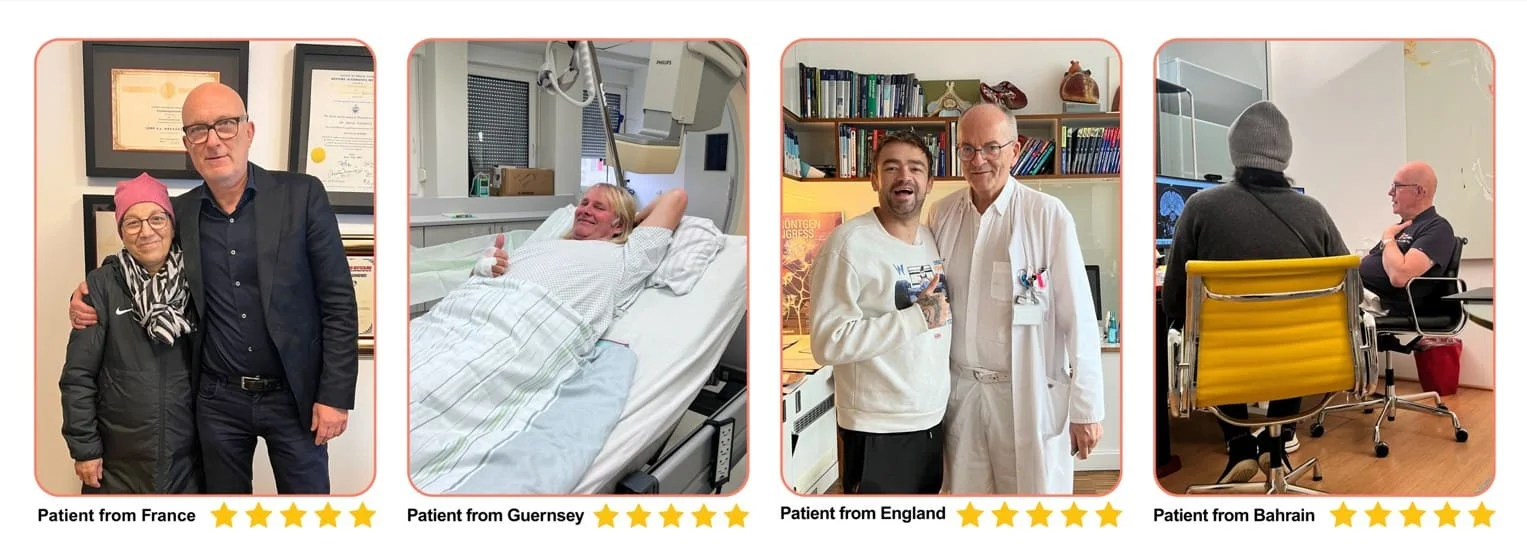
FAQs About Breast Cancer Treatment Costs in Germany
1. How much does breast cancer treatment cost in Germany?
Breast cancer treatment costs vary by therapy. Dendritic cell therapy costs €27,000 per course, while TACP, TACE and TPCE cost about €8,000 to €9,000 per session through TIG GmbH. The cost of standard treatment depends on your individual medical plan.
2. Are there any additional costs for breast cancer treatment in Germany?
Yes. Additional costs can include extra tests, follow-up appointments, travel and visa fees. Some medical services may already be included in your quote, depending on your treatment plan and the hospital.
3. Can the final treatment cost be higher than the estimate?
It can. Additional tests, extra sessions or changes to your treatment plan can increase the final cost, especially in stage 4 breast cancer, where treatment is adjusted to how the cancer responds.
4. Can I get a breast cancer treatment cost estimate before travelling to Germany?
Yes. TIG GmbH coordinates a review of your medical records and helps you get a personal breast cancer treatment cost estimate before you travel to Germany. The quote is based on your medical findings and proposed treatment plan.
5. Does requesting a cost estimate commit me to breast cancer treatment?
No. Sending your reports for a cost estimate is simply a request for information. You can review your estimate and treatment plan before deciding whether to travel.
Frequently asked questions
The oncology team reviews clinical findings and imaging and may recommend further testing, including a repeat biopsy when appropriate. If progression is confirmed, treatment is selected based on disease status, previous therapies, tumor characteristics, treatment tolerance, and available options. Clinical trials may also be considered.
Treatment depends on the disease setting and previous HER2-directed therapies. In metastatic disease, options may include antibody-drug conjugates, tucatinib-based combinations, and other HER2-directed treatments. Previous response, brain metastases, side effects, and current recommendations also guide treatment selection.
For many patients with early-stage HER2-positive breast cancer, HER2-targeted treatment lasts about one year in total. The exact duration depends on the regimen and treatment response. In metastatic disease, treatment generally continues while it remains effective and tolerable, with regular reassessment.
If residual invasive cancer remains after neoadjuvant treatment, postoperative therapy may change. Adjuvant T-DM1 is an established option supported by the KATHERINE trial. Trastuzumab deruxtecan improved invasive disease-free survival over T-DM1 in DESTINY-Breast05 and received a positive CHMP opinion in September 2026, but final European Commission approval is still pending. Treatment is selected based on pathology, previous therapy, and current recommendations.
Treatment depends on the cancer’s stage, tumor size, lymph node involvement, hormone receptor status, and overall clinical situation. Higher-risk early-stage disease often begins with chemotherapy and HER2-targeted therapy before surgery, while smaller or lower-risk tumors may proceed to surgery first. In metastatic disease, options include trastuzumab deruxtecan plus pertuzumab, authorized in the EU in September 2026, and established trastuzumab-based combinations such as THP. The treating team selects the appropriate regimen.
.webp)



.webp)



 (1).webp)
 (1).webp)

.webp)
.webp)