
9 min read 5 clicks
When breast cancer spreads to the liver, treatment options depend on the extent of the disease, previous therapies and overall health. For patients considering treatment in Germany, transarterial chemoperfusion (TACP) may be an option when liver metastases are difficult to control with systemic treatment. This regional approach aims to help manage liver disease in selected patients. Although TACP is not a standard treatment for metastatic breast cancer, its suitability can be assessed by a specialist team based on individual medical findings.
How TACP Delivers Chemotherapy to Breast Cancer Tumours
In transarterial chemoperfusion for breast cancer, an interventional radiologist guides a thin catheter into the arteries supplying liver metastases. Chemotherapy is then infused directly into these vessels. As liver metastases receive much of their blood supply through arteries, this approach delivers chemotherapy directly to the affected area although tumour vascularity varies between lesions and patients [1].
Regional chemotherapy may reduce exposure to some healthy tissues, but the drugs can still enter the bloodstream and cause systemic side effects [1].
Unlike transarterial chemoembolisation (TACE), TACP does not deliberately block the treated blood vessels. TACE combines chemotherapy with embolisation to reduce blood flow to the tumour. The TACE procedure is covered separately.
When TACP May Be Considered for Breast Cancer

Regional treatment is an option for selected patients only, weighed against the full picture of the disease particularly when liver disease is progressing despite previous treatment or when suitable systemic treatment options are limited and its potential role is usually assessed by a multidisciplinary oncology team.
Breast Cancer Liver Metastases
The liver is a common site of breast cancer metastases. TACP treatment for breast cancer liver metastases may be considered when the disease is confined to the liver or mainly affects this organ, particularly when other suitable treatments are limited. Cancer in other organs must also be considered because regional chemotherapy treats only the targeted area [2]. Lung metastases are covered separately.
Breast Cancer That Has Stopped Responding to Systemic Treatment
Regional chemotherapy may be assessed when liver metastases progress despite previous systemic treatments. A 2024 case report described disease regression following hepatic arterial chemotherapy in a patient with breast cancer liver metastases resistant to multiple systemic therapies. However, this individual result cannot predict treatment outcomes for other patients [3].
Eligibility for TACP Treatment
TACP eligibility for breast cancer patients depends on liver involvement, liver function and overall health. Before treatment, the specialist reviews:
- Recent liver MRI or CT and whole-body imaging
- The location of metastases and their arterial blood supply
- Liver function tests and abdominal fluid (ascites)
- Portal vein blood flow, as significant obstruction may increase treatment risks
- Blood counts, kidney function and general health
- Previous cancer treatments and current medications
The breast cancer subtype and available systemic therapies are also considered. In Germany, specialists from different medical fields assess treatment options for advanced breast cancer [4].
TACP Treatment Plan and Number of Sessions
TACP treatment for breast cancer may involve several sessions, depending on the treatment plan and response. The best chemotherapy regimen and schedule for arterial chemotherapy in breast cancer liver metastases remain uncertain [1].
| Part of the plan | Treatment approach |
|---|---|
| Number of sessions | Determined individually; further sessions depend on response |
| Interval | Often several weeks apart, according to the centre's protocol |
| Drugs | May include mitomycin C, gemcitabine or cisplatin, depending on the treatment protocol |
| Response check | MRI or CT and blood tests to monitor response |
| Systemic therapy | Continued or adjusted in consultation with the oncology team |
The specialist confirms the proposed drugs, number of sessions and monitoring schedule after medical review.
TACP Procedure for Breast Cancer
The TACP procedure begins with a specialist consultation and review of previous treatments. MRI or CT scans help identify liver metastases and plan chemotherapy delivery. Angiographic imaging during the procedure helps identify the hepatic arterial anatomy and blood vessels supplying the target lesions.
During treatment, an interventional radiologist inserts a thin catheter into an artery, usually in the groin, under local anaesthesia. Using X-ray guidance and contrast dye, the catheter is directed towards the arteries supplying the tumours, where chemotherapy is infused and the chemotherapy is administered regionally to expose the liver metastases to high local drug concentrations.
After the procedure, patients remain under observation and may receive fluids or medication as needed. Imaging may be performed to assess the treated area or check for complications. Additional imaging may be arranged if a complication is suspected. The treating specialist reviews the findings and explains the next steps before discharge.
Breast Cancer TACP Side Effects, Risks and Aftercare

TACP side effects in breast cancer may include tiredness, nausea, abdominal discomfort, bruising at the catheter site and temporary changes in blood counts or liver function. More serious risks include bleeding, infection, blood vessel injury and damage to the liver or nearby tissues.
Contact the treating team promptly if you experience:
- Fever, chills or sudden illness
- Increasing pain, swelling or bleeding at the catheter site
- Severe abdominal pain or persistent vomiting
- Yellowing of the skin or eyes
Severe bleeding or sudden serious symptoms require emergency medical care.
Follow-up blood tests and imaging help monitor treatment response and complications. Reports are shared with the patient's home oncologist.
Effectiveness and Limitations of TACP for Breast Cancer
TACP aims to help control liver metastases and may help relieve symptoms related to liver involvement in selected patients. However, published evidence mainly comes from studies of arterial chemotherapy, where treatment protocols and patient selection may differ. A survival benefit has not been established for TACP in breast cancer, and it is not part of standard guideline treatment for metastatic breast cancer [1][2].
Systemic therapy remains central to advanced breast cancer care [4]. TACP is not intended to cure metastatic breast cancer, and individual outcomes cannot be predicted and treatment response, duration of disease control and overall outcomes vary according to tumour biology, disease burden, previous treatments and individual patient factors.
TACP Treatment in Germany for International Patients

For international patients seeking metastatic breast cancer treatment in Germany, the process includes:
- Medical reports and imaging are submitted for specialist review.
- A treatment plan is provided if TACP is considered suitable.
- Medical visa guidance.
- Treatment appointments are scheduled.
- Travel-related arrangements are coordinated as needed.
In Frankfurt, Prof. Vogl and his interventional radiology team perform TACP for eligible patients, subject to treatment availability. Treatment in Germany (TIG) assists with medical-record review, appointments and travel arrangements. All medical assessments and treatment decisions remain the responsibility of the treating team.

TACP Treatment Cost in Germany
The TACP treatment cost in Germany depends on the drugs used, number of sessions, imaging and hospital care required. Costs are calculated individually after medical assessment. International patients receive a proposed treatment schedule and cost breakdown before travelling.
Medical Documents Required
The following documents are required for medical review:
- Histopathology report, including hormone receptor and HER2 status
- Recent liver MRI or CT and whole-body imaging
- Previous cancer treatment records
- Recent blood tests, including liver and kidney function
- Current medication list
- A passport copy may also be needed for international patient arrangements.
Patients considering advanced breast cancer treatment in Germany can submit their medical reports to Treatment in Germany (TIG) for specialist review.
References
Why Patients Worldwide Prefer Our Medical Services in Germany – Key Benefits Explained
International patients planning TACP treatment for breast cancer in Germany may need support with hospital consultations, medical documentation, translations, and travel arrangements. TIG GmbH helps coordinate these practical steps and communication with healthcare providers according to each patient's needs and the services agreed.
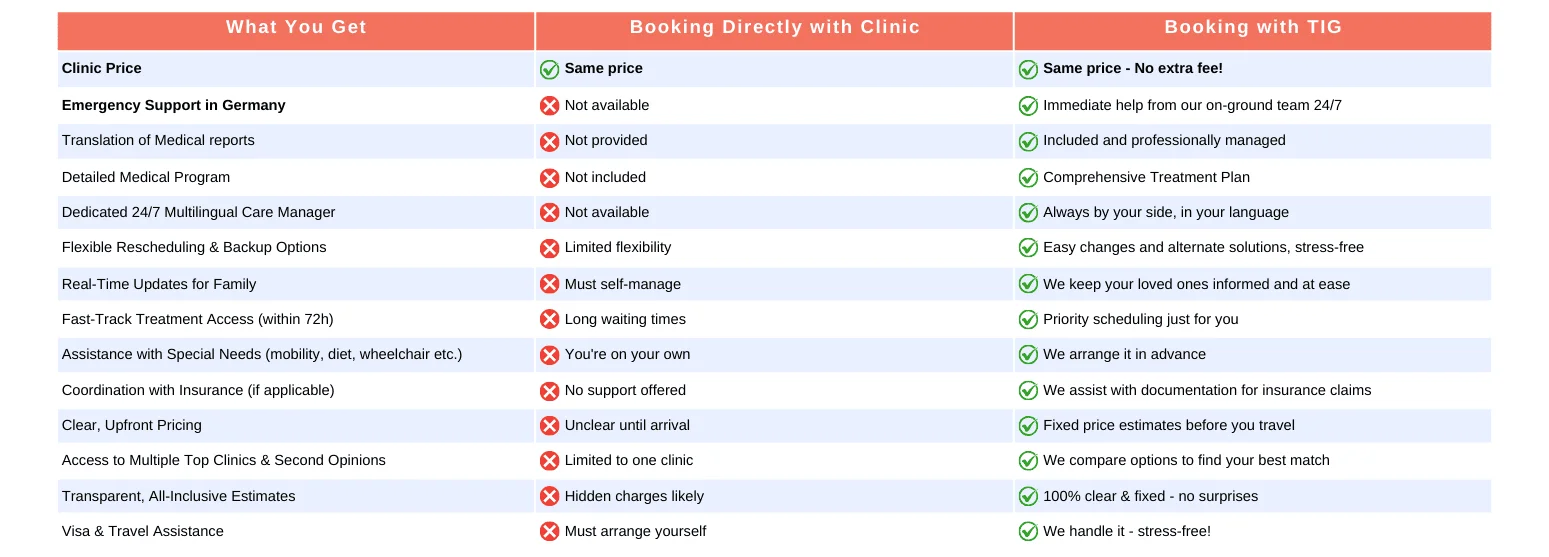
The table above compares the support and coordination services offered through TIG GmbH for TACP treatment of breast cancer in Germany with the arrangements patients may need to manage when booking directly with a clinic.

Frequently Asked Questions About TACP for Breast Cancer
Does TACP for breast cancer cause hair loss?
Hair loss is possible with TACP, depending on the chemotherapy drugs used. Although treatment is delivered directly to the affected area, some medication enters the bloodstream. The treating doctor explains the possible side effects before treatment.
Can I have TACP for breast cancer after a mastectomy, radiotherapy or chemotherapy?
Yes, previous mastectomy, radiotherapy or chemotherapy does not automatically exclude TACP. Eligibility depends on the extent of liver metastases, liver function, overall health and previous treatments. The specialist confirms suitability after reviewing medical records.
Can I fly home after TACP for breast cancer?
Yes, patients can usually fly home once the treating team confirms they are medically fit to travel. The timing depends on recovery, the catheter insertion site and any complications. Follow-up instructions are provided before discharge.
Do I have to stay in Germany between TACP sessions for breast cancer?
Not necessarily. Sessions are normally spaced several weeks apart, so many patients return home between them, while others prefer to stay. The arrangement depends on your treatment schedule, health and travel distance, and is agreed with you before the first trip.
Is there an age limit for TACP in breast cancer?
No fixed age limit is universally established for TACP in breast cancer. Suitability depends on liver function, blood test results, overall health and treatment tolerance. Older patients may be considered after an individual medical assessment.
Is TACP for breast cancer suitable for all subtypes, including triple-negative?
Yes, patients with hormone receptor-positive, HER2-positive or triple-negative breast cancer may be assessed for TACP. However, eligibility depends on liver involvement, previous treatments and overall health. Not every patient with these subtypes will be suitable.
.webp)







.webp)





 (1).webp)
 (1).webp)

.webp)
.webp)