
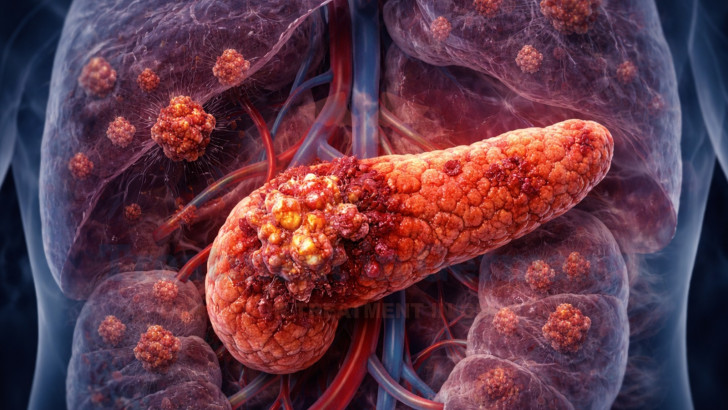
Stage 4 pancreatic cancer treatment options in Germany including TACE and dendritic cell immunotherapy with complete logistical support through Treatment in Germany (TIG).
Stage 4 pancreatic cancer is diagnosed when malignant cells have spread beyond the pancreas to distant organs such as pancreatic cancer with liver metastases, lungs, or peritoneum. At this stage, the disease is considered systemic and requires comprehensive medical planning rather than localized surgery alone. Common symptoms of pancreatic cancer in advanced stages include persistent abdominal or back pain, jaundice, digestive disturbances, unintended weight loss, and fatigue. Because early pancreatic tumors often produce minimal symptoms, diagnosis frequently occurs when the disease has already progressed. Understanding realistic and structured stage 4 pancreatic cancer treatment options in Germany is therefore essential for patients and families seeking clarity and direction.
Germany has become a preferred destination for individuals exploring new and innovative treatments for pancreatic cancer, particularly in complex metastatic cases. Treatment planning is conducted within highly specialized German oncology centers and multidisciplinary German healthcare centers, where each case is reviewed in detail. Interventional oncology procedures are associated with Prof. Vogl, known for advanced image-guided techniques, while immune-based strategies are associated with Prof. Gansauge, recognized for his focused work in cellular immunotherapy. Many patients consult experienced German specialists regarded among the leaders in pancreatic oncology. The combination of structured treatment pathways, latest medical technology in Germany, and coordinated international programs supports affordable treatment for international patients seeking high-level medical evaluation.
Understanding Stage IV Metastatic Pancreatic Cancer

In stage IV metastatic pancreatic cancer, tumor cells spread through the bloodstream or lymphatic system to distant organs. One of the most common scenarios is stage 4 pancreatic cancer with liver metastasis, where secondary lesions develop within the liver. Once metastasis occurs, treatment must address both the primary pancreatic tumor and metastatic deposits. Because pancreatic cancer often grows aggressively, early systemic involvement is common.
The biological behavior of the tumor depends on genetic mutations, molecular markers, and the patient’s overall health status. These variables significantly influence therapy selection. Prognosis in stage 4 pancreatic cancer varies depending on disease burden, tumor biology, and response to systemic therapy. Structured management can help stabilize progression and improve symptom control.
Symptoms and Clinical Presentation
The symptoms of pancreatic cancer in advanced stages often reflect both primary tumor effects and metastatic spread. Patients may experience progressive abdominal pain radiating toward the back, persistent nausea, or early satiety due to digestive obstruction. Jaundice can develop when bile ducts are compressed, leading to yellowing of the skin and dark urine.
When metastasis involves the liver, fatigue and abdominal fullness may increase. Weight loss and general weakness are common systemic manifestations. Because these symptoms overlap with other gastrointestinal conditions, thorough diagnostic assessment is necessary for accurate staging and management.
Advanced Diagnostics in Germany
Precise staging is fundamental before initiating therapy. In Germany, advanced diagnostics include biopsy confirmation, laboratory tumor marker evaluation, and comprehensive imaging using CT, MRI, and PET scans to assess tumor size, vascular involvement, and distant spread. These imaging tools allow detailed visualization of both pancreatic and metastatic lesions.
All diagnostic procedures are supported by latest medical technology in Germany, enabling high-resolution anatomical mapping and treatment planning. Findings are reviewed in multidisciplinary tumor boards within each German oncology center, ensuring collaborative decision-making. This structured approach helps determine whether interventional procedures, systemic chemotherapy, or immune-based strategies are appropriate.
TACE Treatment for Stage 4 Pancreatic Cancer with Liver Metastasis

When stage 4 pancreatic cancer with liver metastasis presents with dominant lesions inside the liver, achieving localized control of these metastatic deposits can become an important part of overall management. Even though advanced pancreatic cancer is systemic, reducing the size and activity of large secondary tumors may help stabilize disease progression and alleviate related symptoms. TACE Treatment, or Transarterial Chemoembolization, is an interventional oncology technique designed to deliver concentrated chemotherapy directly into the arteries supplying metastatic liver tumors. By focusing therapy on the most active tumor sites, this approach aims to decrease tumor burden while limiting unnecessary exposure to the rest of the body. The role of TACE in metastatic pancreatic cancer remains investigational and is considered only in carefully selected patients within specialized centers after multidisciplinary tumor board evaluation.
The procedure is performed in a specialized interventional radiology suite under continuous real-time imaging guidance. A catheter is inserted through an artery in the groin and carefully guided toward the blood vessels feeding the metastatic lesions within the liver. Once optimal positioning is confirmed, chemotherapy is infused directly into the targeted region. This is followed by the administration of embolic particles that partially blocks the blood flow to the tumor, reducing its access to oxygen and nutrients. The combination of localized chemotherapy and blood flow reduction enhances the therapeutic effect while helping to minimize systemic toxicity.
Following TACE Treatment, patients undergo structured monitoring to assess both organ function and treatment response. Liver function tests are performed regularly, and repeat imaging using CT, MRI and PET scans helps evaluate tumor shrinkage or stabilization. Depending on disease behavior and remaining liver reserve, additional treatment sessions may be considered as part of a broader strategy for stage 4 pancreatic cancer treatment options. Careful reassessment within specialized centers ensures safe continuation of therapy. The cost of TACE treatment in Germany typically ranges between €8,000 and €9,000 per session, depending on individualized planning and procedural complexity.
Immunotherapy for Pancreatic Cancer: Dendritic Cell Therapy in Germany
Immunotherapy for pancreatic cancer is an evolving field aimed at enhancing the body’s immune response against malignant cells. The dendritic cell vaccine strategy focuses on stimulating T-cell activation by presenting tumor-associated antigens derived from pancreatic cancer tissue. Because pancreatic tumors often create an immunosuppressive microenvironment, immune-based therapies seek to strengthen systemic immune surveillance.
The treatment begins with the collection of immune cells (monocytes) from the patient’s blood under medical supervision. These cells are isolated in a controlled clinical setting to maintain viability and quality. Strict sterile protocols are followed before laboratory processing to ensure safety and effectiveness.
Collected cells are transferred to an EU GMP certified laboratory, where they are cultured under highly regulated conditions. Within this environment, the monocytes are exposed to tumor-associated antigens specific to pancreatic cancer. This exposure promotes maturation into active dendritic cells capable of presenting cancer markers to T-cells. Comprehensive sterility, purity, and viability testing is performed prior to administration.
Once prepared, the cells are reintroduced into the patient as a personalized immune-based therapy commonly referred to as a dendritic cell vaccine. This therapy is typically integrated with systemic chemotherapy rather than replacing it. Continuous monitoring evaluates immune response and clinical tolerance. This therapy remains investigational and is evaluated in highly selected patients within regulated clinical programs. The cost of Dendritic Cell Therapy in Germany is €27,000, covering immune cell collection, laboratory processing, preparation, and administration.
Combining Innovative Treatment Options in Germany
Management of advanced pancreatic cancer often requires a multimodal strategy. Systemic chemotherapy remains central, while interventional procedures such as TACE may help control liver metastases. Immune-based approaches represent innovative treatment options that may complement standard therapy in selected patients.
Within each German oncology center, multidisciplinary tumor boards evaluate treatment response regularly. Imaging reassessment ensures adaptive therapy adjustments. The integration of systemic and localized treatments reflects the broader goal of stabilizing disease progression and improving patient comfort.
New Clinical Trials for Stage 4 Pancreatic Cancer in Germany
Patients with progressive or treatment-resistant disease may be evaluated for New Clinical Trials for Stage 4 Pancreatic Cancer in Germany. These research programs investigate emerging immunotherapies, targeted agents, and combination strategies under strict regulatory oversight.
Clinical research aligns with international standards referenced by the Canadian Cancer Society, emphasizing patient safety and ethical transparency. Eligibility requires structured evaluation within accredited centers. Participation offers access to additional innovative treatment options in Germany within a controlled research framework.

Limitations and Considerations
Not all patients are suitable candidates for interventional or immune-based therapies. Eligibility depends on liver function reserve, metastatic distribution, immune competence, and overall physical stability. In certain cases, systemic chemotherapy or supportive treatment remains the primary approach. Continuous monitoring through CT scans, MRI, PET scans is essential to evaluate treatment response by the treating physician and detect progression early. Management focuses on disease stabilization, symptom control, and preservation of quality of life rather than guaranteed cure.
International Patient Support and Coordinated Care
For international patients, planning Stage 4 Pancreatic Cancer treatment abroad can involve multiple challenges, including medical report review, hospital coordination, scheduling, travel planning, lodging, and documentation. These steps can be difficult for families already under stress. That is why structured support becomes essential. TIG (Treatment in Germany) at www.treatmentingermany.de ensures seamless coordination and manages complete logistical arrangements for international patients, including travel, lodging, and medical visa for international patients (if required).This support helps patients focus on treatment rather than administrative challenges.
Patients may also get a free consultation with TIG (Treatment in Germany) to receive individualized guidance and coordinated access to specialized oncology centers.
🌍Why Patients Worldwide Prefer Our Medical Services in Germany – Key Benefits Explained:


Stage 4 pancreatic cancer treatment options include systemic chemotherapy, TACE for liver metastases, and immunotherapy in selected cases.
Stage IV metastatic pancreatic cancer means the disease has spread to distant organs such as the liver or lungs.
Common symptoms of pancreatic cancer include abdominal pain, jaundice, weight loss, and digestive issues.
Not always, but liver metastasis is very common in advanced cases. Spread may also occur to lungs or peritoneum.
Immunotherapy for pancreatic cancer is being evaluated in selected advanced cases. Suitability depends on tumor characteristics.
Yes, chemotherapy may reduce tumor size or slow progression in some patients.
Persistent back pain, jaundice, and unexplained weight loss are common warning signs.
Yes, new and innovative treatments for pancreatic cancer are available in Germany in specialized centers.
Some patients may qualify for new clinical trials for stage 4 Pancreatic Cancer in Germany.
TIG, Treatment in Germany, at www.treatmentingermany.de, manages complete logistical arrangements including a medical visa support if required.
Kindly complete the form below, and our dedicated team will reach out to you promptly. We look forward to connecting with you soon!
Trierer Straße, 56072 Koblenz, Germany

Our benefits:

.webp)
 (1).webp)

.webp)
 (1).webp)

.jpg)