
12 min read 6 clicks
When breast cancer spreads to the lungs, treatment depends on the cancer subtype, extent of disease, previous therapies and overall health. Breast cancer with lung metastases treatment in Germany is planned by multidisciplinary teams and mainly involves systemic therapy, which treats cancer throughout the body. Surgery, stereotactic radiotherapy or ablation may also be suitable for selected patients. Specialised approaches, including dendritic cell therapy (DCT), transarterial chemoperfusion (TACP) and transpulmonary chemoembolisation (TPCE), may be assessed individually as part of breast cancer treatment in Germany.
Understanding Lung Metastases from Breast Cancer
Lung metastases develop when breast cancer cells spread through the blood or lymphatic system and form tumours in the lungs. These remain breast cancer cells, so the disease is treated as metastatic breast cancer rather than a new lung cancer. Lung metastases are among the recognised sites of distant breast cancer recurrence [1].
Some patients have no symptoms, while others develop a persistent cough, breathlessness or chest discomfort. Fluid may also collect around the lungs, sometimes requiring drainage to ease breathing. Treatment depends partly on whether there are a few lung metastases suitable for local treatment or more extensive disease requiring systemic therapy [1].
Diagnosis and Assessment of Breast Cancer with Lung Metastases
Before treatment, specialists assess the lung lesions and check for cancer in other organs. Tests may include:
- Chest CT, with PET-CT or other imaging when needed.
- Assessment to distinguish metastases from other lung conditions [2].
- Biopsy when tissue confirmation is needed and safe.
- Repeat hormone receptor and HER2 testing on metastatic tissue when available, as results may change [3].
- Review of symptoms, overall health and disease extent.
In Germany, these findings are discussed in a multidisciplinary tumour board, where medical oncologists, thoracic surgeons, radiation oncologists and interventional radiologists agree on a plan together [4].
Treatment Options for Breast Cancer with Lung Metastases in Germany

Systemic therapy remains the main treatment for breast cancer lung metastases [4]. Surgery, radiotherapy or ablation may be suitable for selected patients with limited lung involvement. Specialised approaches such as DCT, TACP and TPCE require individual assessment However, their clinical evidence, treatment indications and degree of acceptance in breast cancer management differ, and none should be presented as a substitute for established guideline-based systemic therapy.
Systemic Therapy for Breast Cancer Lung Metastases
Systemic therapy depends on breast cancer subtype, previous treatments and overall health. For hormone receptor-positive, HER2-negative disease, hormone therapy with a CDK4/6 inhibitor is preferred for many patients. HER2-positive disease is treated with HER2-targeted medicines. Triple-negative breast cancer may be treated with chemotherapy and immunotherapy for eligible patients whose tumours meet PD-L1 requirements Other options depend on molecular findings, including germline BRCA1/2 status. Antibody-drug conjugates offer additional options for certain patients. Treatment is adjusted according to disease response and tolerance [5].
Surgery, Radiotherapy and Ablation for Lung Metastases
Local treatment may be considered when there are only a few lung metastases and the rest of the disease is under control. Surgical removal may be considered for carefully selected patients with a limited number of lung metastases, particularly when the disease elsewhere in the body is controlled and complete removal is feasible [1].
Stereotactic radiotherapy delivers precisely focused radiation to individual nodules and is used for breast cancer metastases in several organs, including the lungs [6]. Thermal ablation destroys small nodules with heat through a needle [2]. The number, size, position and growth of the lesions decide which option, if any, fits. None of these replaces assessment of the whole body, since isolated lung metastases are less common [1].
Dendritic Cell Therapy for Breast Cancer with Lung Metastases
Dendritic cell therapy is a personalised immune-based approach that uses the patient’s own immune cells. Rather than treating individual lung nodules, DCT aims to stimulate an immune response against breast cancer cells. It may be discussed as an additional measure alongside established treatment for selected patients.
For people with lung involvement, current disease activity, breathing symptoms and earlier treatment all influence whether DCT is sensible. Research into dendritic cell therapy for metastatic breast cancer has shown promising immune-related findings in early studies [7]. For patients with lung metastases, its potential role is assessed individually, as clinical evidence specific to breast cancer lung metastases remains limited. How the vaccine is prepared and given is explained in the article on dendritic cell therapy for breast cancer in Germany.
TACP for Breast Cancer with Lung Metastases
TACP delivers chemotherapy through a catheter into vessels supplying selected lung tumours. It aims to increase local drug exposure without intentionally blocking blood flow. In the lungs, TACP may be considered for selected patients after specialist confirmation. Earlier systemic treatment, the number and position of the nodules, lung and other organ function, and general condition all shape that assessment.
Treatment is planned as a series of catheter-based sessions, with scans used to track the response. Evidence specific to breast cancer lung metastases is limited, TACP is not an established standard treatment for breast cancer with lung metastases [2]. More detail is given in the article on TACP for breast cancer in Germany.
TPCE for Breast Cancer with Lung Metastases
TPCE delivers chemotherapy through the pulmonary circulation to selected lung lesions and then blocks the feeding vessels. Much of the published experience with this specialised lung-directed approach comes from University Hospital Frankfurt. A 2025 Frankfurt study reported encouraging findings for TPCE, used alone or in combination with microwave ablation, in selected patients with breast cancer lung metastases. However, the study was retrospective, and the results reflect selected patients and cannot predict individual outcomes [8]. Suitability depends on the extent of lung involvement, earlier treatment and overall health. The full process is described in the article on TPCE for breast cancer lung metastases in Germany.
Eligibility for Specialised Lung Metastases Treatment
Eligibility for specialised treatment is decided case by case, and meeting general criteria does not mean a treatment will be recommended. Specialists usually weigh:
- The number, size and position of the lung metastases.
- Whether disease is limited to the lungs or also affects the bones, liver or brain.
- Previous treatments and how well they worked.
- Cancer subtype and the systemic options still available.
- Lung function, blood counts, kidney and liver function, and general fitness.
- Current medicines and other conditions, such as heart disease.
DCT, TACP and TPCE are each assessed separately against these factors, because the requirements for an immune-based treatment differ from those for a catheter procedure in the lungs.
Combining Specialised Treatments with Standard Breast Cancer Care
Specialised treatments may be assessed alongside systemic breast cancer therapy. Oncologists and other specialists plan treatment according to disease status, blood results, previous therapies and general health. DCT aims to stimulate an immune response, while TACP and TPCE deliver chemotherapy to selected lung lesions. The clinical benefits of combining these approaches remain uncertain, so treatment decisions require individual assessment. Systemic therapy remains central to metastatic breast cancer care [4].
Monitoring Response to Lung Metastases Treatment

Treatment response is monitored through follow-up scans, compared with imaging taken before treatment. CT scans show whether lung metastases have decreased, remained stable or grown. Specialists also assess symptoms, general health and side effects. If treatment is ineffective or poorly tolerated, doctors may:
- Adjust or change systemic therapy.
- Pause or stop local or specialised treatment.
- Consider another suitable approach.
International patients may share follow-up reports and scans with their oncologist at home.
Side Effects of Lung Metastases Treatment
Side effects vary according to the treatment used. Possible effects include:
- Stereotactic radiotherapy: Tiredness, cough or lung inflammation (radiation pneumonitis).
- Thermal ablation: Pain, bleeding, fluid around the lung or a collapsed lung.
- DCT: Temporary fever, tiredness or discomfort at the injection site.
- TACP and TPCE: Bleeding, infection, blood vessel injury or reactions to chemotherapy or contrast agents. Lung complications may also occur.
Patients should report persistent fever or worsening symptoms to their treating team. Severe breathlessness, sudden chest pain or coughing up blood requires urgent medical assessment.
Clinical Evidence for Breast Cancer with Lung Metastases Treatments
Clinical evidence varies between established and specialised treatments [2] [4] [5] [7] [8]. Results depend on disease characteristics, previous therapies and overall health. No treatment guarantees tumour response or cure.
| Approach | Evidence status for breast cancer lung metastases |
|---|---|
| Systemic therapy | Foundation of care in national and international guidelines |
| Surgery, stereotactic radiotherapy, thermal ablation | Local treatments that may be suitable for selected patients with limited metastases |
| Dendritic cell therapy (DCT) | Encouraging early immune-related findings, lung-specific clinical benefit remains unclear |
| TACP | Specialised regional treatment with limited clinical evidence for breast cancer lung metastases |
| TPCE | Specialised lung-directed treatment with findings from retrospective clinical research |
Specialised treatments may be considered for selected patients alongside established breast cancer care.
Breast Cancer Lung Metastases Treatment in Germany for International Patients

International patients considering breast cancer lung metastases treatment in Germany can submit medical reports for specialist review. TIG GmbH helps identify suitable German specialists and coordinate consultations and treatment arrangements. Medical decisions remain with the German treating team.
Steps to Arrange Treatment in Germany
- Medical reports, imaging and treatment history are submitted for review.
- German specialists assess the disease and treatment options.
- The treating team recommends suitable treatment.
- Consultations and treatment appointments are scheduled when appropriate.
- Medical document, invitation letter and visa guidance is provided when needed.
- Treatment appointments and travel arrangements are coordinated.
Breast Cancer with Lung Metastases Treatment Cost in Germany
Thw cost of breast cancer with lung metastases depends on the recommended therapy, required tests and number of procedures. A personalised estimate can be prepared after specialist assessment. Further details are available in the guide to the cost of lung metastases treatment.
Medical Records Required for Specialist Review
The following records help specialists assess treatment options:
- Pathology report with hormone receptor and HER2 results.
- Recent chest CT and previous scans.
- Details of previous treatments.
- Blood tests and lung function results, if available.
- Current medications and relevant medical conditions.
Patients considering treatment in Germany can submit medical reports to TIG GmbH for specialist review.
References
Why Patients Worldwide Prefer Our Medical Services in Germany – Key Benefits Explained
International patients planning breast cancer treatment in Germany may need support with hospital consultations, medical documentation, translations, and travel arrangements. TIG GmbH helps coordinate these practical steps and communication with healthcare providers according to each patient's needs and the services agreed.
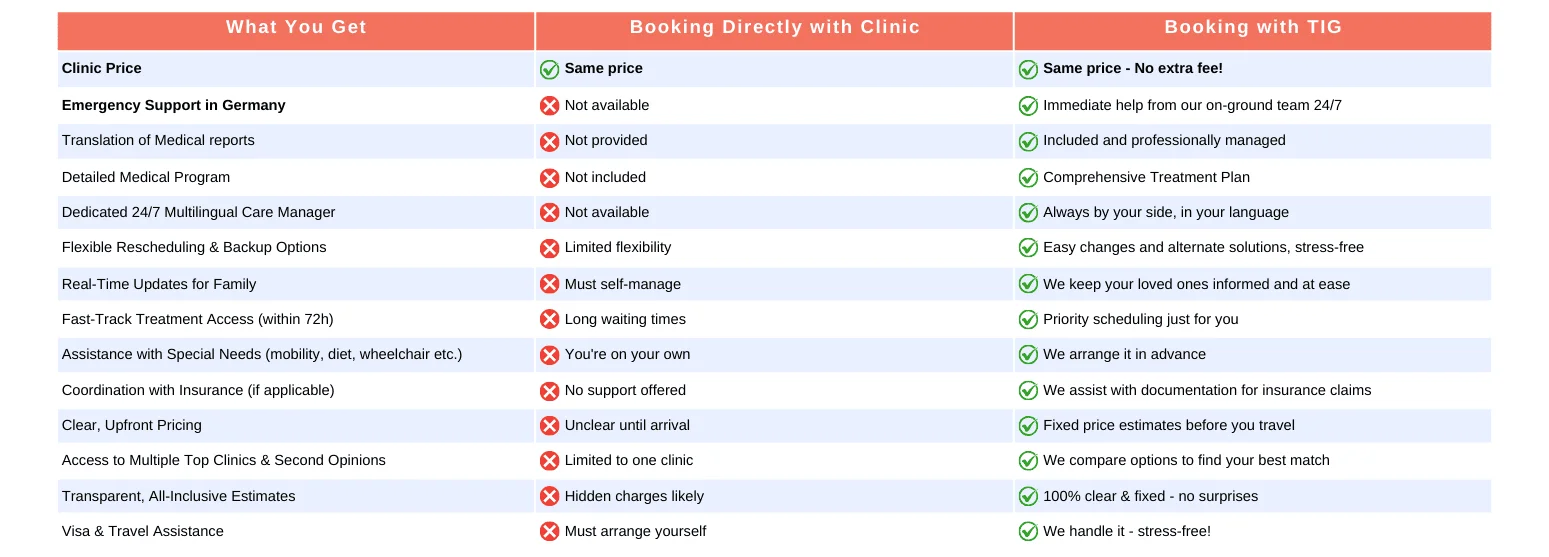
The table above compares the support and coordination services offered through TIG GmbH for breast cancer treatment in Germany with the arrangements patients may need to manage when booking directly with a clinic.

FAQS About Breast Cancer Lung Metastases Treatment in Germany
1. What is the treatment for breast cancer that has spread to the lungs?
Breast cancer that has spread to the lungs is mainly treated with systemic therapy, including hormone therapy, chemotherapy or targeted medicines. Surgery, radiotherapy or ablation may also be considered for selected patients.
2. Can breast cancer lung metastases be treated without surgery?
Yes. Breast cancer lung metastases can often be treated without surgery. Systemic therapy remains the main approach, while stereotactic radiotherapy or thermal ablation may help treat selected lung lesions when appropriate.
3. Can dendritic cell therapy be used for breast cancer lung metastases?
Yes, dendritic cell therapy may be assessed for selected patients. It aims to stimulate an immune response against cancer cells, although lung-specific clinical benefits remain unconfirmed.
4. Can TACP treat lung metastases from breast cancer?
TACP may be considered for selected patients with lung metastases from breast cancer. It delivers chemotherapy through a catheter towards targeted tumours, although clinical evidence for this particular use remains limited.
5. Can breast cancer lung metastases be cured?
Breast cancer lung metastases are usually not considered curable, but treatment may control the disease and relieve symptoms. Selected patients with limited metastases may also benefit from local treatments alongside systemic therapy.
6. Can DCT, TACP or TPCE be combined with chemotherapy?
DCT, TACP or TPCE may be considered alongside chemotherapy for selected patients. The treating team evaluates potential risks, previous treatments and disease status, as the benefits of specific combinations remain uncertain.
7. Can international patients receive treatment for breast cancer lung metastases in Germany?
Yes. International patients can seek breast cancer lung metastases treatment in Germany. German specialists review medical reports, imaging and treatment history before recommending suitable options and arranging consultations based on individual eligibility.
.webp)







.webp)






 (1).webp)
 (1).webp)

.webp)
.webp)