

A breast cancer second opinion in Germany brings specialist review of pathology, imaging, biomarker results, and treatment history together to reassess a diagnosis or proposed treatment plan. Rather than replacing an existing care team, this kind of review offers an additional, evidence-based assessment that can help determine whether a recommendation remains appropriate, particularly when a diagnosis is complex, a major surgical decision is pending, or the disease has recurred. In Germany, this review can be coordinated through breast centers certified by the German Cancer Society (DKG), where multidisciplinary tumor boards bring surgery, medical and radiation oncology, radiology, and pathology together to review a case. Published studies show that second opinions sometimes support the original plan and sometimes change it, so results cannot be predicted for any individual patient.
Breast Cancer Treatment in Germany for International Patients
A breast cancer second opinion in Germany can help clarify a complex diagnosis or major treatment decision. Specialists review pathology, imaging, biomarker results, and treatment history to assess whether the diagnosis and proposed treatment plan fit the patient's clinical circumstances. A review may be useful after diagnosis, before major surgery, or when treatment recommendations are unclear or the disease has recurred or progressed.
The aim is to provide an additional evidence-based assessment that can confirm or clarify the existing diagnosis and treatment plan, rather than automatically replace the patient's current care team.
Reassessing Breast Cancer Diagnosis and Treatment Recommendations

A second opinion after a breast cancer diagnosis or treatment recommendation made abroad begins with a review of the pathology and imaging. Specialists assess the tumor type and subtype, grade, and histological features and compare them with the available breast imaging, such as mammography and ultrasound, to see whether the findings are consistent. MRI may also be reviewed or recommended when it is clinically indicated, for example to clarify the extent of disease or answer a specific diagnostic question.
Estrogen receptor (ER), progesterone receptor (PR), and HER2 status are reviewed because they can influence endocrine therapy and decisions about HER2-positive breast cancer treatment. When pathology or biomarker findings are uncertain or discordant with the clinical and imaging findings, specialists may request additional pathology review, repeat biomarker testing, or other diagnostic investigations when clinically appropriate [1] [2].
When breast cancer has spread to other organs, whether at first diagnosis or after a recurrence, the ESMO metastatic guideline recommends a biopsy of a metastatic lesion, when feasible, to confirm the diagnosis and reassess ER, PR, and HER2 status. Receptor status can differ from the original tumor, and such differences can influence treatment choices [3].
Lymph-node findings and the overall extent of disease are considered alongside pathology and imaging because they contribute to breast cancer staging and treatment planning. For patients who have already received surgery, systemic therapy, or radiation, the review also considers previous treatment and the disease's response, since this information can influence subsequent management [1].
A meaningful review depends on access to the underlying clinical material, not only written summaries. International patients may be asked to provide:
- Original pathology slides or tissue blocks
- Imaging studies themselves, such as mammography, ultrasound, or MRI, rather than reports alone
- Pathology and biomarker reports
- Records of previous surgery, systemic treatment, radiation, and treatment response
Patients should ask the receiving center in advance which records and imaging formats it requires, since the original material lets the team assess the evidence directly rather than rely solely on earlier reports.
Findings From Selected Breast Cancer Second-Opinion Studies
Studies of breast cancer second opinions report different findings depending on the setting and how diagnoses and treatment recommendations are assessed. A German patient survey examined agreement between first and second opinions, while a study at the Netherlands Cancer Institute assessed differences in diagnosis and treatment plans. Because the studies used different methods and patient groups, their results are not directly comparable or predictive of an individual patient's outcome [4] [5].

The table above summarizes the study settings, what was reassessed, and the main findings reported in each study.
Reviewing Breast Cancer Treatment and Surgical Decisions in Germany

A diagnosis review asks whether the pathology and imaging have been interpreted correctly, while a treatment review considers whether the recommended strategy is appropriate for the individual patient.
A specialist review may assess [1] [2]:
- Whether breast-conserving surgery or mastectomy is appropriate based on tumor characteristics, disease extent, and other clinical factors, and whether axillary surgery is indicated, including sentinel lymph node biopsy, axillary lymph node dissection, or omission of sentinel lymph node biopsy in selected patients.
- Whether immediate or delayed breast reconstruction should be considered alongside the planned cancer treatment.
- Whether systemic treatment should be given before surgery (neoadjuvant) or after surgery (adjuvant), based on tumor characteristics, biomarkers, and disease extent.
A treatment review may support the existing recommendation or identify aspects that warrant further discussion. It is intended to provide an evidence-based assessment of the individual case and can be coordinated with the patient's existing treatment team.
Treatment Planning by Breast Cancer Situation
How a specialist review is approached differs by clinical situation.
- Newly diagnosed breast cancer: review usually focuses on confirming the diagnosis and assessing the proposed initial treatment strategy before major decisions are made.
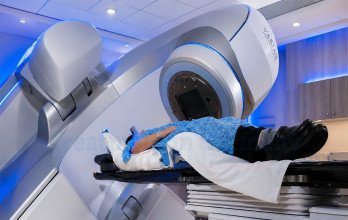
- Early-stage breast cancer: review may consider the surgical approach, the indication for radiotherapy for breast cancer, and whether systemic treatment is appropriate, depending on the tumor characteristics and the patient's clinical situation.
- Locally advanced breast cancer: reassessment often considers neoadjuvant treatment sequencing and coordinated, multidisciplinary planning.
- Recurrent breast cancer: review focuses on how the current recurrence relates to previous treatment and which options remain appropriate.
- Metastatic breast cancer: reassessment considers the overall treatment strategy within a multidisciplinary approach, consistent with current ESMO guidance for this setting [3].
- Complex or uncommon cases: specialist review may help clarify the diagnosis, treatment sequence, or suitability of available options when the clinical situation is less straightforward.
Coordinated Breast Cancer Care Through a German Breast Center
Germany has an established certification framework for breast cancer centers, with defined structural, quality, and interdisciplinary requirements. The certification framework supports interdisciplinary cooperation among specialties such as breast surgery, medical and radiation oncology, radiology, and pathology. The German Cancer Society (DKG) and its certification body, OnkoZert, oversee these requirements [6] [7].
Depending on the clinical situation and the center's procedures, specialists may discuss imaging, pathology, biomarkers, treatment history, and other relevant findings in a multidisciplinary tumor board, which allows treatment options and sequencing to be considered together rather than in isolation [2] [3].
German studies have found higher fulfillment of selected guideline-based quality indicators in centers certified under Germany's breast-center certification framework, although observational research cannot establish that certification alone causes better outcomes [6] [8].
In a multidisciplinary breast cancer tumor board, each specialist contributes a distinct perspective. Breast surgeons assess surgical options, medical oncologists review systemic treatments, radiation oncologists evaluate radiotherapy, radiologists interpret imaging findings, and pathologists assess tumor type, grade, receptor status, and other biomarkers.

The table above summarizes the roles of specialists involved in coordinated breast cancer treatment planning.
Continuing Breast Cancer Care After Treatment in Germany
After treatment or a specialist review in Germany, patients can receive a summary of their findings, recommendations and care to share with their home-country medical team. Records may include:
- Treatment summary and specialist recommendations.
- Pathology reports, imaging and relevant test results.
- Surgery, medication or radiotherapy details.
- Updated biomarker results, if retested.
Follow-up may involve imaging, treatment-response monitoring and further consultations. Remote review of new results depends on the treating center and clinical requirements.
For international patients, Treatment in Germany (TIG) can help coordinate medical record reviews and communication with German healthcare providers. treatment costs for breast cancer treatment in Germany vary according to the proposed plan, hospital and individual needs; an estimate can be provided after medical review. Further specialist assessment may be considered if the disease changes or a complex treatment decision arises.
References
1. S3-Leitlinie Mammakarzinom, Version 5.1 (Leitlinienprogramm Onkologie/AWMF, June 2026)
7. OnkoZert. International Certification (on behalf of the German Cancer Society).
Why Patients Worldwide Prefer Our Medical Services in Germany – Key Benefits Explained
International patients planning breast cancer treatment in Germany may need support with hospital consultations, medical documentation, translations, and travel arrangements. TIG GmbH helps coordinate these practical steps and communication with healthcare providers according to each patient's needs and the services agreed.

The image above summarizes the support and coordination services available through TIG GmbH for international patients.


















.webp)
 (1).webp)
.webp)
.jpg)

 (1).webp)
.jpg)