
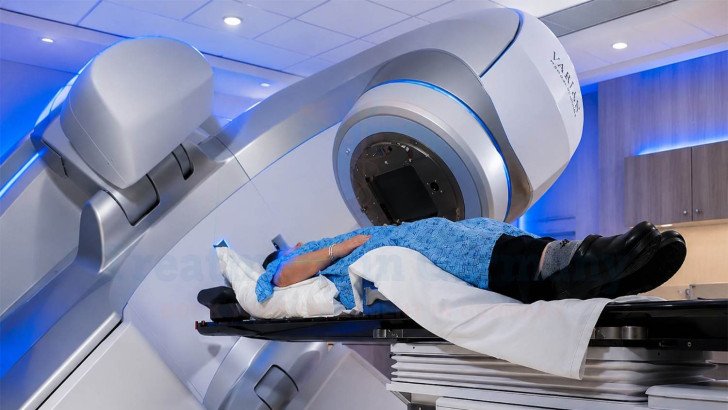
A guide to radiation therapy for breast cancer treatment in Germany, covering when radiation is recommended after breast-conserving surgery or mastectomy, the main techniques (EBRT, partial-breast irradiation, brachytherapy), typical treatment schedules, side effects and recovery, and how care is coordinated among German radiation oncology teams, plus answers to common patient questions.
Radiation Therapy for Breast Cancer in Germany: Treatment and Side Effects
Breast cancer radiation therapy in Germany is an established part of treatment after breast-conserving surgery and is also used in selected patients after mastectomy or when regional lymph nodes need treatment. Whether radiation is recommended, which areas are treated and how many sessions are needed depend on the type of surgery, the tumor’s characteristics, lymph-node involvement, and the risk of recurrence.
Role of Radiation Therapy in Breast Cancer Treatment

After surgery for breast cancer, including breast-conserving surgery, radiation to the remaining breast tissue is standard for most patients with invasive cancer because it meaningfully lowers the risk of local recurrence
After mastectomy, radiation is not required for every patient. It is recommended in higher-risk situations, including locally advanced disease, incomplete resection when further surgery is not possible, and certain cases with axillary lymph-node involvement. For patients with one to three positive lymph nodes, the decision depends on additional risk factors. After neoadjuvant systemic therapy, the decision also takes into account the clinical stage before treatment and the pathological response at surgery, including any cancer remaining in the breast or lymph nodes.
Radiation to the regional lymph nodes may be added when lymph nodes are involved or other risk factors are present. Depending on the indication, it can include selected levels of the axilla, the supraclavicular and infraclavicular regions and, in some cases, the internal mammary nodes. This can reduce the risk of recurrence in higher-risk patients, with a modest increase in the risk of lymphedema [2].
In locally advanced disease, radiation is usually combined with surgery and systemic therapy. In recurrent or metastatic breast cancer, it may also be used in selected situations for local control or symptom relief [1].
Types of Radiation Therapy for Breast Cancer

Several radiation techniques are used in breast cancer care. The choice depends on the extent of surgery, the areas that need treatment, and the patient’s anatomy.
External Beam Radiation Therapy
- External beam radiation therapy (EBRT) is the main form of radiation used in breast cancer care. A linear accelerator delivers radiation from outside the body to the treatment area over a series of sessions.
- Whole-breast irradiation treats the remaining breast after breast-conserving surgery, while chest-wall irradiation is used after mastectomy and may include a reconstructed breast. When indicated, the treatment field can also include regional lymph nodes.
Modern EBRT is planned on CT images, and the delivery technique is chosen according to the treatment area, anatomy and dose limits for nearby organs. Techniques such as 3D conformal radiotherapy, IMRT and VMAT may be used. For left-sided breast cancer, deep-inspiration breath-hold (DIBH) or another respiratory-gating technique is often used to reduce radiation exposure to the heart [1].
Partial-Breast Irradiation
Partial-breast irradiation treats only the area around the tumor bed and may be used instead of whole-breast irradiation in carefully selected patients with a low risk of local recurrence. According to the current German S3 guideline, patients should meet all of the following criteria.
- Age 50 or older.
- Tumor smaller than 3 cm.
- Node-negative (pN0).
- Hormone-receptor-positive (ER/PgR-positive), HER2-negative.
- Grade 1–2.
- Completely resected (R0).
- Non-lobular histology.
Partial-breast irradiation can be delivered with external beam radiation over one to three weeks, depending on the schedule, or with interstitial multicatheter brachytherapy. The radiation oncology team confirms whether a patient is eligible [1].
Brachytherapy
Brachytherapy places a radiation source directly into or next to the tumor bed, usually through thin catheters inserted into the breast. This concentrates the dose where it is needed and limits exposure of the surrounding healthy tissue.
Interstitial multicatheter brachytherapy can be used for partial-breast irradiation in appropriately selected patients and may be considered for a tumor-bed boost in some cases [1]. In the GEC-ESTRO trial of selected patients with early breast cancer, 10-year local recurrence after multicatheter brachytherapy remained low and was non-inferior to whole-breast irradiation [3].
Breast cancer radiation can be delivered in several ways depending on the treatment area and clinical indication. External beam radiation can treat the remaining breast or chest wall after surgery, while regional nodal irradiation targets nearby lymph-node areas when indicated. Partial-breast irradiation focuses on the tumor bed in selected lower-risk patients and usually requires fewer treatment sessions. Brachytherapy delivers radiation from within the breast and may be used for a tumor-bed boost or selected partial-breast treatment.

Breast Cancer Radiation Treatment Planning Process

Before the first session, the radiation oncology team reviews the surgical pathology report, previous imaging and details of any systemic therapy, together with input from the wider multidisciplinary team. This determines which areas need treatment and which technique is most suitable.
- CT simulation: The patient lies on the treatment table, usually on the back with the arm raised, supported by positioning devices that keep the position the same for every session. A CT scan taken in this position maps the treatment area in three dimensions. For left-sided breast cancer, this session may also check whether deep-inspiration breath-hold is suitable; holding a controlled deep breath moves the heart further away from the treatment area and can reduce its radiation dose.
- Target and organ delineation: Using the CT images, the radiation oncologist outlines the area to be treated and nearby healthy structures, such as the heart, lungs and opposite breast, so that their dose can be kept as low as possible.
- Plan development and approval: Medical physicists then develop the treatment plan, which the radiation oncologist reviews and approves before treatment begins.
- Image-guided verification: At treatment sessions, the patient’s position is checked with imaging to make sure the radiation is delivered as planned.
Breast Cancer Radiation Treatment Schedule and Duration

Breast radiation is usually given once a day, five days a week, although the overall length of treatment depends on the fractionation schedule and technique.
Hypofractionated Radiation
Hypofractionated whole-breast or chest-wall irradiation uses larger daily doses over a shorter overall time than conventional schedules, while treating the same area [1].
Moderate hypofractionation: About 40 Gy(Gray) in 15–16 fractions over three weeks is the recommended standard in the current German S3 guideline.
Ultrahypofractionation: 26 Gy in 5 fractions over one week can be used in selected patients. Patients should be informed about the available long-term evidence and the possibility of late effects before treatment.
Tumor-bed boost: After breast-conserving surgery, a tumor-bed boost is recommended for patients aged 50 years or younger and should be considered in older patients with an increased risk of local recurrence. It can be given after whole-breast irradiation (sequential boost) or at the same time (simultaneously integrated boost, SIB).
Side Effects and Recovery After Breast Cancer Radiation

Side effects vary with the area treated, the technique and dose, whether lymph-node areas were included, and patient-related factors such as other treatments given at the same time.
Common Short-Term Side Effects
- Skin changes are among the most common effects. They range from mild redness and dryness to, less often, peeling or breakdown of the skin, particularly in skin folds. They usually build up gradually, are most noticeable toward the end of treatment and may peak in the first one to two weeks after it ends.
- Swelling, heaviness or tenderness in the treated breast or chest wall is common and usually settles after treatment.
- Fatigue is frequently reported. It is usually mild to moderate and tends to build up over the course of treatment.
Possible Long-Term Effects
- Tissue changes: The treated skin and underlying breast tissue may remain slightly firmer than before, and some patients notice a change in breast size, shape or texture, particularly after a tumor-bed boost.
- Lymphedema: The risk can increase when regional lymph nodes are irradiated, especially when radiation is combined with more extensive lymph-node surgery.
- Heart and other organs: Effects on nearby organs are uncommon with modern planning but cannot be ruled out completely. Long-term cardiac risk increases with the radiation dose received by the heart, and the absolute risk also depends on a patient’s baseline cardiovascular health. This is why heart-sparing planning is used when appropriate [4].
- Rare long-term effects: include lung tissue changes that are usually seen only on imaging and, years later, a second cancer caused by radiation. Total dose, technique, smoking, and other health conditions influence this risk.
Recovery and Follow-Up Care
During treatment, the care team regularly checks the skin and overall tolerance and advises on supportive care, such as gentle, fragrance-free moisturizers and sun protection for the treated area. After treatment ends, most short-term effects improve gradually over the following weeks, although the time needed varies between patients.
Follow-up appointments assess healing and review any ongoing symptoms. Patients are also told which symptoms should be checked between scheduled visits, including:
- New or worsening swelling.
- Non-healing skin breakdown.
- New lumps or worsening pain.
Radiation Therapy Alongside Other Breast Cancer Treatments
Radiation is usually given after surgery, once the patient has recovered sufficiently for radiotherapy. When breast cancer chemotherapy is needed as adjuvant treatment, radiation is commonly given after chemotherapy rather than at the same time. The exact sequence depends on the systemic treatment, tumor characteristics, recovery from surgery, and the overall treatment plan.
Hormone and targeted therapy for breast cancer may be given during or after radiation. For HER2-directed and other targeted therapies, the timing relative to radiation depends on the specific drug and is decided by the treating oncology team [1].
Breast Cancer Radiation Therapy in Germany: Specialist Care
In Germany, breast cancer radiation therapy is planned as part of multidisciplinary cancer care. The radiation therapy plan is based on the patient’s diagnosis, previous treatment, tumor characteristics and individual clinical needs. For international patients seeking breast cancer radiation therapy in Germany, treatment planning can begin with a review of existing medical records, pathology and imaging.

How Is Breast Cancer Radiation Therapy Planned and Given in Germany?
The process usually includes medical-record review, a planning CT and an individual treatment plan. Radiation is generally given as an outpatient over several sessions with regular monitoring. Treatment cost for breast cancer radiation therapy in Germany varies by treatment plan, number of sessions and technique.
For a broader overview of breast cancer treatment in Germany, patients can review the main treatment approaches and specialist-care pathways
TIG GmbH (Treatment in Germany) helps international patients connect with German radiation oncologists and specialized cancer centers. TIG collects medical records and forwards them to German specialists for review and, where appropriate, coordinates specialist consultations and helps organize the next steps toward radiation therapy. The German medical team remains responsible for diagnosis, radiation therapy recommendations and patient care, and no specific treatment outcome can be guaranteed.
References
Why Patients Worldwide Prefer Our Medical Services in Germany – Key Benefits Explained
International patients planning breast cancer treatment in Germany may need support with hospital consultations, medical documentation, translations, and travel arrangements. TIG GmbH helps coordinate these practical steps and communication with healthcare providers according to each patient's needs and the services agreed.

The table above compares the support and coordination services offered through TIG GmbH with the arrangements patients may need to manage when booking directly with a clinic.














.webp)
 (1).webp)
.webp)
.jpg)

 (1).webp)
.jpg)