

Triple-Negative Breast Cancer treatment in Germany including dendritic cell therapy, TACE, TACP, and complete logistical support through TIG.
Triple-Negative Breast Cancer Treatment in Germany: Pathways and Modern Options
Triple-negative breast cancer (TNBC) is defined by the absence of estrogen and progesterone receptor expression and the absence of HER2 overexpression or amplification. Endocrine therapy and treatments indicated for HER2-positive breast cancer are therefore not standard options for TNBC. In Germany, treatment follows the national S3 guideline and is built around chemotherapy, with immunotherapy, PARP inhibitors and antibody-drug conjugates considered for selected patients according to disease stage, biomarkers, treatment history and approved indications.
For stage II to III or high-risk operable disease, treatment in Germany typically begins with neoadjuvant therapy before surgery, combining chemotherapy with pembrolizumab when indicated. Smaller, node-negative tumors may follow different protocols, and postoperative management, including adjuvant drug therapy or radiation, depends on surgical findings and residual disease status [1] [2].
Planning Treatment for Triple-Negative Breast Cancer
Treatment planning for TNBC starts with defining how far the disease has spread and which tumor features affect treatment selection.
Several factors shape the plan for each patient, and not every patient with TNBC follows the same treatment pathway:
Factor | Why it matters |
|---|---|
Tumor size and lymph-node status | Helps determine whether chemotherapy combined with immunotherapy before surgery is appropriate and influences surgical planning [1][3]. |
Disease setting (localized, locally advanced, or metastatic) | Sets the overall treatment goal, from treatment with curative intent in localized disease to disease control in advanced disease [1]. |
Germline BRCA1/2 mutation status | A pathogenic or likely pathogenic variant may identify patients eligible for adjuvant olaparib after chemotherapy is completed [1][4]. |
PD-L1 expression (in recurrent or metastatic disease) | Helps determine eligibility for certain pembrolizumab-based treatments; the required PD-L1 level depends on the treatment and disease setting [2]. TROP2-directed antibody-drug conjugates have separate eligibility criteria [5][6]. |
Previous treatment received and response to it | Helps doctors decide which treatments are still appropriate and plan the next steps based on how the cancer has responded. |
These factors determine both treatment choice and sequence. Higher-risk operable TNBC often involves systemic treatment before surgery, while smaller, lower-risk tumors may be treated with surgery first. Advanced or recurrent disease relies more heavily on systemic therapy, with surgery and radiation used more selectively [1].
Treatment Before Breast Cancer Surgery
For many patients with operable TNBC, particularly those with larger tumors or lymph-node involvement, treatment begins with neoadjuvant (preoperative) chemotherapy rather than surgery. Giving chemotherapy first can shrink the tumor, sometimes making breast-conserving surgery possible, and lets the medical team see directly how the cancer responds.
In Germany, pembrolizumab may be combined with neoadjuvant chemotherapy in eligible patients with high-risk early-stage TNBC and continued as a single agent after surgery, in line with the approved indication and current guidance. PD-L1 testing is not required for this early-stage regimen, which is based on the KEYNOTE-522 trial.
Response is monitored clinically and with imaging during treatment, but the key assessment comes after surgery. Pathological examination shows whether a pathological complete response was achieved or invasive cancer remains as residual disease, which guides postoperative treatment [1] [2] [3].
Treatment After Breast Cancer Surgery
What happens after surgery depends largely on the findings in the surgical specimen. Postoperative treatment may include:
- Continued pembrolizumab: Patients who received pembrolizumab before surgery generally continue it on its own after surgery to complete the planned course, unless the disease progresses or side effects become unacceptable. This applies whether or not residual disease is found [2] [3].
- Capecitabine for residual disease: For patients with TNBC who have residual invasive disease after neoadjuvant chemotherapy containing an anthracycline and a taxane, adjuvant capecitabine is recommended in current German guidance [1][7]. When pembrolizumab was also given before surgery, the multidisciplinary team should decide on the choice and sequence of postoperative treatment, because the evidence for combining capecitabine with continued pembrolizumab remains limited.
- Olaparib for germline BRCA1/2 carriers: Patients with a pathogenic or likely pathogenic germline BRCA1 or BRCA2 variant and high-risk HER2-negative early breast cancer may be eligible for one year of adjuvant olaparib after local treatment and (neo)adjuvant chemotherapy [1] [4]. For TNBC, eligibility depends on the treatment sequence and, after neoadjuvant therapy, on the presence of residual invasive disease.
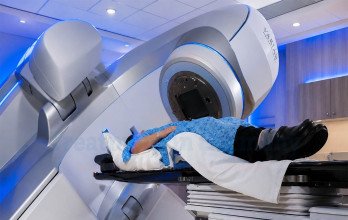
- Radiation therapy: Radiation is not determined by TNBC status alone. The decision depends on the type of surgery, tumor and nodal findings, and other standard indications for breast radiotherapy [1].
Systemic Treatment Options for Triple-Negative Breast Cancer

Systemic treatment acts throughout the body and plays a central role in TNBC care. Chemotherapy, immunotherapy, PARP inhibitors and newer antibody-drug conjugates each have defined roles depending on the disease setting, biomarkers and previous treatment.
Evidence for a treatment in one TNBC setting does not automatically apply to another. Treatment selection depends on the disease setting, previous therapy, applicable authorization and available clinical evidence.
Chemotherapy and Immunotherapy in TNBC
Chemotherapy: Chemotherapy is a central part of TNBC treatment across many disease stages. In early disease, it may be given before surgery, while postoperative systemic treatment depends on the treatment already received and the findings at surgery. Chemotherapy is also a core part of treatment for recurrent or metastatic disease. The specific drugs and schedule depend on disease extent, previous treatment and overall health [1].
Treatment tolerance: Because chemotherapy and immunotherapy can cause significant adverse effects, the oncology team considers organ function, other medical conditions, previous treatment-related toxicities, and the patient's ability to tolerate the proposed regimen.
Immunotherapy: Pembrolizumab has an established role in defined TNBC settings:
- Early-stage disease: Pembrolizumab can be combined with chemotherapy in selected patients with high-risk early-stage TNBC. PD-L1 testing is not required for this indication [3].
- Locally recurrent unresectable or metastatic disease: Pembrolizumab can be combined with chemotherapy for tumors with a PD-L1 combined positive score (CPS) of 10 or higher, in patients who have not received prior chemotherapy for metastatic disease [2].
The early-stage and metastatic indications are not interchangeable. Eligibility requirements differ between them, so treatment decisions should follow the approved indication, current clinical guidance and the individual patient's circumstances.
BRCA and Biomarker-Guided Treatment
Germline BRCA1/2 testing should be considered or offered according to current genetic-testing criteria, particularly when the result could affect treatment selection or the assessment of inherited cancer risk. A confirmed germline variant does not usually change the standard first treatment in early-stage TNBC, which is chemotherapy, with pembrolizumab for eligible patients. In patients who meet the eligibility criteria, however, it can make adjuvant olaparib an option once chemotherapy is completed [1] [4].
PD-L1 testing is mainly relevant in locally recurrent unresectable or metastatic disease, where the combined positive score helps determine eligibility for pembrolizumab-based treatment [2]. Additional molecular testing may be appropriate in advanced disease or when a clinical trial is being considered. Even so, standard treatment decisions rest mainly on the disease setting, previous treatment and established biomarkers such as PD-L1 and germline BRCA1/2 status [1].
A biomarker can make a treatment eligible for consideration, but it cannot predict with certainty how an individual tumor will respond. Eligibility is always weighed alongside stage, prior treatment, and overall health.
Antibody-Drug Conjugates and Newer Systemic Therapies
Antibody-drug conjugates combine an antibody that targets a specific protein with a cytotoxic drug payload, helping deliver the payload to cells that carry the target. Healthy tissue can also be affected, so side effects remain an important consideration [8]. In TNBC, these agents are relevant mainly to metastatic disease rather than early-stage treatment.
- Datopotamab deruxtecan: This TROP2-directed antibody-drug conjugate has EU marketing authorization as monotherapy for the first-line treatment of adults with unresectable or metastatic TNBC who are not candidates for PD-1/PD-L1 inhibitor therapy. The authorization is based on the TROPION-Breast02 trial [5].
- Sacituzumab govitecan: This TROP2-directed antibody-drug conjugate has EU marketing authorization for adults with unresectable locally advanced or metastatic TNBC who have not received prior systemic therapy for metastatic disease: as monotherapy when PD-1/PD-L1 inhibitor therapy is not an option, and in combination with pembrolizumab for tumors with a PD-L1 CPS of 10 or higher [6].
- Trastuzumab deruxtecan (HER2-low disease): For selected patients with HER2-low metastatic TNBC, trastuzumab deruxtecan may be an option after prior chemotherapy in the metastatic setting, or after recurrence during or within six months of completing adjuvant chemotherapy, subject to the current authorization [8].
EU marketing authorization is separate from availability and reimbursement in Germany, where the G-BA assesses the additional benefit of new indications under the AMNOG process. Practical access can therefore differ over time and between indications.
Local Treatment Approaches for Triple-Negative Breast Cancer

Surgery remains part of standard TNBC treatment for operable localized and locally advanced disease, typically following neoadjuvant chemotherapy when it is used. The choice between breast-conserving surgery and mastectomy depends on several factors, including [1]:
- Tumor size relative to breast size, and tumor location.
- Response to preoperative treatment.
- Genetic risk, including germline BRCA1/2 status.
- Feasibility of radiotherapy.
- Patient preference.
Preoperative treatment can shrink the tumor enough to allow breast-conserving surgery in some patients who might otherwise need a mastectomy, although this is not guaranteed. After neoadjuvant treatment, lymph-node surgery depends on nodal status at diagnosis, treatment response and current surgical criteria rather than TNBC status alone.
Radiation therapy may follow surgery, guided by tumor and nodal findings, margin status and the type of surgery. Local and systemic treatment are planned together, because treatment response and pathology findings can influence later surgical and systemic decisions.
When TNBC Treatment Needs to Change
Treatment response is monitored through clinical assessment, imaging, and, after neoadjuvant treatment, pathological examination at surgery. These findings guide whether treatment continues as planned, additional postoperative therapy is considered, or a different approach is needed.
Disease setting | Typical treatment approach | Key consideration |
|---|---|---|
Operable, higher-risk early TNBC | Neoadjuvant chemotherapy, with pembrolizumab added for tumors meeting size or nodal criteria, followed by surgery and continued single-agent pembrolizumab [1] [2]. | The KEYNOTE-522 trial included tumors larger than 2 cm regardless of nodal status, or tumors larger than 1 cm and up to 2 cm with nodal involvement; eligibility did not depend on PD-L1 status [3]. |
Operable early TNBC not meeting pembrolizumab-eligibility criteria | Surgery first may be appropriate for smaller, lower-risk tumors. Selected patients may still receive neoadjuvant chemotherapy without pembrolizumab. | Neoadjuvant immunotherapy is not indicated outside the defined high-risk criteria. |
Residual disease after neoadjuvant treatment | Continue pembrolizumab if it was part of the neoadjuvant regimen. Adjuvant capecitabine is recommended for residual invasive disease after relevant neoadjuvant chemotherapy, and olaparib is offered to eligible germline BRCA1/2 carriers [1] [4] [7]. | The role of capecitabine alongside continued pembrolizumab remains an area of active research rather than settled practice. |
Locally recurrent unresectable or metastatic disease | Systemic treatment is selected according to PD-L1 status, germline BRCA1/2 status, prior treatment and disease burden. Options may include pembrolizumab-based combinations, PARP inhibitors for eligible patients, or TROP2-directed antibody-drug conjugates [5] [6]. | Detailed sequencing and long-term management are covered in the dedicated metastatic treatment guide. |
Residual Disease After Neoadjuvant Treatment
When invasive cancer remains at surgery after neoadjuvant treatment, the risk of recurrence is higher, and the amount and distribution of residual disease may further inform prognosis [1]. This typically prompts a review of postoperative treatment, as outlined in the Treatment After Breast Cancer Surgery section above.
Treatment After TNBC Recurrence
When TNBC returns after initial treatment, the oncology team reassesses the disease rather than automatically resuming the original treatment plan. This typically includes a review of previous chemotherapy and immunotherapy and imaging to determine the extent of recurrence. When clinically appropriate and technically feasible, a biopsy of the recurrence can confirm the diagnosis and allow relevant biomarkers to be reassessed, because receptor and other tumor characteristics may differ from those of the original tumor [1].
PD-L1 and other biomarker or genetic findings may influence which systemic treatments are appropriate, and the choice also depends on how the cancer responded to earlier therapy.
Clinical trials may be considered when standard treatments have been used or do not fit the disease characteristics. Eligibility depends on each trial's own criteria and can be checked through ClinicalTrials.gov or, in Germany, the German Clinical Trials Register (DRKS).
Specialist TNBC Care in Germany

For patients considering TNBC treatment in Germany, specialist assessment usually begins with a review of pathology, biomarker results, imaging, and previous treatment. This is particularly relevant for international patients seeking a second opinion or continued care.
How Is a TNBC Treatment Plan Arranged in Germany?
Treatment planning depends on the disease stage, tumor findings, biomarkers, previous treatment, and response to therapy. German breast cancer guidance recommends interdisciplinary tumor board review before treatment and again after surgery, with care provided through certified breast centers [1]. Treatment and hospital costs can vary depending on the treatment plan, medications, diagnostic procedures, and length of care.
TIG GmbH (Treatment in Germany) supports international patients with specialist appointment coordination, medical record review, and communication with German hospitals. The treating medical team remains responsible for diagnosis, treatment recommendations, and clinical decisions.
References
Why Patients Worldwide Prefer Our Medical Services in Germany – Key Benefits Explained















.webp)
 (1).webp)

.webp)


.jpg)

 (1).webp)


.jpg)