For selected men with metastatic castration-resistant prostate cancer, combining lutetium-177 and actinium-225 may provide a targeted treatment option when disease remains PSMA-positive. Coverage includes how both treatments work, why they may be combined, patient selection, PSMA PET/CT, clinical evidence, potential benefits, side effects, treatment monitoring, costs, access in Germany, and guidance for international patients.
Lutetium-177 Combined With Actinium-225 for Metastatic Prostate Cancer
For selected men with metastatic castration-resistant prostate cancer (mCRPC), specialist centres may consider combining lutetium-177 and actinium-225 in PSMA-targeted radioligand therapy. This prostate cancer treatment in Germany uses two radioactive agents with different properties to target PSMA-positive prostate cancer cells and may offer another treatment approach when disease becomes difficult to control.
Lu-177 and Ac-225 Combination Therapy for Prostate Cancer
Lu-177 and Ac-225 combination therapy, often called tandem PSMA radioligand therapy, combines lutetium-177-labelled and actinium-225-labelled PSMA ligands within the same treatment strategy with the dosing and sequencing determined by the treatment protocol. Both target PSMA on prostate cancer cells but deliver different types of radiation.
The aim is to combine the wider reach of lutetium-177 beta radiation with the high-energy, short-range alpha radiation of actinium-225, while using less actinium-225 in an effort to limit salivary-gland toxicity, although the extent to which this strategy reduces toxicity remains uncertain [1].
How Lutetium-177 and Actinium-225 Target Prostate Cancer Cells
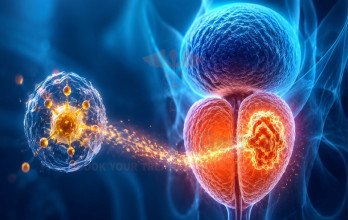
Both treatments target prostate-specific membrane antigen (PSMA), a protein commonly found at high levels on prostate cancer cells although expression vary between patients and individual tumor lesions. Ligands such as PSMA-617 or PSMA-I&T bind to PSMA and carry the attached radionuclide to tumour tissue [7].
The difference lies in what each substance releases:
- Lutetium-177 gives off beta particles: These travel up to a couple of millimetres, crossing many cells, so they can reach cancer cells sitting near the one the molecule attached to.
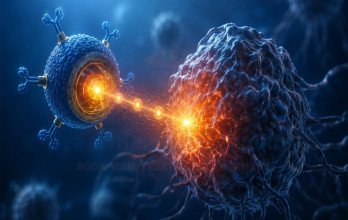
- Actinium-225 gives off alpha particles: These travel less than a tenth of a millimetre, roughly the width of a few cells, but carry far more energy over that short distance [9].
In tandem treatment, both radionuclides are used within the same treatment strategy or cycle. The exact timing and sequence vary between treatment protocols.
Clinical Rationale for Combining Lutetium-177 and Actinium-225

Lutetium-177 and actinium-225 have different radiation properties and may provide complementary patterns of tumour-cell irradiation when used in PSMA-targeted radioligand therapy. Some cancers respond poorly to Lu-177 PSMA therapy from the outset, while others eventually progress after an initial response but subsequently develop progressive disease.
Actinium-225 alpha particles travel only a short distance but deposit high energy that causes complex DNA damage. Their effects are less dependent on tumour oxygen levels and cell division, providing a rationale for their use when disease has progressed despite beta-emitting therapy.
Dry mouth is an important limitation of actinium-225 PSMA therapy, occurring in 77% of patients in one pooled analysis. Tandem protocols use lower actinium-225 activities to try to reduce this toxicity; Recent pooled analyses of tandem therapy report xerostomia predominantly as a low-grade toxicity, However, no randomised trial has shown that tandem therapy works better than either treatment alone [4] [8].
Patient Selection for Lu-177 and Ac-225 Combination Therapy
No single test determines suitability for tandem therapy. Specialists consider several factors:
- Confirmed metastatic disease: The cancer has spread beyond the prostate, and standard hormonal treatment is no longer holding it back, the situation described as metastatic castration-resistant prostate cancer.
- PSMA expression: The tumours must still take up the PSMA tracer on scans. Without that, the treatment has nothing to attach to. PSMA-negative or PSMA-low disease may be less likely to benefit because the radioligand depends on PSMA expression for tumour targeting.
- Previous treatment: Many patients considered for tandem therapy have already had Lutetium-177 PSMA therapy, and in published series most had also received chemotherapy and hormonal agents [3].
- How the disease is behaving: Whether it is growing slowly or quickly, and whether progression has been confirmed on scans rather than on a single blood test.PSA changes should generally be interpreted alongside clinical and imaging findings rather than used in isolation to determine treatment response and/or progression.
- General clinical condition: Functional status, symptoms, comorbidities, expected life expectancy and the patient's ability to tolerate radioligand therapy and its associated monitoring are considered when assessing suitability.
- Blood counts: Bone marrow that can still produce red cells, white cells and platelets, which matters because radiation adds to any existing strain.
- Kidney function: The kidneys clear the radioactive material, and reduced function raises the risk of further damage.
Role of PSMA PET/CT Before Lu-177 and Ac-225 Combination Therapy
PSMA PET/CT shows where the cancer has spread and how strongly different tumour sites express PSMA. It helps specialists confirm that there is sufficient and reasonably consistent PSMA uptake for targeted treatment.
PSMA PET/CT may also help predict response. In a 23-patient study, 86% of patients with higher baseline PSMA uptake achieved a partial response, compared with 31% with lower uptake. However, higher PSMA uptake does not guarantee a treatment response, and PET-derived uptake should be interpreted alongside disease burden, lesion heterogeneity, clinical status and other imaging and laboratory findings [3] [6].
Clinical Evidence for Lu-177 and Ac-225 Combination Therapy
Evidence remains limited and comes mainly from small retrospective studies, including analyses of patients treated within registry programmes. No randomised trial has directly compared tandem therapy with Lu-177 or Ac-225 alone.
In a 23-patient German study, 48% achieved a partial response after two tandem cycles. In an earlier 17-patient study after progression on Lu-177 therapy, 29.4% had a partial imaging response and 41.2% had stable disease after one tandem cycle. Median PSA progression-free survival was 3.7 months [1] [3].
A 2025 analysis pooling the published tandem studies gives the broadest picture available:

Pooled results from published studies of combined Ac-225/Lu-177 therapy. Median overall survival was 11.8 months [4].
These results should be interpreted cautiously. Studies are small, treatment protocols and response measures differ, and patients were not randomly assigned. The evidence suggests potential activity but does not prove that tandem therapy is better than other treatments [1].
Potential Benefits of Lu-177 and Ac-225 Combination Therapy
Tandem therapy may be considered in selected PSMA-positive patients whose disease has progressed despite Lu-177 treatment. Its use should be determined by the treating multidisciplinary team and, where applicable, the eligibility criteria of a clinical trial or investigational treatment program.Adding alpha radiation may provide activity against resistant disease, while using less actinium-225 may reduce salivary toxicity. These potential benefits have not been confirmed in randomised trials.
Side Effects and Risks of Lu-177 and Ac-225 Combination Therapy

Side-effect risk depends partly on previous treatment and existing kidney and bone marrow function.
- Dry mouth: This is an important limitation of Ac-225 therapy. Pooled tandem data reported no severe cases, although milder dry mouth can still occur. Salivary-gland function after tandem treatment has also been studied directly [4] [5].
- Blood counts: Pooled data found grade 3 or higher anaemia in about 10% of patients and thrombocytopenia in about 6%. In the 23-patient German study, 22% developed grade 3 anaemia, with pre-existing bone marrow involvement reported in these patients [3] [4].
- Kidneys: Two patients in that same series (9%) developed significant kidney impairment, again in men whose kidney function was already reduced [3]. An earlier tandem group showed no meaningful change in kidney function after one cycle [1].
- Fatigue and nausea: Common in the days after an infusion and usually manageable.
Blood counts, kidney function and symptoms such as dry mouth are monitored before and during treatment according to the treatment protocol and the patient's clinical status. Patients with existing kidney impairment or poor bone marrow reserve require particularly careful assessment.
Lu-177 vs Ac-225 vs Combination Therapy
The three approaches use PSMA-targeting radioligands but may use different PSMA ligands or formulations; the principal difference considered here is the radionuclide and its radiation characteristics. The table below sets out where each currently sits.

Comparison of the three approaches. None has been directly compared with the others in clinical trials, so the table describes their current use rather than indicating which approach works best.
Lu-177 and Ac-225 Combination Therapy in Germany
Tandem therapy is available at a limited number of nuclear medicine centres in Germany with the required isotope supply, radiopharmacy facilities and inpatient care. It is not available at every hospital offering Lutetium-177 PSMA therapy.
German centres have contributed significantly to research on this approach. Saarland University Medical Center in Homburg has studied actinium-225 added to lutetium-177 PSMA therapy in patients with high-risk mCRPC treatment. The Department of Nuclear Medicine at Saarland University Medical Center in Homburg is led by Prof. Samer Ezziddin, a specialist in nuclear medicine with expertise in PSMA imaging and targeted radionuclide therapy, including Lu-177 and Ac-225 PSMA therapy. A separate retrospective study of 23 patients receiving Lu-177 and Ac-225 tandem therapy was conducted at LMU University Hospital Munich [2] [3] [4].
For patients considering Lu-177 Ac-225 treatment in Germany, availability should be confirmed with the treating centre in advance. Actinium-225 supply can affect when treatment is possible, and treatment schedules may vary between centres. The dose, ratio of Lu-177 to Ac-225 and number of treatment cycles are not yet standardised, so treatment is planned according to the individual patient's case [3].
Treatment Process for Lu-177 and Ac-225 Combination Therapy in Germany
The pathway is broadly similar across centres, although the detail varies.
- Medical record review: Pathology, PSA history, previous treatments with dates, recent blood results and imaging are reviewed before anything is scheduled.
- Specialist assessment: Nuclear medicine and urology consider the case together and decide whether the combination is appropriate.
- PSMA PET/CT where required: A recent scan is needed. Where the existing one is too old or of insufficient quality, it is repeated.
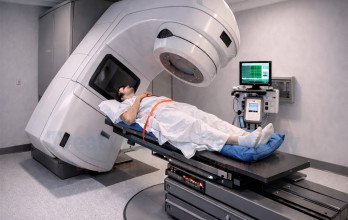
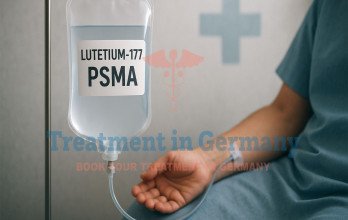
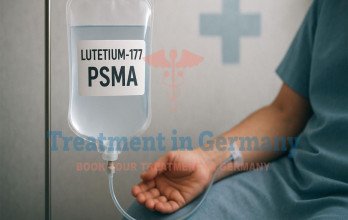
- Treatment administration: Given as an infusion into a vein on a licensed nuclear medicine ward, as German radiation protection rules require, with a short hospital stay.
- Blood and kidney monitoring: Blood counts and kidney function are checked before each cycle and at intervals in between.
- Follow-up assessment: PSA and repeat imaging some weeks after treatment determine whether a further cycle is worthwhile.
Cycles are separated by several weeks, and how many are given depends on response and tolerance rather than a fixed plan.
Cost of Lu-177 and Ac-225 Combination Therapy in Germany
There is no standard price for tandem PSMA radioligand therapy in Germany, and quotations can vary between treatment centres. The total cost depends on the treatment approach, the protocol used and the number of cycles required.

The final cost can vary from one treatment centre to another and may depend on the number of cycles and the protocol used.
International Patient Access to Lu-177 and Ac-225 Combination Therapy in Germany
Patients from outside Germany follow a defined route, and most of it happens before any travel is booked.
- Submitting medical records: Pathology report, full treatment history with dates, recent PSA values, blood counts and kidney function results.
- Sending imaging: The most recent PSMA PET/CT sent as image files rather than written reports, since the German team will review the scans directly.
- Specialist medical assessment: The centre reviews the material and decides whether the case is suitable and whether further evaluation is needed.
- Treatment planning: Where the combination is considered appropriate, the centre outlines the proposed protocol and the likely number of cycles.
- Cost quotation: A written estimate is issued, usually with payment arrangements confirmed before admission.
- Travel and accommodation: Booked once a date is confirmed, allowing for the hospital stay and follow-up imaging rather than a single appointment.
International patients can contact TIG GmbH (Treatment in Germany) to submit their medical records for review and receive guidance on the next steps, including coordination with the appropriate German treatment centre.
References
This article is for information only and does not replace advice from a treating oncologist or nuclear medicine physician. Suitability for tandem PSMA radioligand therapy must be assessed individually.
Why Patients Worldwide Prefer Our Medical Services in Germany – Key Benefits Explained














.webp)
 (1).webp)
.webp)

.jpg)

 (1).webp)
.jpg)