

Actinium-225 PSMA therapy is a treatment option for selected patients with advanced, PSMA-positive metastatic prostate cancer, particularly after progression on Lutetium-177 (Pluvicto). This article explains how Ac-225 works, when it may be considered, eligibility criteria, the role of PSMA PET/CT, treatment in Germany, available centres, potential benefits and side effects, and treatment costs for international patients.
Actinium-225 Prostate Cancer Treatment in Germany: What Comes After Pluvicto?
Actinium-225 PSMA therapy is an alpha-emitting radioligand approach being investigated for advanced, PSMA-positive prostate cancer, including disease that has progressed after Lutetium-177 PSMA therapy. In Germany, access is available at selected centres on an individual-patient basis. It is important to note that availability and eligibility are centre- and patient-specific rather than part of routine standard-of-care treatment.
What Is Actinium-225 PSMA Therapy for Prostate Cancer?

Actinium-225 (Ac-225) is a radioactive isotope that emits alpha particles. Bound to a PSMA-targeting molecule such as PSMA-617 or PSMA-I&T, it circulates in the bloodstream and accumulates in prostate cancer deposits in bone, lymph nodes, liver and soft tissue. It belongs to the same treatment family as Pluvicto, but delivers a different type of radiation and ^225Ac delivers predominantly alpha-particle radiation rather than the beta-particle radiation emitted by ^177Lu.
How Actinium-225 Targets Metastatic Prostate Cancer Cells

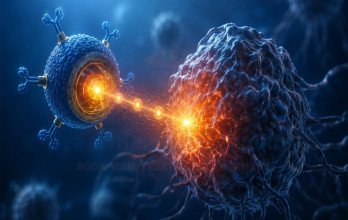
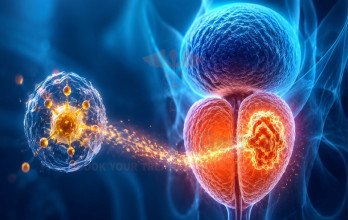
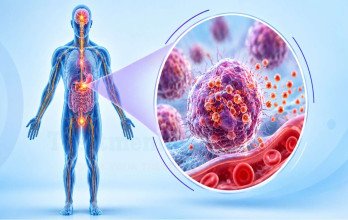
Prostate cancer cells express prostate-specific membrane antigen (PSMA) at levels up to around a thousand times higher than normal tissue, which makes it a suitable target for both imaging and treatment. The PSMA ligand binds to this protein and is taken into the cell, carrying the Actinium-225 with it. Once inside, Ac-225 decays through a chain that releases four alpha particles [7]. Two properties are clinically relevant to targeted alpha therapy:
- Range: Alpha particles travel less than a tenth of a millimetre, approximately three to four cell diameters, so the radiation is deposited within the tumour deposit rather than in surrounding tissue [5].
- Density of damage: Alpha particles have high linear energy transfer and produce clustered DNA damage that is difficult for cancer cells to repair [1].
For these reasons, alpha-particle therapy may remain active in some tumours that have progressed after beta-emitter therapy however, comparative randomized evidence establishing superiority is not yet available.
When Does Lutetium-177 (Pluvicto) Stop Working?
Lutetium-177 PSMA therapy rarely fails abruptly. Some patients respond poorly from the first cycles, while others respond for a period and then relapse. German centres do not rely on a single measurement, because PSA alone can be misleading, particularly after a first cycle when a temporary flare is possible.
In the Homburg protocol for patients progressing on Lu-177, progression was defined as a PSA rise of more than 25% compared with the previous cycle, together with either increased uptake in known lesions or new metastases on PSMA PET/CT [1]. Patients had to have completed at least two cycles before this assessment was made.
Factors considered by the nuclear medicine team include:
- A confirmed, sustained PSA rise across cycles rather than a single reading.
- New lesions on PSMA PET/CT, or existing lesions enlarging and showing increased tracer uptake which are interpreted in the context of established response-assessment criteria and potential treatment-related imaging changes.
- Rising tumour burden on imaging even where PSA appears stable, since the two do not always correspond.
- Worsening bone pain, declining performance status, or a fall in haemoglobin attributable to disease rather than treatment.
- Lesions with high uptake on FDG PET but little PSMA uptake, indicating disease that PSMA-directed treatment cannot reach.
In a Saarland series, imaging-based response predicted survival more reliably than PSA change, and around three in ten patients had discordant imaging and PSA results [1] [3]. It is important to note that these findings require confirmation in larger prospective studies.
What Comes After Pluvicto for Metastatic Prostate Cancer?

There is no single treatment that comes next for everyone after Pluvicto. The best option depends on previous treatments, kidney and bone marrow function, tumour genetics, and whether the cancer still shows enough PSMA.
Possible next treatments may include:
- Actinium-225 PSMA therapy for selected patients whose cancer has progressed after Lutetium-177 although its efficacy and optimal treatment sequence remain under investigation.
- Cabazitaxel chemotherapy.
- Radium-223 for selected patients with mainly bone metastases without visceral metastases who meet the applicable treatment and prior-therapy criteria.
- PARP inhibitors for patients with certain DNA-repair mutations; according to the specific drug's indication, biomarker requirements and prior-treatment setting.
- Clinical trials.
- Lutetium-177 rechallenge for selected patients who previously responded and later relapsed.
Actinium-225 is one possible option when the disease remains PSMA-positive and the patient meets the relevant clinical criteria.
Lutetium-177 rechallenge is different: it is mainly considered for patients who previously benefited from Lu-177 and later relapsed. In one study of 47 such patients, repeat treatment produced further biochemical responses [4].
Is Actinium-225 an Option After Lutetium-177 PSMA Therapy?
Yes. Actinium-225 may be considered for patients whose metastatic castration-resistant prostate cancer has progressed after Lutetium-177, provided there is sufficient PSMA expression and the patient remains medically suitable for treatment.
Ac-225 may be given:
- on its own or together with Lu-177 as tandem therapy.
The tandem approach is designed to add the effect of alpha radiation while using a lower Ac-225 activity to help reduce side effects such as dry mouth [1].
Published studies have reported encouraging results:
- In a study of 17 patients whose cancer had progressed after Lu-177, 29.4% had partial remission, 41.2% had stable disease, and 29.4% progressed after one tandem cycle [1].
- A 2025 meta-analysis found that 47% of patients had a PSA decline of at least 50%, while the pooled median overall survival was 11.8 months[9].
These results come from small retrospective series in late-stage disease rather than randomised trials and randomized trials are needed to establish its comparative efficacy and optimal place in treatment. Ac-225 is therefore used as an escalation option in selected cases rather than as an established standard.
Actinium-225 vs. Lutetium-177: What Is the Difference?
Both are PSMA-targeted radioligand therapies, although the targeting ligand may differ. The main difference is the type of radiation attached to the ligand, which affects tissue range, biological effect and side effects [5].

Comparison of the two PSMA radioligand therapies. Regulatory status and typical role differ by country and centre [8].
The choice between the two approaches depends on disease characteristics, previous treatment, PSMA expression and the patient's tolerance of potential toxicity. Ac-225 is not simply a stronger version of Lu-177; it has a different therapeutic profile and is considered in different clinical circumstances.
Who May Be Eligible for Actinium-225 PSMA Therapy?
Actinium-225 eligibility is assessed individually, usually in a discussion involving nuclear medicine and relevant oncology/urology specialists. Because the treatment is unapproved, centres apply protocol criteria strictly and centres offering it generally use predefined clinical, laboratory and imaging criteria that vary according to the applicable protocol and regulatory framework. The published Homburg thresholds indicate the requirements [1]:
- Adequate blood counts, for example haemoglobin above 8 g/dL, platelets above 75,000/µL and leukocytes above 3,000/µL.
- Kidney function with an eGFR above approximately 45 mL/min.
- ECOG performance status 0–2.
- Confirmed castration-resistant disease, with prior androgen receptor pathway inhibitors and taxane chemotherapy where tolerated.
- Documented progression on or after Lutetium-177.
- Sufficient PSMA expression across the disease rather than in isolated lesions.
Age alone is not necessarily an exclusion criterion; suitability depends more on performance status and organ function.
Why PSMA PET/CT Is Important Before Actinium-225 Treatment
PSMA PET/CT confirms whether metastatic sites express enough PSMA for treatment. Patchy or low uptake may leave some disease untreated. Some centres also use FDG PET/CT to identify active lesions with insufficient PSMA expression, as these may not respond to PSMA-directed therapy. The scan is repeated approximately four to eight weeks after treatment to assess response [1]. Scans older than two to three months are generally repeated before treatment begins.
Actinium-225 Treatment in Germany: How Does the Treatment Process Work?

Actinium-225 treatment in Germany follows a structured process. Because the treatment uses radioactive material, patients are usually admitted to a licensed nuclear medicine ward for a short inpatient stay. The treatment is prepared individually for each patient under German medical regulations, with monitoring before, during, and after treatment.
What to Expect During Actinium-225 PSMA Therapy in Germany
- Record review: Imaging, pathology, PSA history and blood results are submitted, and the centre determines whether assessment in Germany is justified.
- Assessment on arrival: PSMA PET/CT where the existing scan is not recent enough, together with full blood count, creatinine and eGFR, liver function and PSA.
- Consent and dose planning: Activity is selected individually. In tandem protocols, mean Ac-225 activity has been around 4 MBq per cycle alongside approximately 6 GBq of Lu-177, adjusted upwards for high tumour burden and downwards where xerostomia or frailty are a concern. Monotherapy protocols are based on body weight, with approximately 100 kBq/kg proposed as a balance between response and toxicity [1] [7].
- Administration: The treatment is given intravenously over several minutes, with hydration before and after administration [1].
- Inpatient stay: Commonly two to three nights, until radiation levels fall below the legal discharge threshold.
- Discharge and follow-up: Radiation precautions for the first days at home, blood tests over the following weeks, and follow-up PSMA PET/CT with PSA at six to eight weeks. Further cycles are decided according to response, toxicity and the treatment protocol.
Potential Benefits of Actinium-225 for Advanced Prostate Cancer
For some patients with advanced disease and limited remaining options, Ac-225 therapy has produced measurable tumour responses and periods of disease control.
The largest pooled analysis included 18 studies and 1,155 patients. Overall, 65% had a PSA decline of at least 50% [10]. Response was lower in patients previously treated with Lu-177-PSMA-617 than in those who had not received radioligand therapy. This is important because results from earlier treatment settings may not directly reflect outcomes after Pluvicto.

Response after a single tandem cycle in patients already progressing on Lu-177. Reduced bone pain and preserved performance status have been reported where disease is controlled [1].
Possible Side Effects and Risks of Actinium-225 Therapy
Actinium-225 has a different toxicity profile from Lutetium-177, with xerostomia (dry mouth) being the main dose-limiting side effect and a potential long-term quality-of-life concern.
- Xerostomia (dry mouth): The main dose-limiting toxicity. A 2025 meta-analysis reported any-grade xerostomia in 84% of patients receiving Ac-225 monotherapy, while tandem protocols showed lower rates [11]. Symptoms are usually mild to moderate but can persist.
- Haematological effects: Anaemia, thrombocytopenia and leukopenia. In the same series, one patient had grade 3 thrombocytopenia and no other grade 3 or 4 events were recorded [1]. Higher-activity monotherapy carries greater marrow risk, particularly after extensive chemotherapy or with heavy bone involvement.
- Kidney function: Generally stable in the short term, with no relevant eGFR change after a single tandem cycle. Longer-term effects remain under study, which is why baseline kidney function is a firm criterion.
- Fatigue and nausea:Common in the days after infusion and generally manageable.
Monitoring includes blood counts and creatinine during each cycle, structured xerostomia assessment, and PSMA PET/CT before any decision to continue. Xerostomia already present from previous treatment influences the activity offered and should be reported at assessment.
How Much Does Actinium-225 Prostate Cancer Treatment Cost in Germany?
Actinium-225 treatment in Germany costs around €22,000 for international patients. The exact cost can vary depending on the patient’s treatment plan and the hospital’s assessment.
The final cost may depend on:
- The number of treatment cycles.
- Whether Ac-225 is given alone or together with Lu-177.
- PSMA PET/CT or other required imaging.
- Isotope costs.
- The length of the hospital stay.
At Rechts der Isar Hospital, Technical University of Munich (TUM), the nuclear medicine department is led by Prof. Matthias Eiber, who has published clinical work on PSMA-targeted radioligand therapy, including Lu-177 and Ac-225 approaches.
Can Patients from the USA Receive Actinium-225 Treatment in Germany?
Yes. German university centres treat international prostate cancer patients, including patients from the United States. Access depends mainly on medical suitability, centre capacity and isotope availability.
Practical considerations for patients from the USA:
- Visa: US citizens may enter Germany for short stays without a visa under Schengen rules, currently up to 90 days in any 180-day period. Requirements should be checked before booking, as EU entry systems are changing.
- Records: DICOM imaging files rather than reports alone, since German teams review the scans themselves and reports without images delay assessment.
- Timing: Several weeks between first contact and treatment, as record review, tumour board discussion and isotope scheduling all take time.
- Continuity: Agreement on who manages care between cycles and who receives the German discharge letter, since the treating oncologist at home will need the treatment details.
How to Apply for Actinium-225 Treatment in Germany
1. Contact Team TIG.
Contact Team TIG GmbH (Treatment in Germany) with a summary of the case, including previous Lu-177 PSMA therapy and evidence of disease progression.
2. Submit the medical records and imaging.
Provide recent PSMA PET/CT images, PSA history, blood counts, kidney-function results, pathology reports and previous treatment details.
3. Receive specialist assessment.
The relevant German specialists review the medical records and determine whether further evaluation or treatment is appropriate.
4. Confirm the treatment plan and cost.
If treatment is considered suitable, the treating centre discusses the proposed protocol, estimated costs and scheduling.
5. Arrange travel and admission.
Once the appointment is confirmed, organise travel and prepare for the planned inpatient stay and follow-up.
International patients can contact TIG GmbH (Treatment in Germany) to submit their medical records for review and receive guidance on the next steps, including coordination with the appropriate German treatment centre.
References
This article is for information only and does not replace advice from a treating oncologist or nuclear medicine physician. Suitability for Actinium-225 PSMA therapy must be assessed individually
Why Patients Worldwide Prefer Our Medical Services in Germany – Key Benefits Explained














.webp)
 (1).webp)
.webp)
.jpg)

 (1).webp)
.jpg)