

Breast cancer surgery generally involves lumpectomy (removing the tumor with a margin of surrounding tissue) or mastectomy (removing the entire breast), often alongside lymph node surgery and, when appropriate, reconstruction. For many appropriately selected early-stage cancers, both approaches can provide similar survival outcomes. The choice depends on tumor characteristics, treatment plans, reconstruction options, and personal preference.
Breast Cancer Surgery in Germany: Lumpectomy, Mastectomy and Aftercare
Breast cancer surgery in Germany is a cornerstone of local treatment for many patients and may be combined with radiation therapy, chemotherapy, hormone therapy or targeted treatment depending on the cancer. The surgical approach depends on factors such as tumor size and location, tumor biology, lymph node involvement, previous treatment and the patient’s preferences.
Breast Cancer Surgery Options

Breast cancer surgery comprises breast-conserving surgery (tumor resection with negative margins) or mastectomy (complete removal of breast tissue). Sentinel lymph node biopsy (SLNB) is commonly used for axillary staging in invasive breast cancer, although selected patients may not require it depending on age, tumor characteristics, clinical nodal status and the planned treatment.
For biopsy-proven DCIS, sentinel lymph node biopsy (SLNB) is generally not performed with breast-conserving surgery but is recommended when mastectomy is planned, because a later SLNB may not be technically feasible after the breast has been removed [1]. When reconstruction is being considered, preoperative discussion with the breast and reconstructive surgery teams helps integrate immediate or delayed reconstruction into the overall treatment plan.
Surgeons weigh several factors when recommending an approach:
- Tumor size relative to breast volume.
- Whether the cancer is present in one location or spread across several areas of the breast.
- Tumorbiology, including hormone-receptor and HER2 status, which primarily influences systemic treatment and also affects the overall multidisciplinary treatment plan.
- Prior treatment history, including any previous radiation.
- The patient's ownpriorities regarding breast preservation and willingness to undergo radiation or additional surgery, reconstructive preferences, recovery considerations, and tolerance for different potential risks and complications.
For most early-stage cancers, breast-conserving surgery and mastectomy offer broadly similar survival outcomes when paired with appropriate follow-up treatment [1]. Because of this, the choice is rarely about oncologic necessity alone; it's often a personal decision made with the surgical team.
Lumpectomy and Breast Conserving Surgery
Breast-conserving surgery is one of two primary surgical approaches to treating breast cancer, the other being mastectomy. Rather than removing the entire breast, it aims to eliminate the cancer while preserving the natural breast shape and sensation as much as possible. For appropriately selected patients, this approach, paired with radiation therapy, has been shown to offer equivalent survival outcomes to mastectomy, making it a widely used first-line option in early-stage disease.

Lumpectomy Procedure and Surgical Margins
A lumpectomy, also called breast-conserving surgery or partial mastectomy, removes the tumor along with a rim of healthy-appearing tissue. For non-palpable lesions, preoperative or intraoperative image-guided localization using wire or non-wire markers (e.g., radioactive or magnetic seeds) is indicated to ensure precise target identification and resection.
The removed tissue goes for pathological assessment, where a pathologist examines the surgical margins, the outer edges of the tissue under a microscope. Guidelines developed by the Society of Surgical Oncology (SSO) and the American Society for Radiation Oncology (ASTRO), endorsed by the American Society of Clinical Oncology (ASCO), define an adequate margin for invasive cancer treated with whole-breast irradiation as no cancer cells touching the inked edge, a standard known as no ink on tumor [2].
If cancer is found at the surgical margin, a re-excision may be recommended depending on the tumor type and overall treatment plan. For invasive breast cancer treated with whole-breast irradiation, the usual standard is no ink on tumor, while DCIS treated with breast-conserving surgery followed by radiotherapy generally requires a margin of at least 2 mm. Margins under 2 mm do not automatically mandate re-excision or mastectomy; the need for further surgery depends on the clinical and histopathologic findings [1].
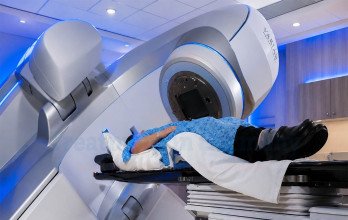
Lumpectomy is typically performed as day surgery or with a short hospital stay and is usually followed by radiotherapy, although radiation may be omitted in carefully selected patients.
Lumpectomy Eligibility and Surgical Considerations
Suitability for lumpectomy hinges on several interrelated factors, including the ability to achieve adequate tumor removal with negative margins:
- Tumor size and location relative to breast size: a single, well-defined tumor is usually easier to conserve.
- Number and spread of tumors: multifocal or multicentric disease can make breast conservation more challenging, though it may still be possible when all disease can be removed with clear margins and an acceptable cosmetic result.
- Presence of ductal carcinoma in situ (DCIS), often treatable with lumpectomy, though margin requirements differ slightly from invasive cancer.
- Previous radiation to the same breast: this can limit the feasibility of another breast-conserving approach, though selected patients with a local recurrence may still be considered for repeat breast-conserving surgery with carefully planned re-irradiation.
- Whether clear surgical margins can realistically be achieved.
- Patient preference, once the surgical team confirms both pathways are oncologically reasonable.
When clear margins cannot realistically be achieved with an acceptable cosmetic result, or when breast-conserving surgery followed by radiation is not an appropriate treatment pathway, mastectomy may be considered.
Breast Cancer Mastectomy and Surgical Options

Types of Mastectomy
Several mastectomy techniques exist, differing mainly in how much skin and surrounding tissue is preserved, whether the nipple–areola complex is preserved,and whether axillary lymph-node surgery is performed. The table below summarizes the main types [3].

Mastectomy Planning and Surgical Considerations
Mastectomy may be recommended in several situations:
- Breast-conserving surgery cannot achieve clear margins with an acceptable cosmetic outcome, or there is concern that adequate oncologic control cannot be achieved while preserving the breast
- The tumor is large relative to breast size.
- Disease is multicentric.
- Breast-conserving surgery followed by radiation therapy is not an appropriate option for the patient.
- A hereditary predisposition leads the patient, after genetic counseling, to consider more extensive surgery (details of that assessment are addressed separately).
Surgical planning is tailored to each patient and involves the breast surgeon, reconstructive surgeon when needed, and the radiology and pathology teams and other specialists according to the patient’s clinical needs. Factors such as tumor size and location, breast and nipple anatomy, and whether radiotherapy is expected help determine the most suitable mastectomy and reconstruction approach.
Lumpectomy and Mastectomy: Key Factors to Consider
Choosing between lumpectomy and mastectomy isn't about which operation is universally better. For most early-stage breast cancers, both offer broadly comparable long-term survival when combined with appropriate adjuvant treatment, consistent with both NCCN and German S3 guidance [1] [3]. The decision comes down to a mix of medical and personal factors that differ from patient to patient, summarized below.

Radiotherapy is usually recommended after lumpectomy to reduce local recurrence, though it may be omitted in carefully selected low-risk patients. After mastectomy, radiotherapy depends on tumor stage and nodal status as well as other clinical and pathologic features. Cosmetic outcomes vary with anatomy and surgical technique, and both approaches can achieve satisfactory results. Genetic factors may influence decisions about bilateral surgery after counseling, but patient preference remains important when both options are medically appropriate.
Lymph Node Surgery in Breast Cancer

Sentinel Lymph Node Surgery
Sentinel lymph node biopsy removes the sentinel lymph node or nodes, the first node(s) draining the tumor site and most likely to contain cancer cells if disease has spread beyond the breast. A radioactive tracer, blue dye, or both are injected beforehand to help the surgeon locate them [4].
It is typically performed during breast surgery through a small axillary incision. If sentinel nodes are negative, further axillary surgery is often unnecessary; positive findings may lead to an individualized treatment approach and may include regional or breast/chest-wall radiotherapy, observation or no further axillary surgery in selected patients, or completion axillary lymph-node dissection when indicated, based on the extent of nodal involvement, type of breast surgery, tumor characteristics, planned radiotherapy and systemic therapy, and other clinical factors [5].
Axillary Lymph Node Dissection
Axillary lymph node dissection removes a larger group of lymph nodes from the axilla and is now used more selectively than sentinel lymph node biopsy. For selected patients with early-stage, clinically node-negative breast cancer, completion axillary lymph node dissection may be omitted when only 1 to 2 sentinel lymph nodes are positive, depending on the type of breast surgery and planned radiotherapy [1] [5].
So it's now used more selectively. Whether it's needed depends on the extent of nodal involvement, the type of breast surgery, prior systemic treatment, and planned radiotherapy. Compared with sentinel node biopsy, axillary dissection carries a substantially higher risk of lymphedema, or chronic arm swelling caused by disrupted lymphatic drainage. Risk varies with treatment and patient factors but remains meaningfully higher after axillary dissection [6].
Other potential effects of axillary dissection include:
- Numbness in the arm or inner upper-arm area.
- Restricted shoulder movement or stiffness.
- A longer recovery period than sentinel node biopsy.
Postoperative physiotherapy and a gradual, guided return to arm mobility are generally recommended after this procedure [6].
Breast Reconstruction After Mastectomy
Breast reconstruction rebuilds the shape of the breast after mastectomy and can be done using implants, the patient's own tissue, or a combination of both. It's not a single procedure but a process that may involve multiple stages, and the choice of technique and timing depends on factors like body type, cancer treatment plan, and personal preference.

Immediate and Delayed Reconstruction
Reconstruction may be immediate, performed during mastectomy, or delayed, performed after mastectomy and any needed adjuvant treatment. Immediate reconstruction may preserve the skin envelope and support body image, while delayed reconstruction allows more time for decision-making and may be preferred when radiotherapy is anticipated.
The choice depends on cancer treatment, reconstructive factors, and patient preference. Whether radiation is expected is an important consideration in reconstructive planning and may influence the choice of reconstructive technique and timing. Radiation delivered to a reconstructed breast can cause wound-healing problems or infection [7], and especially with implants, a higher chance of capsular contracture (tightening of scar tissue around an implant) or revision surgery [8]. Surgical and oncology teams typically discuss anticipated radiation needs before finalizing the reconstruction plan.
Implant-Based and Autologous Reconstruction
Implant-based reconstruction uses a saline or silicone implant, often after temporary tissue expansion. It generally involves a shorter operation and recovery than autologous reconstruction but carries risks such as capsular contracture, with higher complication rates after radiotherapy. Autologous reconstruction uses the patient’s own tissue, most often from the abdomen.
Because radiotherapy can increase complications with implant-based reconstruction, the reconstructive team may consider autologous reconstruction depending on the patient’s anatomy, treatment plan and preferences [8]. The choice depends on anatomy, treatment plan, previous surgery, overall health, donor tissue, and patient preferences.
Breast Cancer Surgery Recovery and Aftercare

Recovery differs considerably by procedure type; the timeframes below are general ranges, not fixed timelines, and vary by extent of surgery, whether lymph nodes or reconstruction were involved, the presence of complications, and individual healing:
- Hospital stay: lumpectomy is often day surgery; mastectomy, especially with reconstruction, may need several inpatient days
- Pain and swelling are normal in the first days after surgery, managed with prescribed medication and rest
- Drains: small tubes draining excess fluid from the wound area, common after mastectomy and axillary surgery, usually removed once drainage has fallen sufficiently, often within the first few weeks
- Wound care: Follow the surgical team’s instructions for incision care. Contact the care team or seek immediate emergency evaluation if you experience a fever of 38°C (100.4°F) or higher, rapidly spreading redness/warmth around the surgical site, purulent or foul-smelling drainage, sudden severe calf pain/swelling, or unexpected shortness of breath.
- Arm and shoulder mobility can be affected after lymph node surgery, especially axillary dissection; gentle arm and shoulder exercises are often introduced early, with timing and progression adjusted according to the procedure, wound healing, and the surgical team's instructions
- Scarring and sensation changes: numbness or tingling near the incision is common and often improves over months, though some can be permanent
- Activity restrictions: heavy lifting and strenuous activity are usually restricted temporarily, with the duration depending on the type of surgery, reconstruction, and individual recovery
- Returning to work: some people return within a few weeks after lumpectomy, while recovery after mastectomy or reconstruction may take longer; timing depends on the type of surgery, physical demands of the job, and individual recovery
Recovery tends to be quicker and more straightforward after lumpectomy than after mastectomy and reconstruction, particularly autologous techniques, which add their own recovery considerations related to the donor site [3].
Surgical Pathology and Follow Up After Breast Cancer Surgery

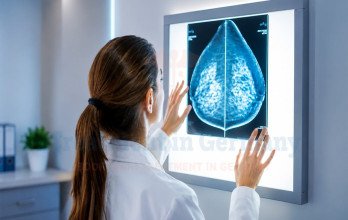
After surgery, pathology confirms the tumor’s features, surgical margins and lymph node status. If margins are involved or other findings affect the surgical plan, re-excision or additional surgery may be considered [1] [2]. Follow-up reviews pathology and determines whether additional treatment, such as radiation or systemic therapy, is needed. Long-term follow-up generally includes clinical examinations and mammography of any remaining breast tissue, with additional imaging when clinically indicated.
Breast Cancer Surgery in Germany: Surgical Options and Specialist Care
German breast cancer care is provided through certified breast centers, where breast surgeons and other specialists work together to develop individualized treatment plans. Breast-conserving surgery, mastectomy, lymph node surgery and breast reconstruction are available according to the patient’s diagnosis and treatment needs [1] [9].
How Is Breast Cancer Surgery Planned in Germany?
The surgical approach is based on factors such as tumor size and location, breast anatomy, lymph node involvement, previous treatment and whether breast reconstruction or radiotherapy is expected. German specialists review the clinical and pathological findings before recommending the most appropriate surgical procedure.
For international patients, treatment arrangements, required medical records, hospital stay and follow-up should be discussed with the selected German breast center in advance. Breast cancer surgery costs in Germany vary depending on the procedure, hospital and individual treatment plan.
TIG GmbH (Treatment in Germany) reviews available medical records and helps connect suitable patients with experienced German breast specialists or certified breast centers. Where appropriate, we coordinate specialist consultations and help organize the next steps toward treatment. The German medical team remains responsible for diagnosis, surgical recommendations and patient care.
References
3. NCCN Guidelines for Patients: Invasive Breast Cancer
4. National Cancer Institute Sentinel Lymph Node Biopsy Fact Sheet
6. American Society of Breast Surgeons Management of the Axilla, Resource Guide
7. National Cancer Institute Breast Reconstruction After Mastectomy
9. OnkoZert / German Cancer Society (DKG) International Certification of Breast and Cancer Centers
Why Patients Worldwide Prefer Our Medical Services in Germany – Key Benefits Explained

















.webp)
 (1).webp)
.webp)

.jpg)

 (1).webp)
.jpg)