
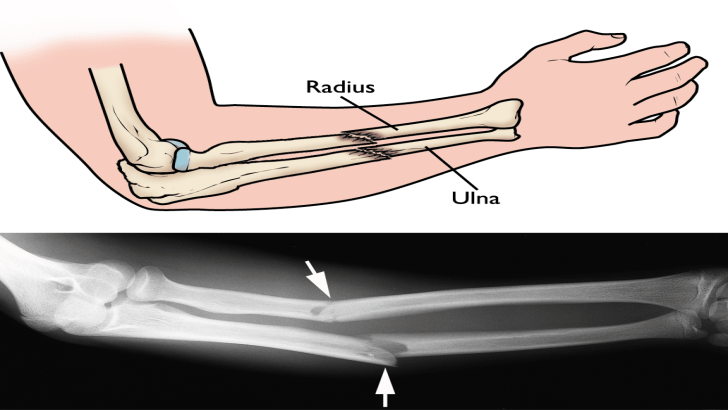
A bone fracture is the medical definition for a broken bone. There are many types of fractures classified by their shape, cause or where in your body they occur.
Bone Fracture Treatment in Germany
Creating a comprehensive article on bone fractures requires a detailed exploration of various facets, including types, causes, symptoms, diagnosis, treatment options, and rehabilitation strategies. Below is an overview structured to provide a foundational understanding of bone fractures treatment in Germany
Overview of Bone Fractures
Definition and Classification: A bone fracture is defined as a break in the continuity of the bone structure, which can occur due to traumatic injury, pathological conditions, or repetitive stress. Fractures are classified into several categories:
Closed vs. Open Fractures:
- Closed Fractures (simple fractures) do not penetrate the skin.
- Open Fractures (compound fractures) involve a breach in the skin, exposing the bone to the external environment.
Complete vs. Incomplete Fractures:
- Complete Fractures result in the bone being divided into two or more pieces.
- Incomplete Fractures (greenstick fractures) occur when the bone bends but does not completely break.
Specific Types of Bone Fractures :
- Transverse Fractures: Occur at a right angle to the bone's axis.
- Oblique Fractures: Have an angled pattern.
- Spiral Fractures: Result from a twisting or rotational force.
- Comminuted Fractures: Involve the bone being shattered into multiple fragments.
Causes of Bone Fractures: Bone fractures can be precipitated by various factors, including but not limited to:
- Traumatic Injury: Falls, motor vehicle accidents, and sports injuries.
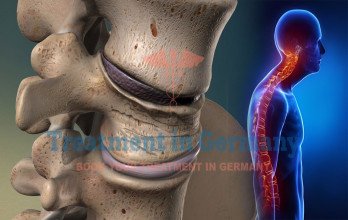
- Pathological Conditions: Diseases such as osteoporosis, malignancies, and infections that weaken bone integrity.
- Overuse Injuries: Stress fractures resulting from repetitive activities without adequate recovery.
Symptoms: The clinical presentation of a bone fracture may vary depending on the fracture type and location, but common symptoms include:
- Severe pain at the injury site.
- Swelling and tenderness.
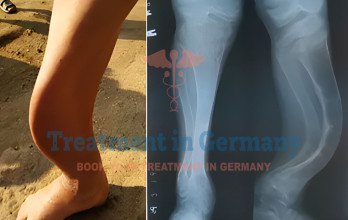
- Deformity or abnormal positioning of the limb.
- Inability to bear weight or use the affected limb.
Bruising or discoloration.
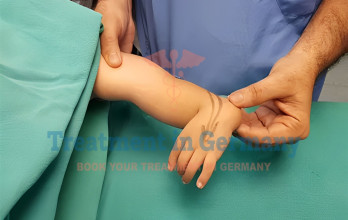
- Diagnosis: A thorough assessment begins with a detailed medical history and physical examination, followed by imaging studies. Radiography (X-rays) remains the primary diagnostic tool, while advanced imaging techniques such as CT scans and MRIs may be utilized for complex cases or to assess soft tissue involvement.
- Treatment Options: The management of bone fractures is contingent upon the type and severity of the fracture, the patient’s overall health, and other individual factors. Treatment strategies may include:
Non-Surgical Interventions:
- Immobilization: Utilization of casts or splints to stabilize the fracture.
- Pain Management: Nonsteroidal anti inflammatory drugs (NSAIDs) or analgesics to alleviate pain.
Surgical Interventions in Germany :
- Internal Fixation: Involves the insertion of rods, plates, or screws to stabilize the bone.
- External Fixation: Utilizes a frame outside the body to stabilize the fracture.
- Bone Grafting: May be necessary to facilitate healing in certain complex fractures.
Rehabilitation: Post-fracture rehabilitation is critical for restoring function and strength. Physical therapy typically commences once the fracture has sufficiently healed, focusing on:
- Range of motion exercises.
- Strengthening exercises.
- Functional training to resume daily activities.








.webp)
 (1).webp)

.webp)


.jpg)

 (1).webp)

.jpg)