

Explore treatment options for pancreatic cancer with liver metastasis in Germany, including TACE treatment and dendritic cell therapy under expert treatment, supported by TIG for international patients.
Pancreatic Cancer with Liver Metastases in Germany: Treatment Planning and Care
Learning that pancreatic cancer has spread to the liver changes the treatment plan, but it does not create one pathway for every patient. The next steps depend on the extent of liver involvement, whether cancer is present elsewhere, and how the disease responds to treatment.
Pancreatic Cancer with Liver Metastases and Disease Extent
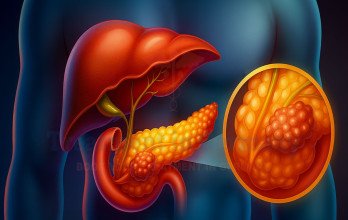
Liver metastases are deposits of pancreatic cancer cells that have travelled to the liver, not a second, separate cancer. Much of the blood leaving the pancreas reaches the liver through the portal circulation, which is one reason the liver is the most common site of distant spread from pancreatic cancer The predominance of liver metastases is likely influenced by both vascular anatomy and biological interactions between pancreatic cancer cells and the liver microenvironment [1]. Treatment therefore stays directed at pancreatic cancer, unlike primary liver cancer. Systemic therapy is generally central to treatment, with liver-directed treatment considered only in selected circumstances.
Liver involvement is often silent at first and picked up on scans. Where symptoms appear, they may include right-sided upper abdominal discomfort, jaundice, fatigue and abnormalities in liver blood tests. Contrast-enhanced CT is central to staging and treatment planning, while MRI can provide additional information when liver lesions are small or difficult to characterize [3]. Some small or radiologically occult metastases may remain undetected on initial imaging.
- The number of lesions, and whether they can be counted or are too numerous to list.
- The size of the largest lesions, and whether they are measurable and reproducible on follow-up scans.
- The distribution across liver segments, and whether one lobe or both are involved.
- Whether disease is liver-only, or also in the peritoneum, lungs, bone or distant lymph nodes.
- Whether metastases are synchronous, found at the same time as the pancreatic tumour, or metachronous, appearing later after earlier treatment [5].
These details decide whether treatment aims purely at controlling disease throughout the body, or whether liver-directed treatment could be discussed.
Limited Liver Metastases in Pancreatic Cancer
Some patients have widespread deposits through both lobes. Others have one or two small lesions and nothing elsewhere. The second situation may be described as oligometastatic disease, a pattern that may reflect more favourable tumour biology than widespread metastatic disease [1].
There is no single agreed definition. A systematic review of 76 studies found that only 32 reported a definition of oligometastatic disease, and the criteria used varied considerably between studies. Lesion count is only part of the assessment. Clinicians also consider tumour biology, including the CA 19-9 trend, the response to previous treatment and whether the disease remains controlled over time [2].
Treatment Planning for Pancreatic Cancer with Liver Metastases

Treatment planning generally combines systemic treatment with, in selected cases, treatment directed at specific liver lesions. The overall approach is part of pancreatic cancer treatment in Germany.
Treating Metastatic Pancreatic Cancer Systemically
Systemic therapy remains the backbone of treatment once pancreatic cancer has metastasised, including when the metastatic burden is limited to a small number of liver lesions. Once distant metastases are present, clinicians generally assume that microscopic disease may exist beyond what can be seen on imaging. This is why treating visible liver lesions alone does not replace treatment directed at disease throughout the body. The response to systemic treatment also provides important information about how the disease is behaving. In published series, patients who did well after liver-directed surgery were almost always selected after a good response to earlier systemic treatment [1].
Treating Selected Liver Metastases Locally
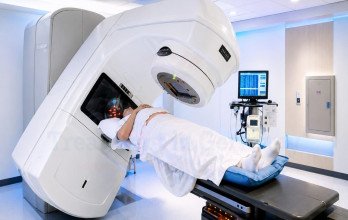
For a small, carefully selected group, treatment directed at liver lesions may be discussed after systemic therapy, particularly when the disease has shown a favourable and sustained response however, this is not established as routine treatment for metastatic pancreatic cancer. The main approaches are metastasectomy, surgical removal of liver metastases; thermal ablation, destroying small lesions with heat through a needle; and SBRT, focused radiotherapy in a few sessions. TACE, TACP and NanoKnife have their own guides [1].

A median survival of 25.5 months was reported in a retrospective single-centre series of highly selected patients who underwent liver resection after chemotherapy. Because these patients were carefully selected, the result cannot be assumed to apply to most people with metastatic pancreatic cancer. Overall, some retrospective studies have reported encouraging outcomes in highly selected patients, but the evidence remains limited and comes mainly from retrospective, non-randomised studies. Until randomised trials report, liver-directed treatment remains a considered option for particular patients [1].
Determining Suitability for Local Treatment of Liver Metastases
Suitability is assessed from the overall clinical picture rather than from a single feature of the scan or medical history. A multidisciplinary tumour board brings together the surgeon, medical oncologist, radiation oncologist and interventional radiologist to review these questions:
- Response to previous systemic treatment, and the durability of disease control, which may provide information about the underlying disease behaviour.
- The number, size and location of liver lesions, and whether every relevant lesion could actually be treated.
- Whether disease is present outside the liver, since more widespread disease generally makes a liver-directed approach less suitable and while systemic treatment remains central to metastatic disease management.
- Technical feasibility, including the location of the lesions, their relationship to important structures and whether enough healthy liver would remain after treatment.
- Overall fitness, nutritional state and how well previous treatment was tolerated.
- Tumour markers and clinical behaviour over time, as indicators of biology and while they may provide supplementary information about treatment response and disease behavior, it should not replace imaging or clinical assessment.
- Whether local treatment could be delivered without a long interruption to systemic therapy, since that pause carries its own risk [1].
This is why two patients with similar scans can receive different recommendations. Someone whose disease has remained controlled over time may have different options from a patient whose cancer progressed rapidly despite systemic therapy.
Liver Metastases With Disease at Other Distant Sites
The liver is the most common site of spread in pancreatic cancer, but it is not always the only one. Scans may also show metastases in the lungs, the lining of the abdomen, or, less commonly, the bones. In a prospective study of 559 patients with metastatic disease at diagnosis, about three in ten had metastases in more than one site rather than in a single organ [6]. When this happens, treatment planning takes the full pattern of disease into account.
- Liver and lung metastases. Lung metastases may be small and detected on staging scans before symptoms develop. Studies suggest that lung and liver metastases may follow different disease courses [7].
- Liver and peritoneal metastases. Spread to the peritoneum, the lining of the abdominal cavity, can cause fluid buildup and may be harder to assess on scans. Doctors therefore consider symptoms and clinical findings alongside imaging.
- Liver and bone metastases. Bone spread is less common in pancreatic cancer. When it occurs, treatment may need to address pain, mobility and fracture risk alongside systemic therapy.
- Liver and several other sites together. Metastases in several organs usually indicate more widespread disease. Treatment therefore focuses mainly on controlling cancer throughout the body while managing symptoms and maintaining quality of life.
When cancer is present in several organs, treating only one area will not control disease elsewhere. Systemic treatment therefore remains the main approach when pancreatic cancer has spread beyond the liver [1]. Liver-directed treatment may still be considered in selected patients, particularly when disease has responded well to systemic therapy or when a liver lesion is causing symptoms. However, it is considered case by case rather than as standard treatment for widespread metastatic disease [2].
Doctors consider the overall disease pattern, response to previous treatment, disease behaviour over time, CA 19-9 levels, disease burden and the patient's general health when deciding whether additional liver-directed treatment is appropriate [1]. Liver metastases with disease at other distant sites do not lead to one standard treatment plan. Two patients with cancer in the liver and lungs may receive different recommendations because treatment depends on the cancer's behaviour, previous treatment response, overall disease burden and the patient's general condition.
Treatment Changes as Pancreatic Cancer Liver Metastases Progress

Metastatic pancreatic cancer is managed over time, with treatment plans reviewed as the disease responds or progresses. Plans are reviewed at intervals, and the pattern of change guides what comes next.
Tracking Changes in Liver Metastases
Follow-up imaging is compared with previous scans to determine whether the disease is responding, remaining stable or progressing. CA 19-9 trends, symptoms and overall clinical condition are also considered alongside the imaging findings. Several patterns can emerge:
- Lesions shrink, which suggests treatment is working and usually supports continuing the current plan.
- Lesions remain stable, which can indicate that treatment is controlling the disease even when there has been no measurable shrinkage.
- Existing lesions grow, or new liver lesions appear.
- Disease progresses outside the liver, in the peritoneum, lungs or elsewhere.
A response in the liver does not necessarily mean that the cancer is controlled elsewhere in the body. Metastases can shrink while disease progresses at another site, which is why follow-up imaging assesses more than the liver.
Planning Treatment After Disease Progression
When scans show progression, the team first considers where the cancer is growing and whether the pattern is limited to one site or involves several areas. Growth confined mainly to the liver may lead to a different treatment discussion from progression affecting several sites at once.
Progression at multiple sites points towards reassessing systemic treatment, since the issue is disease behaviour throughout the body. If progression is confined mainly to the liver, the team may reassess both systemic treatment and whether a liver-directed option could still have a role. Either way the case returns to the multidisciplinary team.
Supportive Care for Pancreatic Cancer with Liver Metastases

Supportive care can be provided alongside cancer treatment from the beginning, helping manage symptoms, treatment-related effects and practical concerns throughout the course of care. Clear information is an important supportive-care need for patients and families, making understandable communication an important part of care [4]. Support usually covers:
- Pain control, reviewed and adjusted actively rather than left at a fixed dose.
- Nutritional support, including pancreatic enzyme replacement where digestion is affected.
- Monitoring of liver function where lesions or bile duct narrowing affect it, with a stent placed if jaundice develops. If malignant biliary obstruction causes clinically significant jaundice or other complications, endoscopic or radiological biliary drainage, such as stent placement, may be considered.
- Management of treatment-related effects such as fatigue, nausea and reduced appetite.
- Emotional and practical support for patients and the people caring for them [4].
If the cancer can no longer be controlled with anticancer treatment, care may increasingly focus on symptom relief, comfort and quality of life. Palliative care can also be provided alongside cancer treatment to help manage symptoms and support quality of life.
Accessing Treatment for Pancreatic Cancer with Liver Metastases in Germany
For international patients seeking treatment in Germany , assessment at a German centre can begin with a review of medical records and imaging before travel is arranged.
- Recent contrast-enhanced CT or MRI of chest, abdomen and pelvis, ideally the images rather than reports alone.
- The pathology report confirming pancreatic cancer.
- A treatment summary listing previous chemotherapy, radiotherapy and surgery with dates.
- Recent blood results including liver function and the CA 19-9 trend.
- A short note on current symptoms, weight change and any stent in place.
How can I get a specialist opinion for pancreatic cancer that has spread to the liver?
A specialist review can assess the disease pattern, liver involvement, previous treatment and overall condition to help determine which treatment approaches may be appropriate.
Treatment costs can vary depending on the systemic therapy, number of treatment cycles, hospital care and any liver-directed procedure included in the plan. Pancreatic cancer treatment costs in Germany provide guide figures, while the final quotation depends on the individual treatment plan.
The case can then be reviewed by a multidisciplinary team, allowing systemic treatment and any potential liver-directed options to be considered together based on the patient's disease pattern and previous treatment. TIG GmbH (Treatment in Germany) can help international patients arrange medical-record and imaging review, connect suitable cases with relevant specialists, and coordinate specialist consultations where applicable. The German medical team remains responsible for treatment assessment, recommendations and clinical care.
References
Why Patients Worldwide Prefer Our Medical Services in Germany – Key Benefits Explained
































.webp)
 (1).webp)

.webp)


.jpg)

 (1).webp)


.jpg)