

Stage 4 pancreatic cancer means the disease has spread beyond the pancreas to distant organs. Treatment focuses on controlling the cancer, managing symptoms and maintaining quality of life. Depending on the patient’s condition, options may include systemic treatment, selected local therapies, molecular testing and clinical trials. Care is reassessed as the disease responds or progresses, with supportive care and specialist teams involved throughout.
Stage 4 Pancreatic Cancer in Germany: Treatment Approaches and Care
Stage 4 pancreatic cancer is treated with the aim of controlling cancer throughout the body while maintaining quality of life. Because metastatic disease can behave differently between patients, treatment is selected according to overall health, disease distribution, previous treatment and how the cancer responds over time. The overall approach forms part of pancreatic cancer treatment in Germany, with Stage 4 care focused mainly on systemic disease control and symptom management.
Stage 4 Pancreatic Cancer and Metastatic Spread
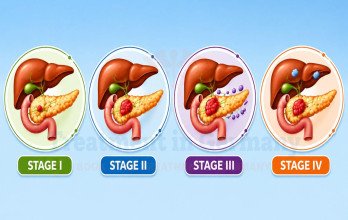
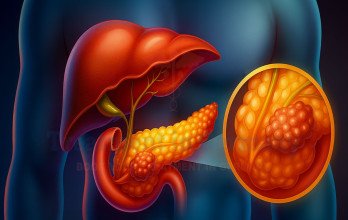
Stage 4 means the cancer has spread to organs or sites away from the pancreas. That distant spread defines the stage. Tumour size and lymph node involvement still matter clinically, but they do not change the overall Stage IV stage group. That separates metastatic disease from locally advanced pancreatic cancer, where the tumour has grown around nearby vessels but has not seeded distant organs.
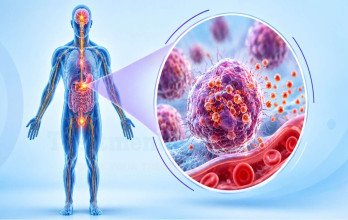
Because Stage 4 disease has spread to distant sites, treatment generally focuses on systemic disease control rather than surgical removal of the primary tumour or all metastatic disease. Local treatments may be considered in highly selected circumstances. The liver is the most common site of distant spread, with liver metastases occurring frequently in advanced pancreatic cancer; the peritoneum and lungs are also among the most common sites of metastasis [1]. Stage 4 is not a single clinical situation.
Key differences between patients include:
- Whether one organ is involved or several.
- How many deposits there are and their size.
- Whether spread was present at diagnosis or appeared later.
- How quickly the disease is progressing.
- The current symptom burden.
For example, three small liver lesions with normal liver function differ substantially from widespread liver and peritoneal disease with early jaundice. This pattern shapes treatment intensity and whether local therapies should be discussed.
Treatment Approaches for Stage 4 Pancreatic Cancer

Treatment usually centres on systemic therapy, with selected local or molecular approaches considered when appropriate.
Systemic Treatment for Stage 4 Pancreatic Cancer
Metastatic disease can involve cancer cells at sites that are not yet visible on imaging. Systemic therapy is therefore the backbone of Stage 4 care. Depending on fitness and other clinical factors, first-line chemotherapy for pancreatic cancer may include combination regimens such as FOLFIRINOX, gemcitabine plus nab-paclitaxel, and NALIRIFOX [2] [5].
The goals are to slow tumour growth, shrink disease where possible, relieve cancer-related symptoms and maintain quality of life. For most patients, treatment is intended to control the disease and extend survival rather than achieve cure.
What is offered depends on several things at once:
- Performance status, meaning how well someone functions day to day.
- Liver, kidney and bone marrow function on blood tests.
- Disease burden and where it sits.
- Other medical conditions and current medications.
- Any previous treatment already given.
- The patient's own balance between intensity and side effects.
Treatment generally continues while the disease remains controlled and side effects are manageable. Dose adjustments or treatment breaks may be used when needed, while progression, unacceptable side effects or declining health may prompt a change in treatment.
Local Treatment for Selected Metastatic Disease
A minority of patients have limited metastatic spread, often called oligometastatic disease. In carefully selected cases, treatment of individual metastatic deposits may be discussed alongside systemic therapy. There is no universally accepted definition of oligometastatic pancreatic cancer, and proposed criteria vary between studies. Some definitions restrict disease to a single organ and use a limited number of metastatic lesions [3].
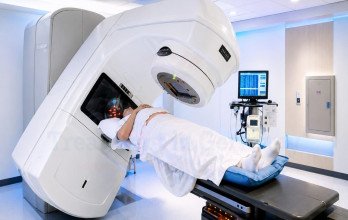
Options include surgical removal of isolated deposits, stereotactic body radiotherapy (SBRT) for pancreatic cancer to a specific lesion, and liver-directed interventional treatment. Selection may take into account disease behaviour, response to systemic treatment, the absence of new sites, tumour-marker trends and overall fitness. Local treatment targets selected visible sites of disease and does not replace systemic treatment.
Because Stage 4 treatment may involve several therapies or repeated treatment cycles, pancreatic cancer treatment costs in Germany can vary according to the treatment pathway, hospital care and services included in the quotation.
Precision Treatment for Stage 4 Pancreatic Cancer

The implications depend on the specific alteration:
- A germline BRCA1 or BRCA2 mutation can identify patients who may benefit from platinum-based treatment. For patients whose disease has not progressed after first-line platinum-based therapy, maintenance olaparib may be considered [1] [6].
- Mismatch repair deficiency (dMMR) or microsatellite instability-high (MSI-H) status can identify a small subgroup in which checkpoint immunotherapy for pancreatic cancer may be appropriate. In KEYNOTE-158, pembrolizumab produced an objective response in 18.2% of previously treated patients with MSI-H/dMMR pancreatic cancer [1].
- Rare NTRK-targeted therapies may be considered when a matching gene fusion is present.
- KRAS-directed therapies remain an active area of research, but treatment depends on the specific KRAS alteration. For many KRAS variants, these therapies remain available mainly through clinical trials rather than routine care [1].
Stage 4 Pancreatic Cancer by Metastatic Site
Where the cancer has spread and how widely affects treatment planning, symptom management and how response is assessed. In a prospective cohort of 559 patients with metastases at diagnosis, just over half had liver-only disease and around three in ten had more than one metastatic site. Systemic treatment remains central, while the site of spread may influence local treatment and supportive care [7].
Pancreatic Cancer with Lung Metastases
Lung metastases are often found on CT before they cause symptoms. A few small nodules are different from cancer spread throughout both lungs. Lung-only disease is uncommon and may follow a different course from liver-predominant disease. Systemic therapy is usually the main treatment. If only a few lung lesions are present and the cancer remains controlled, doctors may consider SBRT or surgery in selected cases, but this is not routine [7].
Pancreatic Cancer with Bone Metastases
Bone metastases are less common than spread to the liver, peritoneum or lungs. Treatment focuses on controlling pain and reducing the risk of fractures. Radiotherapy can help with painful bone lesions, and bone-directed medicines may be used when needed. New back pain with leg weakness, numbness or bladder problems needs urgent medical attention because it can signal spinal cord compression. Systemic treatment continues as needed [10].
Pancreatic Cancer with Peritoneal Metastases
The peritoneum, the lining of the abdominal cavity, can be difficult to assess on CT and may sometimes only be confirmed at laparoscopy. Systemic chemotherapy is the main treatment, while treatments delivered directly into the abdominal cavity remain investigational. Symptoms guide supportive care, including drainage for ascites or stenting for bowel obstruction [9].
Pancreatic Cancer with Distant or Non-Regional Lymph-Node Metastases
Lymph nodes near the pancreas are regional and do not by themselves mean Stage 4 disease. Nodes outside the regional drainage area, such as those above the diaphragm, are considered distant metastatic disease. Their location and extent are assessed alongside the rest of the imaging rather than in isolation [8].
Pancreatic Cancer with Multiple Metastatic Sites
Liver and lung, liver and bone, liver and peritoneum, or several sites together are possible patterns of metastatic disease. When cancer has spread widely, systemic treatment is generally the priority because local treatment cannot control disease throughout the body. Local treatment may still be considered for a specific symptom or problem. Treatment response and the patient's overall condition can lead to different recommendations even when the metastatic sites are similar [8].
Monitoring Treatment Response in Stage 4 Pancreatic Cancer
Response is assessed at planned intervals rather than continuously. CT of the chest, abdomen and pelvis is often repeated every eight to twelve weeks, depending on the treatment plan and clinical situation. Between scans, the team considers symptoms, weight, organ function, clinical examination and CA 19-9 trends when the marker was elevated at baseline [5].

A response indicates that the treatment is controlling measurable disease, not that the cancer has been eradicated. Imaging findings are interpreted alongside symptoms, examination, laboratory results and the overall clinical picture.
Treatment Changes After Stage 4 Pancreatic Cancer Progression

When Stage 4 pancreatic cancer progresses, the treatment plan is reassessed based on the pattern of disease, previous treatment and the patient’s overall condition. The next approach may involve changing systemic therapy, modifying the treatment schedule, continuing treatment in selected circumstances, considering a local treatment for limited progression, or focusing primarily on supportive care.
Signs of Treatment Response and Progression
Progression may be identified by:
- Measurable growth of existing lesions.
- New lesions appearing on imaging.
- Regrowth after an earlier response.
- Consistent changes in tumour markers when they are clinically useful.
- Worsening symptoms that correspond with other evidence of disease progression.
Whether progression is limited to one site or involves several sites influences what follows. In selected cases, growth at a single site while the remaining disease stays controlled, sometimes called oligoprogression, may allow systemic treatment to continue while local treatment is considered for the progressing area.
Progression across several organs generally suggests that the current systemic approach is no longer providing adequate disease control and may require a change in treatment. Imaging and clinical findings are read together. A rising marker on its own, without a matching change on scans, is not usually enough to justify switching treatment.
Choosing the Next Treatment for Stage 4 Pancreatic Cancer
The decision after progression requires a full reassessment of the treatment strategy rather than picking from a fixed list. The multidisciplinary team will review:
- Performance status and overall organ function.
- Current symptom burden and past toxicities.
- Prior treatments received, which help narrow down subsequent systemic therapy options.
- Any available molecular findings to guide targeted approaches.
Further anti-cancer treatment is not always appropriate. After several lines of therapy, particularly when performance status declines, symptom-focused care may provide greater benefit and fewer treatment burdens than another systemic regimen. Progression means the current approach has stopped working, not that options are exhausted.
Clinical Trials for Stage 4 Pancreatic Cancer

Standard systemic options are limited and gains have been incremental, which gives trials a more central role here than in cancers with long treatment ladders. Raising them early matters, because eligibility may depend on performance status, organ function, previous treatments and specific molecular or disease characteristics. Active areas include KRAS-directed small molecules, new chemotherapy combinations, antibody-based approaches, and strategies designed to make an immunologically quiet tumour respond to immunotherapy.
Studies are organised by phase:
- Phase I: mainly evaluates safety, dosing and tolerability.
- Phase II: whether the treatment shows meaningful activity.
- Phase III: direct comparison against current standard care.
Eligibility is specific: a particular molecular alteration, a defined number of prior lines, adequate performance status, acceptable organ function, measurable disease on recent imaging. Participation may involve closer monitoring, additional visits and scans, depending on the study.
A treatment being evaluated in a clinical trial has not yet been established as better than current standard treatment. Trial availability changes as studies open, close or reach recruitment limits, so eligibility should be checked when a decision is made.
Supportive Care and Quality of Life in Stage 4 Pancreatic Cancer
Supportive care runs alongside active treatment from the beginning. It can help manage symptoms, maintain quality of life and support patients through treatment. Pain deserves early, structured attention. Tumour involvement of nerves around the pancreas can cause abdominal or back pain.
When medication does not provide sufficient relief, in selected patients with inadequately controlled pain, a coeliac plexus or coeliac-axis nerve block may be considered as part of multimodal pain management. Exocrine pancreatic insufficiency is common in pancreatic cancer and can contribute to weight loss, diarrhoea and nutritional problems [4]. Pancreatic enzyme replacement therapy (PERT) can help when insufficiency is present and is generally taken with meals and snacks according to the prescribed dose and timing.
The rest of supportive care tends to cover:
- Dietitian input for weight loss, muscle loss and appetite change.
- Biliary stenting for jaundice caused by bile duct obstruction.
- Stenting or bypass where the duodenum becomes blocked.
- Awareness of the raised risk of blood clots.
- Anti-sickness and bowel management during chemotherapy.
- Psychological support for patients and for family members.
Palliative care here means specialist symptom management delivered in parallel with anti-cancer treatment. It is not a signal that treatment has stopped.
Specialist Care for Stage 4 Pancreatic Cancer in Germany
Care for advanced pancreatic cancer in Germany can involve certified pancreatic cancer centres and multidisciplinary tumour boards (Tumorkonferenz), where treatment decisions are reviewed across relevant specialties. For Stage 4 disease, the team may include medical oncology, surgery, radiation oncology, radiology, pathology and supportive-care specialists.
The multidisciplinary team may include:
- Medical oncology, which leads systemic treatment and reassessment.
- Pancreatic surgery, consulted for selected oligometastatic cases and for bypass procedures.
- Radiation oncology, for SBRT to a symptomatic or isolated site.
- Interventional radiology, for selected image-guided procedures such as liver-directed treatment, biliary interventions and biopsies.
- Molecular pathology, which supports tumour profiling.
- Palliative medicine, nutrition and psycho-oncology.
Some larger centres also have molecular tumour boards (molekulares Tumorboard) that review molecular findings in relation to available treatments and clinical trials. Access to trials varies by centre, study eligibility and recruitment status. For international patients seeking treatment, coordination may involve obtaining imaging and pathology for specialist review, arranging molecular testing when appropriate, and coordinating appointments across specialties.
How can I get a specialist opinion on Stage 4 pancreatic cancer in Germany?
A specialist review can assess the disease extent, previous treatment, current condition and available treatment options to help determine the most appropriate next steps.
TIG GmbH (Treatment in Germany) can help international patients arrange medical-record review, connect suitable cases with relevant specialists, and coordinate specialist consultations where applicable. Decisions still rest with the treating medical team.
References
Why Patients Worldwide Prefer Our Medical Services in Germany – Key Benefits Explained
International patients planning breast cancer treatment in Germany may need support with hospital consultations, medical documentation, translations, and travel arrangements. TIG GmbH helps coordinate these practical steps and communication with healthcare providers according to each patient's needs and the services agreed.

The table above compares the support and coordination services offered through TIG GmbH with the arrangements patients may need to manage when booking directly with a clinic.





























.webp)
 (1).webp)

.webp)


.jpg)

 (1).webp)

.jpg)