

International patients often seek a specialist pancreatic cancer opinion in Germany when the diagnosis, extent of disease or possibility of surgery is uncertain. This article explains how a German centre reviews medical records, scans and pathology, how treatment planning may differ by disease setting, how multidisciplinary teams reach recommendations, and how treatment and follow-up can continue between Germany and the patient’s home country.
Pancreatic Cancer Treatment in Germany for International Patients
A pancreatic cancer diagnosis can leave patients and families wondering whether another specialist might interpret the scans, pathology or treatment options differently. This can be especially important when surgery is uncertain or when different centres have given different recommendations. A specialist review in Germany can provide an independent assessment and help clarify whether the current pancreatic cancer treatment plan in Germany is appropriate or should be reconsidered.
Specialist Second Opinions for Pancreatic Cancer From Abroad

A second opinion is not necessarily a challenge to the doctors who made the original recommendation. It gives another specialist team the opportunity to review the same pathology, imaging and treatment history. In one study of 487 pancreatic cancer cases discussed at a multidisciplinary tumour board, management changed in 18.3% of cases, rising to 24.4% among patients referred specifically for a resectability assessment. In many cases, the second opinion confirms the existing recommendation, which can provide reassurance before treatment continues [1].
The review typically looks again at the pathology, imaging and treatment history. Specialists may reassess the tumour's location and its relationship with nearby blood vessels, review whether suspected metastases are consistent with metastatic disease, and compare scans taken before and after treatment to assess the response. They may also consider treatment or clinical-trial options that were not discussed at the original centre.
A second opinion is most valuable when there is genuine uncertainty about the diagnosis or the best treatment approach. This can arise when imaging leaves the extent of disease unclear, different specialists recommend different treatments, the tumour has unusual features, or the findings need reassessment after treatment. When the diagnosis, stage and treatment plan are already well established, another specialist review may simply provide confirmation rather than lead to a different recommendation.
Importantly, a second opinion does not necessarily mean that surgery will be recommended. A specialist review may instead show that an operation is less suitable than initially thought, particularly when the tumour’s relationship with nearby blood vessels is difficult to define. This can help prevent a major operation from being undertaken when a complete cancer resection is unlikely to be achievable. Conversely, another centre may identify a surgical option that was not initially considered. In a 2025 study of 116,072 patients with pancreatic ductal adenocarcinoma, those who received a second surgical opinion had higher odds of undergoing pancreatectomy, with an adjusted odds ratio of 6.17. However, the study did not show that seeking a second opinion improved survival or other clinical outcomes [2].
Pancreatic Cancer Case Review and Treatment Planning in Germany

Much of the initial assessment can be completed before travel. A German centre can review the available medical records and imaging first and then determine whether an in-person assessment is likely to add useful information. This can avoid unnecessary travel when the clinical question can be answered remotely. The documents commonly requested include:
- Histology or cytology reports, and where possible the original slides or paraffin blocks for independent review.
- Cross-sectional imaging as DICOM files rather than written reports, since the images are reread rather than taken on trust.
- Recent laboratory results, including CA 19-9 alongside liver and kidney function.
- A treatment history giving drug names, doses, dates and the reason anything was stopped.
- Operative, endoscopy and stenting reports where those procedures have already been done.
A review may confirm the existing plan, suggest a change, or identify information that is still needed before a recommendation can be made. Further assessment might include updated imaging, additional pathology review, molecular testing or, in selected cases, staging laparoscopy. Any recommendation should be understood in the context of the information available at that stage and may be revised if an examination, new imaging or other findings provide additional information.
Pancreatic Cancer Treatment Planning by Disease Setting
The focus of a specialist review depends on the current extent of the disease, previous treatment and the clinical question that needs to be answered.
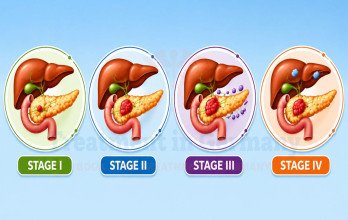
- Newly diagnosed disease: confirming the diagnosis, reviewing the available pancreatic cancer staging information and identifying any additional assessment needed before treatment begins.
- Resectable disease: reviewing whether surgery is appropriate and whether further specialist assessment could affect the sequence of care.
- Borderline resectable disease: clarifying the extent of vascular involvement and whether the findings support surgery or further treatment before reassessment.
- Locally advanced disease: assessing whether the current findings leave a realistic possibility of future surgery and when reassessment would be appropriate.
- Metastatic disease: reviewing the extent of disease, previous treatment and the patient's overall condition when considering further care.
- Recurrent disease: determining whether new findings represent recurrence and whether the available evidence changes the treatment approach.
The clinical situation can also help determine whether travelling to Germany is likely to add value. When resectability is uncertain, an in-person assessment may be particularly useful because the surgical question can depend on the detailed interpretation of imaging and the patient's overall condition. In other situations, particularly when the question concerns systemic treatment rather than a procedure, a remote review may provide the information needed without requiring travel.
Depending on the tumour type, previous treatment and clinical situation, the team may also consider molecular testing or clinical-trial eligibility. Trial participation is not automatic; eligibility depends on the individual study's criteria, previous treatment, organ function and other factors. A centre can assess whether a patient may be eligible, but participation cannot be guaranteed in advance.
Multidisciplinary Pancreatic Cancer Treatment in Germany
At certified German cancer centres, pancreatic cancer cases are discussed within a multidisciplinary tumour board. Depending on the case, this may bring together pancreatic surgeons, medical oncologists, radiologists, pathologists, radiation oncologists and gastroenterologists. The purpose is to bring these different specialist perspectives together before deciding on the most appropriate treatment approach. Imaging and pathology are particularly important when the question is whether the tumour can be removed safely and appropriately.
Caseload matters alongside structure. In a nationwide German analysis of 86,073 pancreatic resections, in-hospital mortality was 5.5% at hospitals performing at least 50 resections a year against 10.1% elsewhere, though only 24.2% of resections took place at those 23 high-volume centres [3]. The same study found that case mix and comorbidity explained part of the gap, so volume alone does not guarantee a better outcome. It remains a fair thing to ask a centre about.

In-hospital mortality after pancreatic resection in German nationwide data. Patients treated at high-volume centres differed in case mix from those treated elsewhere, so the difference reflects patient selection as well as caseload [3]. Always request a copy of the multidisciplinary tumour board's written recommendation. It should outline their main conclusions alongside the underlying medical reasoning. Asking for an English version makes it much easier to share with your healthcare team back home, ensuring they clearly understand the recommended approach and the logic behind it.
Coordination continues after the plan is agreed. Sequencing between chemotherapy, radiotherapy and surgery is decided as a whole rather than one step at a time, response is checked at set intervals, and the case goes back to the board whenever the situation shifts: progression on treatment, an unexpected scan finding, or a complication that changes what is feasible.
Continuing Pancreatic Cancer Treatment Across Germany and Home Country

Many international patients do not need to remain in Germany for their entire course of treatment. Continuing care between Germany and the home country works best when the medical records are complete and the treating team at home has a clear understanding of the recommendations. Before leaving Germany, ask for:
- A treatment summary in English stating what was done, what was found and what is recommended next.
- Full pathology, including grade, margin status and lymph node findings where surgery was performed.
- Imaging on disc or by secure transfer, so future scans are compared against actual images.
- Operative notes and discharge letters, with any stents, drains or reconstructions clearly described.
- A written follow-up schedule naming which scans and blood tests are due, and at what intervals.
Follow-up may be delivered in the home country, with the German team reviewing new scans or results remotely when this has been arranged with the treating team. Before leaving, clarify who should receive follow-up results, how the German centre can be contacted and when reassessment in Germany would be appropriate. Further review may be useful if the disease changes, a new decision about surgery arises, or the doctors involved have different recommendations.
How to Coordinate International Care
Navigating medical care abroad involves handling record transfers, translation, and hospital scheduling. International coordination platforms, such as TIG GmbH (Treatment in Germany) , assist patients by managing these logistics, arranging remote medical reviews, and facilitating consultations with specialist pancreatic cancer centres in Germany.
References
Why Patients Worldwide Prefer Our Medical Services in Germany – Key Benefits Explained





























.webp)
 (1).webp)
.webp)
.jpg)
 (1).webp)
.jpg)