

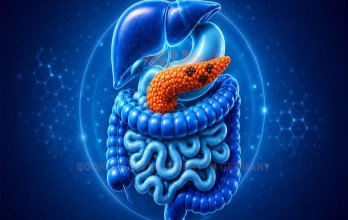
Pancreatic cancer includes several tumour types that differ in their cells of origin, biological characteristics, and clinical behaviour. The main types include pancreatic ductal adenocarcinoma (PDAC), neuroendocrine tumours, rare exocrine cancers, and other uncommon pancreatic tumours. Benign, premalignant, cystic, and inflammatory pancreatic lesions can also resemble cancer, making accurate tumour classification important for understanding the diagnosis and planning appropriate clinical management.
Pancreatic Cancer Types: Main Tumor Types and Subtypes
Pancreatic tumours are classified according to the type of cells they arise from. The two main groups are exocrine tumours, which develop from duct or enzyme-producing cells, and neuroendocrine tumours, which arise from hormone-producing cells. These groups include pancreatic ductal adenocarcinoma, pancreatic neuroendocrine tumours, rarer tumour types and noncancerous lesions that may appear similar on imaging [1].
Major Pancreatic Cancer Types and Tumor Groups
Classification is based primarily on the cell of origin because different cell types give rise to tumours with distinct biological characteristics. Exocrine tumours, led by ductal adenocarcinoma, account for the large majority of pancreatic cancers, while neuroendocrine tumours form a smaller, distinct group with very different behaviour [1]. The table below summarises the main pancreatic tumour groups. The major groups of pancreatic tumours by cell of origin.

The terms pancreatic tumour, pancreatic lesion and pancreatic cancer are not interchangeable. A pancreatic tumour is an abnormal growth that may be benign or malignant, while a pancreatic lesion refers more broadly to any abnormal area seen on imaging and may not represent a growth at all. Pancreatic cancer refers specifically to a malignant tumour.
Pancreatic Ductal Adenocarcinoma and Its Distinctive Features
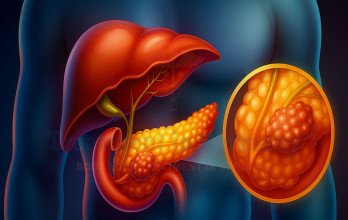
Pancreatic ductal adenocarcinoma or PDAC, develops from the cells lining the pancreatic ducts and is the most common type of pancreatic cancer, accounting for more than 90 percent of cases. A characteristic feature of PDAC is a dense fibrous tissue, known as desmoplastic stroma that surrounds the tumour cells and can influence how the cancer responds to treatment [1].

The location of a PDAC within the pancreas can influence how it is detected and managed. Tumours in the head of the pancreas are located close to the bile duct and may cause symptoms related to bile duct obstruction. Tumours in the body or tail may remain unnoticed for longer and can be larger when detected.
Under the microscope, PDAC typically forms structures that resemble pancreatic ducts within the surrounding fibrous tissue. Pathologists also assess how closely the cancer cells resemble normal cells, describing them as well, moderately, or poorly differentiated [1]. PDAC can be distinguished from neuroendocrine and acinar tumours by its microscopic appearance and other pathological features. Molecular research has also identified subtypes, including classical and basal-like patterns, which may differ in their biological behaviour.
Other Exocrine Pancreatic Cancers
In addition to conventional PDAC, several rare exocrine pancreatic cancers have distinct pathological features and biological behaviour[1].
- Acinar cell carcinoma grows from the enzyme-producing acinar cells and can release digestive enzymes into the blood; it is rare and behaves differently from PDAC.
- Adenosquamous carcinoma contains at least 30 percent squamous cells mixed with gland-forming tissue and tends to be more aggressive [1].
- Colloid carcinoma is defined by large pools of mucin, often arises alongside an intestinal-type IPMN, and generally carries a better outlook than conventional PDAC [1].
- Undifferentiated (anaplastic) carcinoma shows little recognisable gland structure and behaves aggressively, while a variant with giant cells is very rare.

Relative frequencies of selected rare ductal variants in the study population; conventional PDAC represented the majority of cases [1].
Neuroendocrine Tumors of the Pancreas
Pancreatic neuroendocrine tumours (pNETs) arise from hormone-producing cells in the pancreas and differ from PDAC in their biology, behaviour, and classification. They are less common than PDAC and are assessed according to their differentiation and proliferative activity [2].

Pancreatic neuroendocrine neoplasms include well-differentiated neuroendocrine tumours and poorly differentiated neuroendocrine carcinomas, which are high-grade and generally more aggressive. They can also be described as functional or non-functional according to whether hormone secretion causes a clinical syndrome. Most pNETs are non-functional. Differentiation and grade are important because they help indicate how the tumour is likely to behave [2] [3].
Tumour grade is assessed using the Ki-67 proliferation index and mitotic activity. Ki-67 indicates the proportion of tumour cells that are actively dividing, while the table below summarises the grading thresholds [2].

WHO grading of pancreatic neuroendocrine tumours by Ki-67 index [2].
Functional Pancreatic Neuroendocrine Tumors
Functional pNETs are classified according to the hormone responsible for the associated clinical syndrome [3]:
- Insulinoma produces insulin and is the most common functional pNET.
- Gastrinoma produces gastrin.
- Glucagonoma produces glucagon.
- Somatostatinoma produces somatostatin.
- VIPoma produces vasoactive intestinal peptide.
Non-Functional Pancreatic Neuroendocrine Tumors
Non-functional pNETs make up the majority of pancreatic neuroendocrine tumours, accounting for around 85 percent of cases. They are defined by the absence of a hormone-related clinical syndrome rather than by the presence or absence of a particular hormone. Some may still produce hormones or other substances without causing recognisable symptoms. Their behaviour can range from relatively slow-growing disease to more aggressive high-grade tumours, making differentiation and grade important when assessing the tumour [3].
Less Common Pancreatic Tumors
Other rare pancreatic tumours include the following [1].
- Solid pseudopapillary neoplasm is an uncommon pancreatic tumour seen mainly in younger women. It often has a favourable outcome after complete surgical removal, although it has malignant potential [4].
- Pancreatoblastoma is very rare and occurs mainly in children, with features that set it apart from adult carcinomas.
- Other uncommon malignancies, including some cystic and mixed tumours, are recognised but seen only occasionally.
Pancreatic Tumor Types and Nonmalignant Pancreatic Lesions

Not every pancreatic lesion is cancer. Pancreatic abnormalities may be benign, premalignant, malignant, cystic, or inflammatory. Lesions range from clearly benign, through premalignant, to frankly malignant, and some inflammatory areas can even mimic a tumour [4].
- Benign lesions such as serous cystic neoplasms rarely turn cancerous and are often simply watched.
- Premalignant neoplasms, chiefly IPMN and mucinous cystic neoplasm, can progress over time and may need removal or surveillance.
- Cystic lesions as a group, mostly serous, mucinous, and IPMN, make up the majority of pancreatic cysts [4].
- Inflammatory lesions, such as those from chronic pancreatitis, can resemble a tumour and need careful distinction.
Among these, IPMN grows within the pancreatic ducts and is a recognised precursor of cancer. Mucinous cystic neoplasm and serous cystic neoplasm differ in their lining and malignant potential, while solid pseudopapillary neoplasm is generally less aggressive than many other pancreatic malignancies but still has malignant potential. A pancreatic lesion is not automatically cancer, so its nature must be established before conclusions are drawn [4].
Clinical Significance of Pancreatic Cancer Type

Identifying the exact tumour type is important because it can influence pancreatic cancer treatment, surgical decisions, and prognosis. The tumour type, grade, and other clinical factors can influence whether surgery is considered, which systemic treatments may be appropriate, and the likely course of the disease.
The tumour type, grade, and other clinical factors can influence whether surgery is considered and which systemic treatments may be appropriate. An operable PDAC may follow a different treatment pathway from a slow-growing pNET, while systemic treatment options also differ between these tumour types. Certain tumours may prompt genetic or molecular testing, which can help identify eligibility for specific treatments or clinical studies, including options available at specialised cancer centres in Germany. Differentiation and grade, particularly the Ki-67 index in pNETs, can also help assess the likely course of the disease.
For this reason, confirming the exact tumour type and grade through appropriate pancreatic cancer diagnosis and testing before treatment begins is important. For international patients seeking further evaluation in Germany, specialist review of pathology slides and medical reports may help support treatment planning. TIG GmbH can assist with coordinating medical records, while diagnostic and treatment decisions remain with the treating medical team.
References
Why Patients Worldwide Prefer Our Medical Services in Germany – Key Benefits Explained



























.webp)
 (1).webp)

.webp)


.jpg)

 (1).webp)

.jpg)