

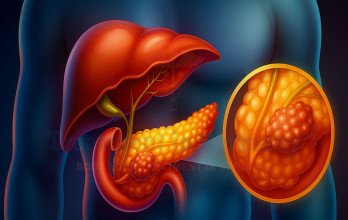
Lutetium-177-DOTATATE is a receptor-directed radioligand treatment used for advanced, somatostatin-receptor-positive pancreatic neuroendocrine tumors. This guide explains who may be suitable for PRRT, how receptor imaging supports treatment decisions, what happens during treatment, and the possible side effects. It also covers follow-up, treatment response, liver metastases, repeat PRRT, and how treatment is organised at specialist centres in Germany.
Lutetium-177-DOTATATE PRRT for Pancreatic NETs in Germany: Treatment Process and Suitability
Before starting Lutetium-177-DOTATATE for pancreatic neuroendocrine tumors (pNETs), several critical factors must be evaluated. Suitability depends on the tumor and its characteristics, while the treatment itself involves a specific course, potential side effects, and regular monitoring. Follow-up is also important to assess the response and detect any signs of recurrence over time.
Lutetium-177-DOTATATE PRRT for Pancreatic NETs
Peptide receptor radionuclide therapy (PRRT) works because most well-differentiated pNETs carry large numbers of somatostatin receptors on their cell surface, although the level of expression varies between tumours and between individual lesions. Lutetium-177-DOTATATE pairs a somatostatin analogue, which locks onto those receptors, allowing the attached radionuclide to deliver radiation to receptor-positive tissue. The molecule circulates, binds where receptors are dense, and is drawn into the tumour cell, where lutetium-177 releases short-range beta radiation that damages it from within. The short radiation range helps concentrate treatment around receptor-positive tumour cells, although the kidneys and bone marrow can also be exposed and receive radiation and are therefore monitored during treatment.

PRRT differs from conventional drug treatment because it delivers radiation directly to somatostatin-receptor-positive tumour cells. Treatment is guided by a target the tumour itself displays, and PRRT can treat multiple somatostatin-receptor-positive tumour sites during the same treatment course. Within the wider field of pancreatic cancer treatment in Germany, PRRT is an established treatment for advanced, receptor-positive pancreatic NETs. Poorly differentiated neuroendocrine carcinomas generally require a different treatment approach, and PRRT is not routinely used for poorly differentiated NEC. Selected well-differentiated higher-grade NETs may be considered when receptor expression is sufficient and the overall clinical circumstances support its use.
Patient Selection for Lutetium-177-DOTATATE PRRT in Pancreatic NETs
While PRRT is standard for advanced, receptor-positive, well-differentiated NETs, selected G2 and G3 tumors may also qualify if receptor expression is robust and clinical status permits. Evidence for PRRT in higher-grade disease is still more limited than for lower-grade, well-differentiated NETs and needs to be interpreted alongside tumour biology and receptor expression [1].
The nuclear medicine team also weighs:
- Strong receptor uptake, generally comparable with or greater than normal liver, is important across the disease rather than only in one or two lesions.
- Kidney function is assessed because renal radiation exposure is an important safety consideration and impaired renal function may require treatment modification or make PRRT unsuitable.
- Bone marrow function is assessed using blood tests, including haemoglobin, white cells and platelets.
- Liver function, particularly where hepatic tumour burden is high.
- Previous chemotherapy or radiotherapy, which can lower marrow tolerance and influence the safety and sequencing of PRRT.
- Overall health and ability to tolerate the treatment course are also considered.
Doctors consider these findings together rather than relying on a single test. Someone with excellent uptake but borderline kidney function may still be treated at reduced activity, while strong uptake alone does not make PRRT the right next step.
Receptor Imaging and PRRT Eligibility in Pancreatic NETs

Receptor imaging, usually 68Ga-DOTA PET/CT, does two jobs before PRRT. It confirms the tumour expresses the target, and it maps where that expression sits. Receptor uptake may be described using a modified Krenning score, which compares tumour uptake with normal organs such as the liver. Strong receptor uptake is an important factor when doctors assess whether PRRT is suitable. In the GEP-NET cohort described above, every treated patient had a Krenning score of at least 3 [1].
Often the more useful information is the variation between lesions. Deposits in the same patient differ in receptor density, and doctors pay particular attention to lesions with low uptake because they may respond less well to PRRT. In an analysis of 94 NET patients, lower uptake in the least avid lesion and a higher total tumour volume both predicted shorter progression-free survival after PRRT [2]. FDG PET may also be used when the tumour appears more aggressive or receptor expression is uneven.
Imaging is repeated if the scan is old or when the tumour has changed substantially since receptor imaging. It is interpreted alongside tumour grade, growth rate and clinical condition rather than on its own.
Lutetium-177-DOTATATE Treatment Journey
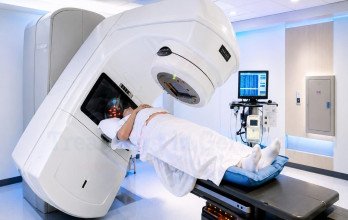
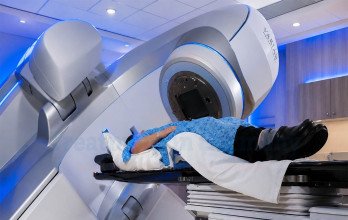
Before the first cycle, the team confirms receptor status, checks kidney and marrow function, reviews pathology and previous treatment, and takes the case to a multidisciplinary NET board. Long-acting somatostatin analogues are usually scheduled around PRRT according to the treatment protocol because they can interfere with receptor targeting. A treatment day then follows a fairly consistent shape:
- An amino acid infusion of lysine and arginine starts first and continues for several hours, reducing the radiation dose absorbed by the kidneys.
- Anti-sickness medication is commonly given because the amino acid infusion can cause nausea or vomiting.
- Lutetium-177-DOTATATE is infused intravenously, usually over about 30 minutes.
- Observation follows according to local radiation-protection requirements, and some German centres use a short inpatient stay.
- A post-treatment scan may be performed to document radiopharmaceutical distribution.
PRRT is usually given in four cycles, approximately eight weeks apart, although dose modification or treatment delay may be required for toxicity or other clinical reasons. Kidney function and blood counts are checked before each cycle, and treatment may be delayed, reduced or stopped if results or the patient's condition require it. In a German real-world series of 166 patients with metastatic pNET, 19% did not complete the planned course because of progression, toxicity or death [4].
PRRT Safety and Side Effects in Pancreatic Cancer

PRRT is generally well tolerated, although nausea, fatigue and temporary blood-count changes can occur. In a prospective phase II trial of 96 patients, fewer than 10% experienced grade 3–4 toxicity, which was mainly related to blood counts; no grade 3–4 kidney toxicity was reported [3]. The effects patients notice most are:
- Nausea during and shortly after the amino acid infusion, usually controlled with medication.
- Fatigue that can develop in the days after a cycle and may become more noticeable over the treatment course.
- Reduced appetite and mild abdominal discomfort.
- A gradual, usually modest fall in haemoglobin, white cells or platelets.
- Temporary worsening of hormone-related symptoms soon after treatment in functioning tumours.
Some risks can appear later, so long-term monitoring remains important. Kidney function is monitored because radiation exposure can affect the kidneys. Amino acid infusion helps reduce this exposure. Bone marrow injury is uncommon but can sometimes be long-lasting, and rarely, patients may develop myelodysplastic syndrome or acute leukaemia after treatment. Previous chemotherapy, extensive bone metastases and reduced baseline kidney function can increase treatment risk and may lead to dose reduction or longer intervals between cycles.
PRRT Follow-Up and Treatment Response
Response is judged on imaging and on how the patient feels, and the two do not always move together. Complete disappearance of tumour is rare, and stable disease can still be a meaningful treatment outcome. Among patients with functioning tumours, meaning tumours that produce excess hormones, 88.1% experienced improvement in hormone-related symptoms across two prospective trials [6].
Follow-up after PRRT usually tracks:
- CT or MRI may be used to assess treatment response, with timing based on the patient's disease and local protocol.
- Receptor imaging when a decision depends on whether uptake has changed.
- Tumour markers such as chromogranin A may be monitored when useful. Relevant hormone levels may also be followed in functioning tumours.
- Full blood count, kidney and liver function, continuing well beyond the last cycle.
- Weight, energy and symptom control, which often shift before imaging does.

Stable disease was the most common radiological outcome in a prospective phase II trial of dosimetry-guided ^177Lu-DOTATATE [3].
Follow-up results help the treatment team decide what to do next:
- Response or stability usually means treatment stops and surveillance continues, often with a somatostatin analogue.
- Clear progression triggers reassessment of grade, receptor status and the treatment options that remain.
- Slow marrow or kidney recovery can rule out further radioligand treatment even when the tumour responded well.
PRRT for Advanced and Liver-Dominant Pancreatic NETs
Liver metastases in pancreatic NETs are common in advanced pancreatic NETs and may be treated with PRRT when they express somatostatin receptors. Because PRRT is systemic, it treats hepatic and extrahepatic deposits in the same sitting, which is a real advantage when disease is scattered across several sites.
Tumour location and size also affect treatment planning. Very large lesions may respond less completely because ^177Lu-DOTATATE has a relatively short tissue range. In a small Berlin cohort receiving salvage ^177Lu-DOTATOC, patients with a largest lesion above 60.5 mm had shorter progression-free survival than those below that threshold. This finding came from a small retrospective study and should not be treated as a universal size cutoff for PRRT. PRRT is therefore sometimes sequenced alongside local liver treatment rather than used alone [5].
Metastatic pattern matters elsewhere too. In the German pNET cohort, patients with bone involvement had shorter overall survival than those without, at 74 months versus 89 months. Whether PRRT is the right next step, and where it sits relative to a liver-directed approach, is a judgement for the NET board rather than a rule [4].
PRRT Following Earlier Pancreatic NET Treatment
PRRT is most often given after progression on a somatostatin analogue, and sometimes after targeted therapy for pancreatic cancer or chemotherapy for pancreatic cancer. Previous treatment does not rule it out, but it changes the assessment. Marrow reserve may be lower after chemotherapy, and receptor expression can shift over time, so imaging is repeated rather than assumed from an older scan.
Repeat PRRT may be considered in selected patients who previously responded, progressed after a reasonable interval, still show receptor uptake, and have adequate kidney and marrow function. Retreatment can provide additional disease control, although the benefit may be less durable than after the initial course. In a small Charité cohort receiving salvage ^177Lu-DOTATOC, median progression-free survival was 10.8 months after retreatment versus 31 months after the initial course [5]. High-grade toxicity was uncommon, with a single case of grade 3 anaemia.

Beyond retreatment, combination strategies and alpha-emitting radionuclides such as actinium-225 labelled compounds are under active study, as are pairings of radioligand therapy with systemic agents. None of these is established care, and where they are available it is generally within a clinical trial.
Pancreatic NET PRRT Consultation and Specialist Care in Germany
PRRT requires a licensed nuclear medicine department with radiation-protection facilities. In Germany, PRRT is delivered in specialised nuclear medicine units, with admission and monitoring arrangements varying by centre and patient. PRRT treatment costs in Germany can vary according to the number of treatment cycles, hospital stay, monitoring and other services included in the treatment plan. There, nuclear medicine, oncology, endocrinology, radiology, pathology and pancreatic surgery review a case together before treatment is agreed, which matters most when eligibility is borderline.
For international patients seeking PRRT in Germany the sequence is much the same. Records, pathology and recent imaging are reviewed first, receptor imaging is repeated if the existing scan is old or was performed differently, and only then is a schedule set. Because cycles run roughly eight weeks apart over several months, planning has to cover the whole course rather than a single visit, including blood tests between cycles and follow-up afterwards. Patients travelling from abroad may need to coordinate medical records, imaging, blood tests, treatment cycles and follow-up.
How can I find out if PRRT is an option for my pancreatic NET?
A specialist review can assess somatostatin-receptor imaging, tumour status, previous treatment and overall health to determine whether PRRT may be appropriate.
TIG GmbH (Treatment in Germany) can help international patients arrange medical-record and imaging review, connect suitable cases with relevant nuclear medicine specialists, and coordinate specialist consultations where applicable. The treating medical team remains responsible for treatment assessment, recommendations and clinical care.
References
Why Patients Worldwide Prefer Our Medical Services in Germany – Key Benefits Explained





























.webp)
 (1).webp)

.webp)

.jpg)

 (1).webp)

.jpg)