

Learn about metastatic non-small cell lung cancer treatment in Germany, including TPCE, TACP, and dendritic cell immunotherapy, advanced diagnostics, and TIG support for international patients.
Metastatic Non-Small Cell Lung Cancer Treatment in Germany
Metastatic non-small cell lung cancer (NSCLC) is an advanced form of lung cancer in which the disease spreads beyond the lungs to distant organs or tissues. This stage is also called stage 4 NSCLC. At this point, treatment planning becomes more complex because doctors are not treating one isolated tumor. Instead, the focus shifts toward controlling cancer activity across the body, reducing symptoms, supporting organ function, and maintaining quality of life through a structured long-term approach.
In many cases, metastatic NSCLC requires a combination of systemic therapy planning and advanced supportive approaches depending on where the cancer has spread and which tumor sites are most active. This is why many international patients consider treatment in Germany, where the medical system is recognized for structured diagnostics, careful treatment selection, and advanced interventional oncology planning. Germany has also developed strong expertise in procedure-based oncology and immunotherapy programs, supported by specialists such as Prof. Vogl and immune-based treatment programs performed by Prof. Gansauge with international cancer treatment journeys coordinated through TIG which manages complete logistical support for international cancer patients.
What Is Metastatic Non-Small Cell Lung Cancer?
Non-small cell lung cancer is the most common category of lung cancer. When NSCLC becomes metastatic, cancer cells have moved beyond the original lung tumor and spread to areas such as NSCLC with liver metastasis, bones, adrenal glands, brain, or distant lymph nodes. At this stage, the disease is considered systemic, meaning treatment planning must address cancer activity throughout the body.
Even though metastatic NSCLC is an advanced diagnosis, it is important to understand that treatment planning can still be meaningful and structured. Some patients have limited metastatic spread, while others have multiple metastatic sites. The treatment strategy depends heavily on disease distribution, patient strength, and response monitoring.
How Metastatic NSCLC Is Diagnosed in Germany
Accurate diagnosis is essential in advanced cancer treatment In Germany, metastatic NSCLC evaluation typically begins with detailed staging so that the medical team understands exactly where cancer is active and how extensive it is. This structured approach helps avoid under-treatment or inappropriate therapy choices.
Advanced diagnostic pathways commonly involve imaging tools such as CT scans, MRI, PET scans, which help doctors evaluate tumor burden, detect metastatic sites, and measure treatment response over time. These imaging tools are also important for planning interventional oncology procedures when localized tumor control is required. This high diagnostic accuracy is one reason Germany is recognized for latest medical technology for International patients, with structured imaging and follow-up pathways built into treatment planning.
Why Treatment in Germany Is Considered for Metastatic NSCLC
Choosing treatment abroad is a major decision, especially for stage 4 cancer. Germany is considered a strong option because of its regulated healthcare environment and consistent medical planning. Many patients value Germany’s structured approach, where treatment is guided through careful staging, specialist-led decision-making, and continuous reassessment.
Germany is known for advanced treatment delivered through recognized German healthcare centers and specialized German oncology centers, supported by experienced German specialists who focus on precise diagnostic interpretation and individualized treatment strategies. This organized system helps international families feel more confident, especially in complex metastatic cases where multiple decisions must be made over time.
Germany is also widely discussed among innovative treatment options in Germany, particularly because interventional oncology and immune-based approaches are evaluated carefully alongside systemic treatment planning.
Innovative Treatment Options in Germany for Metastatic NSCLC
Germany is internationally respected for combining structured diagnostics with advanced procedure-based treatment. In selected metastatic NSCLC cases, localized interventional approaches may support tumor control when systemic therapy alone is not enough to reduce disease burden.
TPCE Treatment (Transpulmonary Chemoembolization) for Non-Small Cell Lung Cancer in Germany
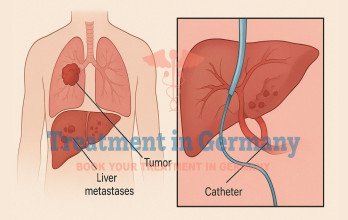
TPCE Treatment (Transpulmonary Chemoembolization) for Non-Small Cell Lung Cancer in Germany is an interventional oncology procedure designed to deliver chemotherapy directly into blood vessels supplying lung tumors through the pulmonary circulation. This approach supports targeted delivery, allowing higher concentration of chemotherapy to reach tumor tissue while limiting full-body exposure.
Before TPCE, patients undergo imaging assessment to identify tumor location and blood supply. During the procedure, a catheter is guided through the vascular system toward the tumor-feeding area. Chemotherapy is delivered directly, followed by embolic agents that reduce blood flow to tumor tissue, limiting its nutrient supply and supporting localized control. Patients are monitored after the procedure, and follow-up imaging helps determine response and whether additional sessions are needed.
The cost of TPCE therapy in Germany typically ranges between €8,000 and €9,000 per session, depending on tumor burden and procedural planning.
TACP Treatment (Transarterial Chemoperfusion) for Non-Small Cell Lung Cancer in Germany
TACP Treatment (Transarterial Chemoperfusion) for Non-Small Cell Lung Cancer in Germany is another interventional oncology approach evaluated in selected advanced lung cancer cases. This procedure delivers chemotherapy directly through arteries supplying tumor tissue while maintaining blood flow, which may help protect surrounding structures and reduce unnecessary damage.
Prior to treatment, angiographic planning is performed to map the arterial supply. A catheter is guided into the relevant artery, and chemotherapy is infused in a controlled manner. Patients are monitored throughout and after the procedure, and follow-up evaluation determines whether additional sessions are required. The session-based structure is similar to other interventional oncology procedures, and planning typically falls within the same treatment range.
The cost of TACP therapy in Germany typically ranges between €8,000 and €9,000 per session, depending on complexity and individual treatment planning.
Immunotherapy Dendritic cell therapy for Non-Small Cell Lung Cancer in Germany
Immunotherapy Dendritic cell therapy for Non-Small Cell Lung Cancer in Germany, is a personalized immune-based treatment designed to enhance the body’s natural immune recognition of cancer cells. Unlike chemotherapy, which directly targets dividing cells, this therapy focuses on immune education and immune surveillance so the immune system can better identify cancer-related markers.
The process begins with medical evaluation to assess suitability based on disease status, immune function, and treatment goals. A blood sample is collected (typically around 150–200 ml). From this sample, immune cells (Monocytes) are isolated in an EU GMP certified laboratory under strict controlled standards.
These monocytes are cultured for approximately seven days and exposed to tumor-specific antigens to develop mature dendritic cells. Before administration, the dendritic cells undergo safety checks including viability and purity assessment. The final therapy is administered back to the patient, usually by injection under the skin. This forms a personalized dendritic cell vaccine designed to support immune targeting. The cost of Immunotherapy Dendritic Cell Therapy in Germany is €24,000. which includes laboratory processing and vaccine preparation.
New Clinical Trials for Metastatic NSCLC in Germany
Research continues to expand options for metastatic lung cancer patients. Germany supports regulated oncology research pathways, and in some situations, patients may be evaluated for new clinical trials for metastatic NSCLC depending on eligibility. Eligibility can depend on the cancer subtype, biomarker status, previous treatments, and overall clinical condition. Clinical trial availability changes, and acceptance is always based on strict criteria and patient safety planning.
International Patient Support through TIG (Treatment in Germany)
For international patients, arranging metastatic NSCLC treatment abroad can be stressful. It involves multiple moving parts such as medical record review, hospital coordination, appointments, travel, lodging, and documentation. This is why structured coordination becomes essential. TIG (Treatment in Germany) ensures seamless coordination and manages complete logistic arrangements for international patients, including travel, lodging, and medical visa for international patients (if required). This support helps patients focus on treatment rather than administrative challenges.
🌍Why Patients Worldwide Prefer Our Medical Services in Germany – Key Benefits Explained:














.webp)
 (1).webp)

.webp)


.jpg)

 (1).webp)

.jpg)