
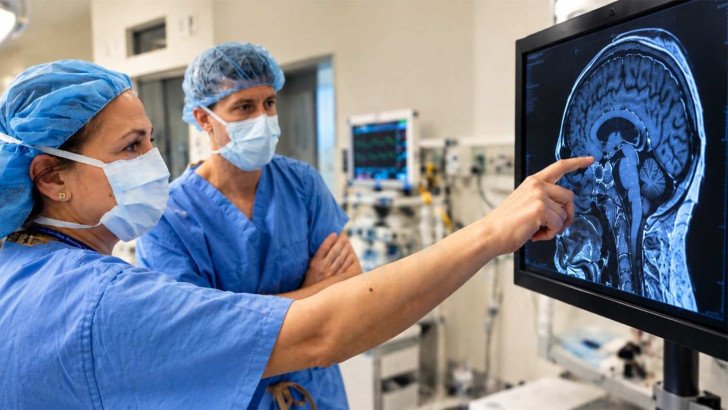
Brain metastases retain important features of the cancer they came from, so treatment is planned around the primary cancer as well as the number, size, location and total volume of brain lesions. Care may include surgery, stereotactic radiation, systemic treatments with intracranial activity, supportive treatment for neurological symptoms and MRI follow-up. Specialist assessment in Germany can also help international patients review local and systemic options together.
Brain Metastases in Germany: Treatment Approaches and Patient Care
When cancer from the lung, breast, skin or another part of the body spreads to the brain, the resulting tumors are called brain metastases (Hirnmetastasen), not a new type of brain cancer. They retain the biology of the original cancer, which plays a major role in deciding how they should be treated. Treatment options now include focused radiation, surgery and medicines that can act on cancer cells in the brain. For this reason, many patients and families seek an independent assessment when considering brain metastases treatment in Germany.
Factors That Shape Brain Metastases Treatment
There is no single standard pathway for brain metastases. Specialists build the plan around the whole cancer history, and several factors are weighed together:
- The primary cancer: including its histological and molecular characteristics and any findings that may influence treatment.
- Whether that cancer is known: controlled, newly diagnosed or progressing.
- The number: size, location and total volume of the brain metastases.
- Symptoms and neurological function: and whether the metastases are causing edema, raised intracranial pressure, seizures, or focal neurological defects.
- Cancer elsewhere in the body: and whether it is controlled or growing.
- Previous surgery: radiation and systemic treatment, and including the cancer's response to those treatments.
- General health and ability to tolerate further treatment.
The number of brain metastases is only one part of treatment planning. Their size, location, total volume, symptoms and whether cancer elsewhere in the body is stable or growing also matter. In a retrospective Dutch study of 303 patients, having more than five brain metastases and cancer outside the brain that was stable or progressing were associated with a higher risk of new metastases developing elsewhere in the brain [2]. Because treatment inside the brain and treatment of the whole body so often interact, decisions usually need a multidisciplinary review. The goals are typically threefold: control of the brain metastases, preservation of neurological function, and quality of life.
Local Treatment for Brain Metastases
Local treatment targets the metastases inside the brain directly. The main options differ in how they work and in whom they suit best and the appropriate approach depends on the number, size, location, symptoms, and overall clinical context.

The main local treatment approaches for brain metastases. Detailed information on each is covered in the dedicated treatment guides.
Surgery is most likely to help when a large, accessible metastasis is pressing on the brain or when tissue is needed to confirm the diagnosis. International guidance notes that patients with several brain metastases or cancer that is not controlled elsewhere in the body may benefit less. Surgery can also provide tissue for further testing when this may affect treatment decisions. After the metastasis is removed, focused radiation is often given to the area where it was located to reduce the chance of it returning there. In a retrospective German single-centre study, local control at one year was 98.6% [1] [3]. Multiple brain metastases do not automatically mean that whole-brain radiation is needed. Stereotactic treatment may still be possible when the size, location and total volume of the metastases allow focused treatment. If whole-brain radiation is needed, suitable patients may receive memantine and radiation techniques that avoid the hippocampus, an area of the brain involved in memory, to help reduce effects on thinking and memory [1].
In some patients with asymptomatic brain metastases, local treatment may be deferred when a systemic therapy with proven intracranial activity is appropriate for that specific cancer. This is not a general rule for all brain-active drugs: the decision should follow the disease-specific evidence and multidisciplinary review, and guidance recommends local treatment in most other situations [1].
Systemic Treatment for Brain Metastases
Systemic treatment acts throughout the body, and its choice depends above all on the original cancer. Metastases from lung cancer, breast cancer and melanoma are treated with quite different medicines, and molecular characteristics such as EGFR or ALK changes in lung cancer or HER2 status in breast cancer can open very specific options.
- Targeted therapies for molecularly defined cancers, several of which were designed to reach the brain.
- Immunotherapy for selected cancers, particularly melanoma and some lung cancers.
- Chemotherapy when the underlying cancer is sufficiently responsive.
Some cancer medicines have much stronger activity in the central nervous system than others. In the phase III CROWN trial of previously untreated advanced ALK-positive non-small cell lung cancer, the probability of remaining free from intracranial progression at five years was 92% with lorlatinib and 21% with crizotinib. These figures describe the overall randomized trial population, not only patients who already had brain metastases at baseline [4].

Five-year probability of remaining free from intracranial progression in the overall CROWN trial population with advanced ALK-positive non-small cell lung cancer: lorlatinib 92% versus crizotinib 21% [4]. Newer treatments have also shown activity against brain metastases from HER2-positive breast cancer, including in patients with active or untreated brain metastases. In DESTINY-Breast12, 71.7% of patients whose brain metastases could be measured had a confirmed response in the brain to trastuzumab deruxtecan [5] [6].
Systemic treatment can be combined with surgery or radiation, or in carefully selected asymptomatic patients it may come first. Symptomatic brain metastases, however, generally need prompt brain-directed treatment even when a brain-active drug exists, because waiting for a drug to work can risk neurological harm [1]. Recommendations may also change over time if the cancer’s molecular profile or behavior changes.
Neurological Symptoms and Supportive Care for Brain Metastases
Where brain metastases are located and how much swelling they cause determine the symptoms they may cause, including:
- Raised pressure inside the skull from swelling around the tumors, causing headache, nausea or drowsiness.
- Focal deficits such as weakness, speech difficulties or vision changes, linked to the area involved.
- Seizures, particularly with metastases near the surface of the brain.
- Changes in thinking or behavior, especially when several areas or the frontal lobes are affected.
Supportive treatment addresses these effects directly:
- Corticosteroids such as dexamethasone reduce swelling and can relieve symptoms quickly, but they do not treat the cancer itself and are tapered once symptoms allow.
- Antiseizure medicine is started for people who have had a seizure; preventive seizure medicine is not routinely recommended for people who have never had one.
- Rehabilitation and symptom support help maintain function during and after treatment.
Neurological function is monitored throughout treatment, and symptom control continues while cancer-directed treatment is being planned or given. Supportive care is tailored to each patient’s symptoms, disease burden and overall condition, and preserving neurological function and quality of life are part of treatment planning from the start.
Monitoring Brain Metastases During and After Treatment
Follow-up usually covers several things at once:
- Neurological review during and after treatment.
- Repeat brain MRI, compared carefully with earlier scans.
- Assessment of treated metastases, whether shrinking, stable or growing.
- A search for new lesions elsewhere in the brain.
- Monitoring of cancer outside the brain, since it affects the overall strategy.
New metastases can appear even when previously treated lesions remain controlled, so follow-up continues after treatment. In the retrospective Dutch cohort, immunotherapy and targeted therapy were associated with a lower risk of distant brain failure than chemotherapy, but the study was observational and does not prove that the treatment type alone caused the difference. If new or recurrent lesions appear, repeat stereotactic treatment may be considered in selected patients [2] [7].
A treated metastasis can sometimes look different on MRI even when the cancer is not growing. After stereotactic radiation, inflammation or radiation-related tissue damage can make the treated area look larger or brighter on the scan. Specialists therefore compare the MRI with earlier scans, symptoms and treatment history. Another MRI or additional imaging may sometimes be needed before deciding whether treatment should change [3].
Brain Metastases Care in Germany: Specialist Assessment and Treatment

Brain cancer treatment in Germany for metastatic disease is often planned by a multidisciplinary team. This may include specialists in neurosurgery, radiation oncology, medical oncology, brain imaging and pathology, along with doctors who treat the original cancer. This is important because treatment for brain metastases often needs to be planned together with treatment for cancer elsewhere in the body.
A specialist assessment may include:
- Review of brain scans together with the original cancer diagnosis.
- Review of pathology reports, previous treatments and relevant molecular test results.
- Assessment of which brain-directed and whole-body treatments may be suitable.
- Coordinated treatment planning and follow-up when more than one type of treatment is needed.
The treatments available depend on the type of cancer, the patient’s condition and the individual centre. Not every treatment is available or suitable in every case, so this should be confirmed directly with the German medical team. An independent specialist review (Zweitmeinung) may also be helpful when more than one treatment option is being considered or the next step is unclear.
For patients from the United States and other countries, the process may involve:
- Sending brain scans, pathology reports and previous treatment records for review.
- Review of the medical information by a specialist.
- Consultation with a German neuro-oncology team.
- Assessment of the brain metastases together with the original cancer.
- Discussion of possible brain-directed and systemic treatment options.
- Coordination of further consultation or treatment when appropriate.
TIG GmbH (Treatment in Germany) can support international patients by helping organise medical-record review and consultations with German specialists. TIG can assist with coordination, while all medical decisions, including diagnosis, treatment suitability and treatment recommendations, remain the responsibility of the treating medical team.
References
Why Patients Worldwide Prefer Our Medical Services in Germany – Key Benefits Explained
International patients planning brain cancer treatment in Germany may need support with hospital consultations, medical documentation, translations, and travel arrangements. TIG GmbH helps coordinate these practical steps and communication with healthcare providers according to each patient's needs and the services agreed.

The table above compares the support and coordination services offered through TIG GmbH with the arrangements patients may need to manage when booking directly with a clinic.






























.webp)
 (1).webp)

.webp)


.jpg)

 (1).webp)

.jpg)